
On July 1, 2025, astronomers at the ATLAS telescope in Chile identified a rare celestial visitor: comet 3I/ATLAS, officially designated C/2025 N1. This object, only the third confirmed interstellar comet in recorded history, arrived from beyond our solar system, carrying with it clues to the distant origins of planetary systems. The discovery sparked immediate excitement among scientists and the public, marking a pivotal moment in the ongoing quest to understand the universe’s most elusive travelers.
Anomaly in the Heavens
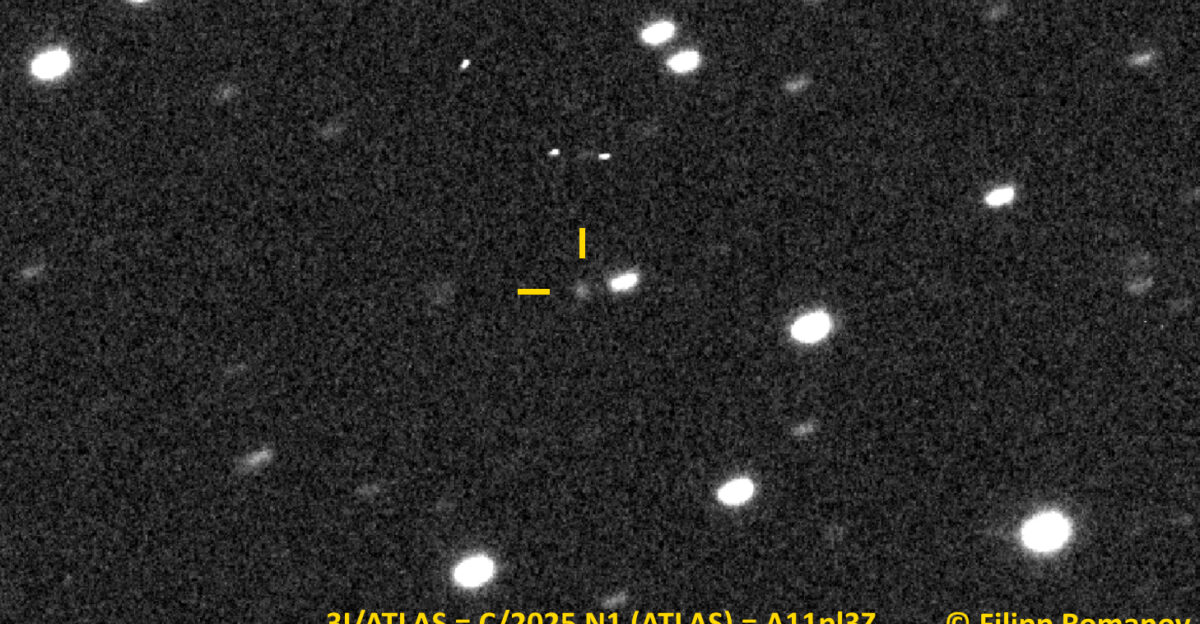
As 3I/ATLAS drew closer to the Sun in October 2025, astronomers noticed something extraordinary. Data from the Atacama Large Millimeter/submillimeter Array (ALMA) revealed that the comet’s path deviated by four arcseconds from its predicted trajectory—a significant shift that could not be explained by gravity alone. This anomaly raised urgent questions: What force could be acting on the comet as it neared the Sun? The scientific community mobilized to investigate, recognizing that such a deviation might reveal new physics or unknown properties of interstellar objects.
A Rarity Among Millions
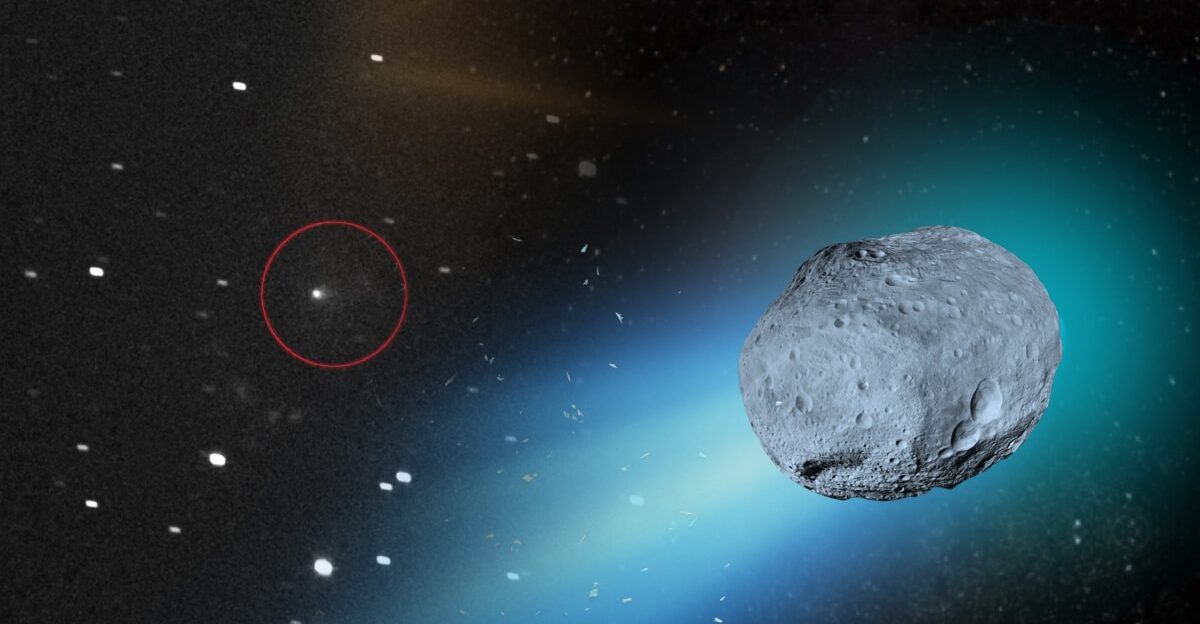
Interstellar objects are exceedingly rare. Before 3I/ATLAS, only two had been confirmed: 1I/’Oumuamua in 2017 and 2I/Borisov in 2019. Of the confirmed astronomical objects detected to date, these three represent an exceptionally small fraction. Each detection offers a unique opportunity to study material from other star systems, providing insights into the conditions and chemistry that shaped distant worlds. For astronomers, 3I/ATLAS was a fleeting but invaluable chance to peer into the galaxy’s past.
Unusual Behavior and Blue Glow
As the comet approached its closest point to the Sun on October 29, 2025, it displayed behavior unlike any comet previously observed. Its brightness increased dramatically—far surpassing typical cometary outbursts. Even more puzzling, 3I/ATLAS glowed with a distinct blue hue, in contrast to the reddish tones usually seen in comets reflecting sunlight. This color shift suggested an unusual composition or outgassing process, prompting intensive study by NASA’s Hubble and James Webb space telescopes, as well as ground-based observatories worldwide.
NASA’s Jet Propulsion Laboratory confirmed that 3I/ATLAS was experiencing measurable non-gravitational acceleration. The comet was accelerating away from the Sun at 135 kilometers per day squared, with a transverse acceleration of 60 kilometers per day squared. This marked a rare instance of NASA officially documenting such acceleration in an interstellar object, with similar phenomena previously detected in the interstellar comet 1I/’Oumuamua, signaling that unknown forces were at work.
Global Collaboration and Scientific Debate
The discovery of 3I/ATLAS triggered a wave of international cooperation. After its initial detection in Chile, ALMA tracked the comet’s deviation, while Hawaii’s Pan-STARRS telescope and South Africa’s MeerKAT radio telescope contributed additional observations and chemical analyses. NASA’s space telescopes provided high-resolution imaging, allowing scientists to study the comet’s structure and activity in unprecedented detail. This global effort underscored the importance of collaboration in unraveling the mysteries of the cosmos.
The comet’s unusual acceleration sparked debate among astronomers. One leading hypothesis suggested that outgassing—jets of gas or dust erupting from the comet’s surface—could be propelling it off course. While outgassing is common in comets, the magnitude and direction of 3I/ATLAS’s acceleration were highly unusual, raising the possibility of exotic phenomena or even artificial influences. Though such ideas remain speculative, they highlight the need for open scientific inquiry and continued observation.
A Brief Window Into the Distant Past

With 3I/ATLAS having passed behind the Sun in late October 2025 and beginning to emerge by late November 2025, astronomers faced a narrow window to collect data. The comet’s blue glow, rapid acceleration, and interstellar origin made it a unique laboratory for studying the building blocks of planetary systems beyond our own. By analyzing its composition and behavior, researchers hoped to uncover clues about the processes that shaped the early Milky Way and other galaxies.
The comet’s visit also captured the public imagination, drawing widespread attention on social media and in news coverage. NASA’s press briefings and live updates allowed people around the world to follow the unfolding story, fostering a sense of shared curiosity and wonder.
Looking Ahead: New Frontiers in Space Science

The fleeting passage of 3I/ATLAS has broad implications for the future of astronomy. Its unexpected characteristics challenge existing models of comet behavior and interstellar dynamics, suggesting that scientists may need to develop new theories and detection methods for similar objects. The event has already inspired calls for increased investment in space observation technologies and international research partnerships.
As 3I/ATLAS continues its journey out of the solar system, it leaves behind a legacy of discovery and collaboration. For scientists and the public alike, the comet serves as a reminder of the vast unknowns that remain in our universe—and the enduring human drive to explore them.