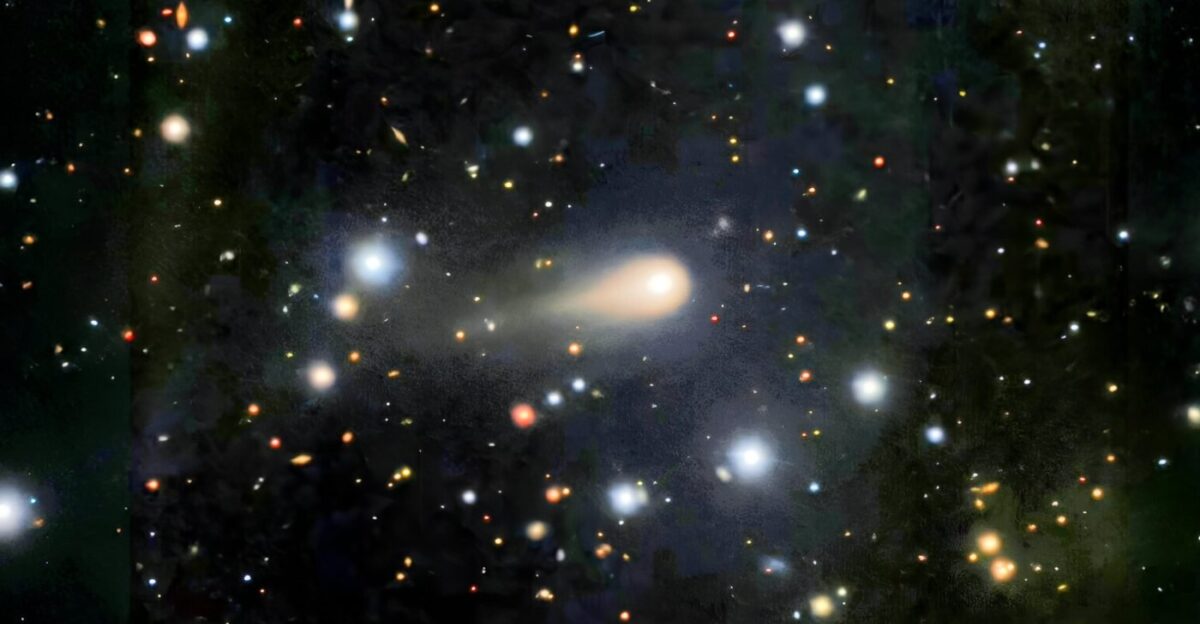
An interstellar comet has shattered speed records as it hurtled through our solar system, captivating astronomers and igniting a global scientific effort. Known as 3I/ATLAS, this rare visitor was captured in detail by NASA’s Hubble Space Telescope during its closest approach to the Sun on October 30, 2025. Its extraordinary velocity and unusual characteristics have prompted scientists to rethink what is possible for objects arriving from beyond our solar neighborhood.
Unprecedented Scientific Response
The arrival of 3I/ATLAS triggered a rapid, coordinated response from NASA and observatories worldwide. To track the comet’s swift passage, NASA mobilized fifteen separate missions, adapting instruments to follow its trajectory at speeds never before encountered. This level of mobilization reflects the rarity of such interstellar objects—only two others, 1I/‘Oumuamua in 2017 and 2I/Borisov in 2019, have ever been confirmed. The collaborative effort pushed scientific equipment to its limits, underscoring both the technical challenges and the excitement surrounding this cosmic event.
A New Benchmark in Interstellar Exploration
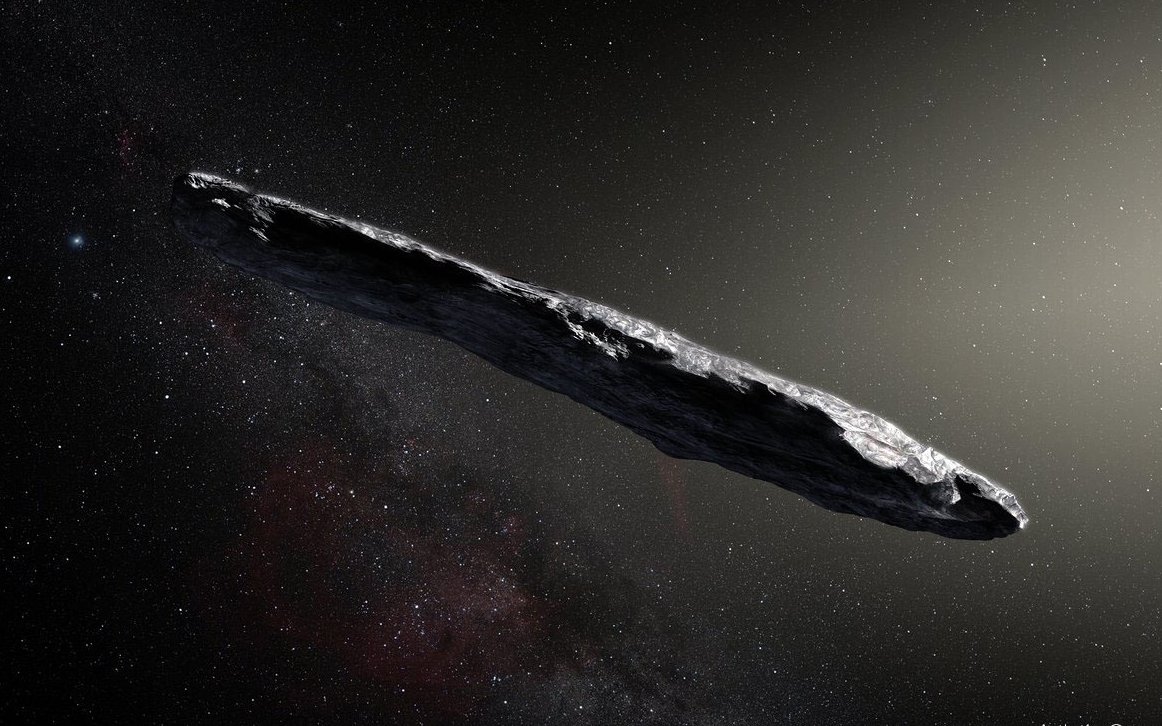
3I/ATLAS stands out not only for its presence but for its record-breaking speed. NASA confirmed the comet is traveling at 58 kilometers per second—about 130,000 miles per hour—making it the fastest interstellar object ever observed in our solar system. This velocity is more than twice that of ‘Oumuamua and significantly faster than Borisov, setting a new standard for future discoveries. The comet’s rapid approach left astronomers with a narrow window for observation, requiring swift coordination and technological innovation to capture meaningful data.
The comet’s official designation, “3I,” marks it as the third confirmed interstellar object, solidifying its place in the growing field of interstellar research. Each of these rare visitors offers a unique opportunity to study material from other star systems, providing clues about the broader universe and the processes that shape planetary systems.
Mysteries of Motion and Composition
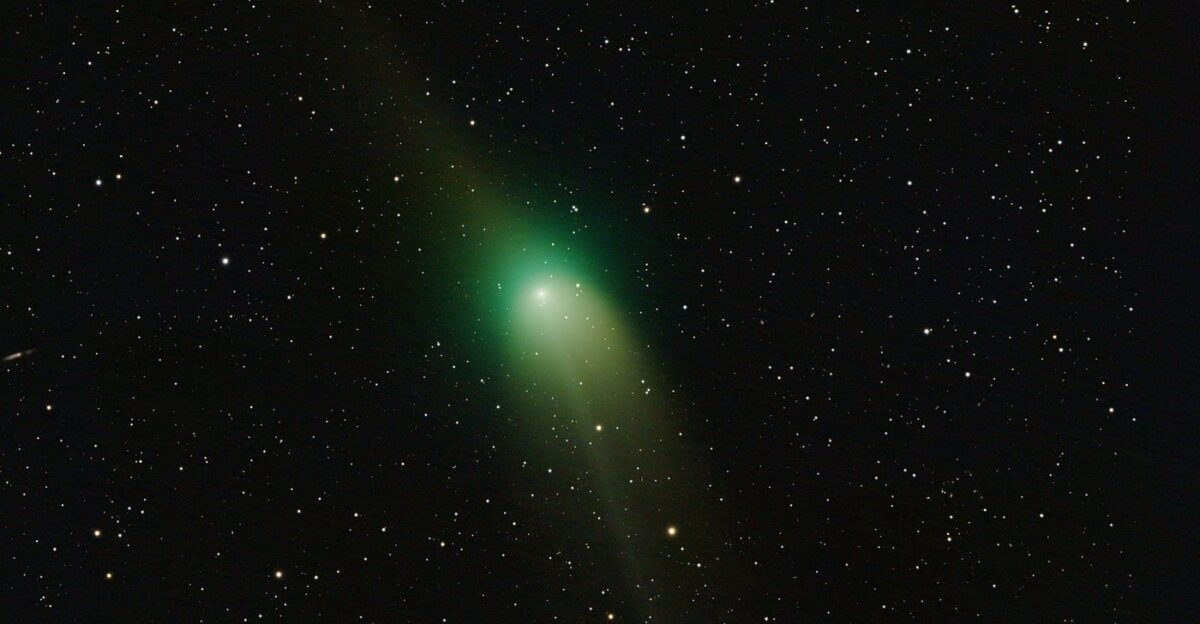
As 3I/ATLAS neared the Sun, it exhibited unexpected behavior. Scientists observed a non-gravitational acceleration—movement that could not be explained by the Sun’s gravity alone. This phenomenon, which coincided with the comet’s closest approach, suggests that solar heating triggered active processes on the comet’s surface. However, the degree of acceleration surpassed what is typically seen in solar system comets, sparking debate about the underlying physics.
Adding to the intrigue, 3I/ATLAS displayed a striking blue coloration, a rarity among comets, which are usually white or yellow. Radio telescope observations detected hydroxyl radicals, indicating that water molecules were breaking apart—a first for an interstellar object. The persistent blue hue after perihelion hints at an unusual chemical makeup, possibly involving exotic ices from a distant stellar system.
NASA’s analysis, supported by images showing a visible coma and tail, led to the conclusion that 3I/ATLAS is indeed a comet. The agency attributed the observed acceleration to asymmetric sublimation: sunlight vaporizes ices unevenly, creating jets that act like natural rocket thrusters. During perihelion, seven distinct jets were observed, reinforcing this explanation and providing a new level of detail for understanding cometary behavior.
Debate and Discovery in the Scientific Community
While NASA’s findings have been widely accepted, some scientists have raised alternative theories. Harvard astrophysicist Avi Loeb, for example, has suggested a possibility—though not a consensus—that the object could be of artificial origin, citing the unusual acceleration. This view has fueled debate and highlighted the importance of rigorous analysis and open scientific discourse.
The broader scientific community has responded with a mix of excitement and skepticism. Many researchers are eager to analyze the wealth of data collected, recognizing that 3I/ATLAS could reshape our understanding of interstellar phenomena. The comet’s discovery has also sparked public interest, drawing amateur astronomers and the general public into discussions about the mysteries of the cosmos.
Looking Ahead: Implications and Future Exploration
The study of 3I/ATLAS opens new avenues for research and technological advancement. Scientists are keen to further investigate its composition and behavior, hoping to refine models for predicting and analyzing future interstellar visitors. The challenges of tracking such fast-moving objects are likely to drive improvements in astronomical instruments and observational techniques.
Beyond the technical achievements, the discovery of 3I/ATLAS raises profound questions about the origins of our solar system, the nature of distant star systems, and the exchange of material across the galaxy. As researchers continue to analyze the data and debate the comet’s mysteries, the story of 3I/ATLAS stands as a testament to human curiosity and the ongoing quest to understand our place in the universe.