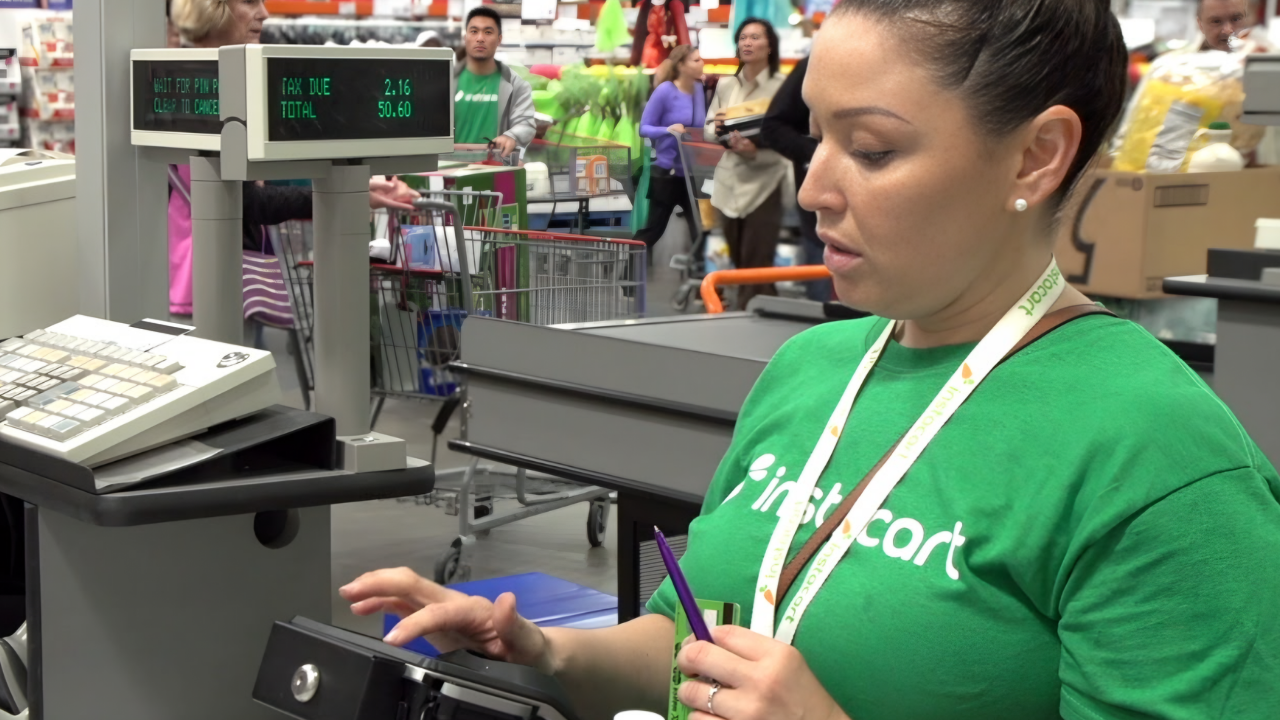
Food prices in the United States have climbed sharply in recent years, and digital shopping is changing how those increases reach consumers. Between 2020 and 2024, grocery prices rose by nearly 25%, according to federal data. Surveys now show most Americans worry about affording groceries, with nearly two-thirds reporting they have traded down to cheaper products or simply bought less food. Against that backdrop, new research is raising questions about how online platforms are using artificial intelligence to set prices—and how much extra families may be paying without realizing it.
Digital grocery boom

Online grocery has rapidly become a major part of household shopping. By 2025, e-commerce grocery sales in the U.S. were estimated at about $166 billion a year, with Instacart alone accounting for roughly 22% of the online grocery market. As more shoppers rely on apps for routine purchases, pricing decisions increasingly take place behind the screen, driven by software rather than store shelf tags.
Most customers see only the final price at checkout, not the process that produced it. Yet in digital marketplaces, prices can be adjusted repeatedly and almost instantly. That flexibility has helped fuel concerns that some shoppers may be paying more than others for the same items, at the same time, on the same platform.
AI-driven pricing takes hold
Instacart’s use of artificial intelligence in pricing dates back to its 2022 acquisition of Eversight, a company specializing in data-driven experimentation on promotions and price levels. After the deal, Instacart began deploying Eversight’s tools to run frequent tests on how customers respond to different prices. Rather than setting a single price for all users, the system can vary prices in real time to gauge how sensitive different shoppers are to changes.
By 2025, these kinds of dynamic pricing tools had become common across online commerce. Companies such as Amazon and Uber routinely adjust prices based on demand patterns and user behavior. Groceries, however, occupy a different category from ride-hailing or discretionary retail: they are everyday essentials. That distinction has intensified debate over whether undisclosed pricing tests are appropriate in a sector that directly affects food security and household budgets.
Findings from a hidden experiment
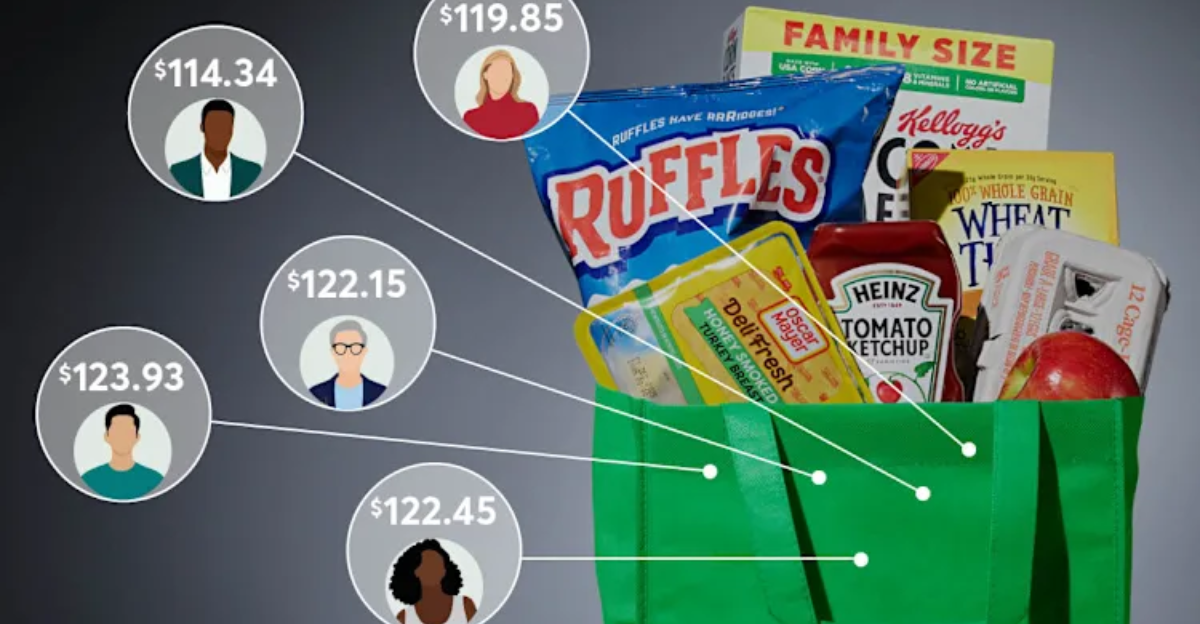
A joint investigation by Consumer Reports and the Groundwork Collaborative, released on December 8–9, 2025, examined how Instacart’s price testing worked in practice. Researchers tracked 437 volunteer shoppers in four metropolitan areas. Comparing what those volunteers were charged for identical items, the study found that roughly three-quarters of the products examined showed price variation.
For the same brand and size of a product, shoppers sometimes paid between 7 cents and $2.56 more than others. In one case cited in the report, a shopper’s total bill for a basket of identical groceries was about 23% higher than what another shopper paid. These differences appeared even when orders were placed close in time.
The pricing tests spanned at least ten major retail partners. At Safeway, Target, and Costco locations accessed through Instacart, everyday items showed noticeable spreads. In Seattle, for example, a package of Oscar Mayer deli turkey purchased via Instacart ranged from $3.99 to $4.89 among different users. In Washington, D.C., Lucerne eggs varied from $3.99 to $4.79 for the same carton size. Investigators concluded that these were not isolated discrepancies but part of a systematic program of experimentation affecting a broad set of shoppers.
Impact on household budgets and regulatory gaps
Even modest per-item differences can accumulate over time. Analysts working with the investigation estimated that a household spending around $10,000 a year on groceries might see roughly $700 in additional costs tied to algorithmic price shifts. In more extreme cases, the yearly gap between higher and lower tested prices for the same kinds of purchases could reach about $1,200.
While Instacart has drawn the most attention because of the Consumer Reports findings, other large grocery platforms have not fully described their own pricing systems. Companies such as Amazon Fresh and Walmart’s subscription-based delivery services also operate in an environment where real-time price changes are technically simple to deploy. At the same time, U.S. regulators have yet to issue specific rules on algorithmic price discrimination for essential goods like food. The Federal Trade Commission has flagged algorithmic pricing as a concern, but clear standards for grocery pricing experiments are still under discussion.
Inside “smart rounding” and public response
Documents cited in the Consumer Reports investigation indicated that Instacart staff described one of the pricing approaches as “smart rounding.” Internal emails suggested this tactic was designed to fine-tune how much an individual shopper might accept paying, in collaboration with participating retailers. The tests were not disclosed to customers as experiments.
The lack of transparency has fueled a strong reaction from Instacart users who participated in or learned about the study. Consumer advocates report that many shoppers view undisclosed testing on staple items as a breach of trust. They argue that customers should be informed if they are part of a pricing trial, especially when the product is a basic necessity rather than a discretionary purchase.
Instacart, in public statements following the report, has defended its practices. The company characterizes the experiments as “limited” and “short-term,” describing them as one of many tools that allow retailers to respond to competitive pressure and offer promotions. Instacart contends that, in aggregate, this kind of experimentation can lead to more flexible pricing and potential savings for shoppers, not just higher charges.
Eversight, the pricing technology firm Instacart acquired, also maintains that continuous testing is a long-established practice in retail. The controversy, however, has prompted some experts in consumer behavior and law to argue that applying such models to groceries without explicit consent crosses a line, particularly when customers have little visibility into how the tests function.
Legal, policy, and global implications
The Consumer Reports findings have increased pressure on regulators and lawmakers to clarify what kinds of algorithmic price testing are acceptable. Policy proposals now under discussion in the U.S. would require large digital platforms selling essentials to disclose when and how they modify prices using automated systems. Some advocates also want limits on individualized pricing for food, arguing that families should at least know whether they are seeing the same prices as their neighbors.
Potential legal consequences are also emerging. Consumer advocates are exploring possible class-action lawsuits alleging unfair or deceptive practices and raising concerns about how shopper data is collected and used in these experiments. If courts were to find that undisclosed price testing on groceries violates consumer protection laws, Instacart and its partners could face substantial financial and reputational fallout.
Internationally, moves toward stronger oversight are farther along. The European Union’s Digital Markets Act and AI Act include provisions that push for greater transparency and accountability in algorithmic decision-making. Practices similar to those examined in the Instacart investigation may run afoul of emerging European standards, underscoring the widening gap between U.S. and EU approaches.
Beyond immediate legal and policy questions, experts say the episode highlights a broader challenge: how to govern AI-driven pricing in markets where people buy essentials rather than luxuries. As online grocery continues to grow and more retailers adopt algorithmic tools, decisions made in the coming years by regulators, legislatures, and courts will help determine whether digital platforms can quietly test how much shoppers are willing to pay—or whether open rules and clearer disclosure will become the norm for pricing everyday food.
Sources
Consumer Reports / Groundwork Collaborative – Investigation on Instacart’s AI pricing experiments (Published: December 8, 2025)
U.S. Department of Agriculture, Economic Research Service – Food price inflation data (Published: February 2025)
IBISWorld – Online Grocery Sales in the US industry report (Published: December 5, 2025)
Instacart – Official press release on Eversight acquisition and company statements (Published: August 31, 2022 / December 8, 2025)
Blue Book Services / Produce Marketing Association – Survey on Americans’ grocery affordability (Published: March 2025)
Industry analysts (SaleHoo, Oberlo, Meritech Capital) – Online grocery market share reports (Published: 2024–2025)