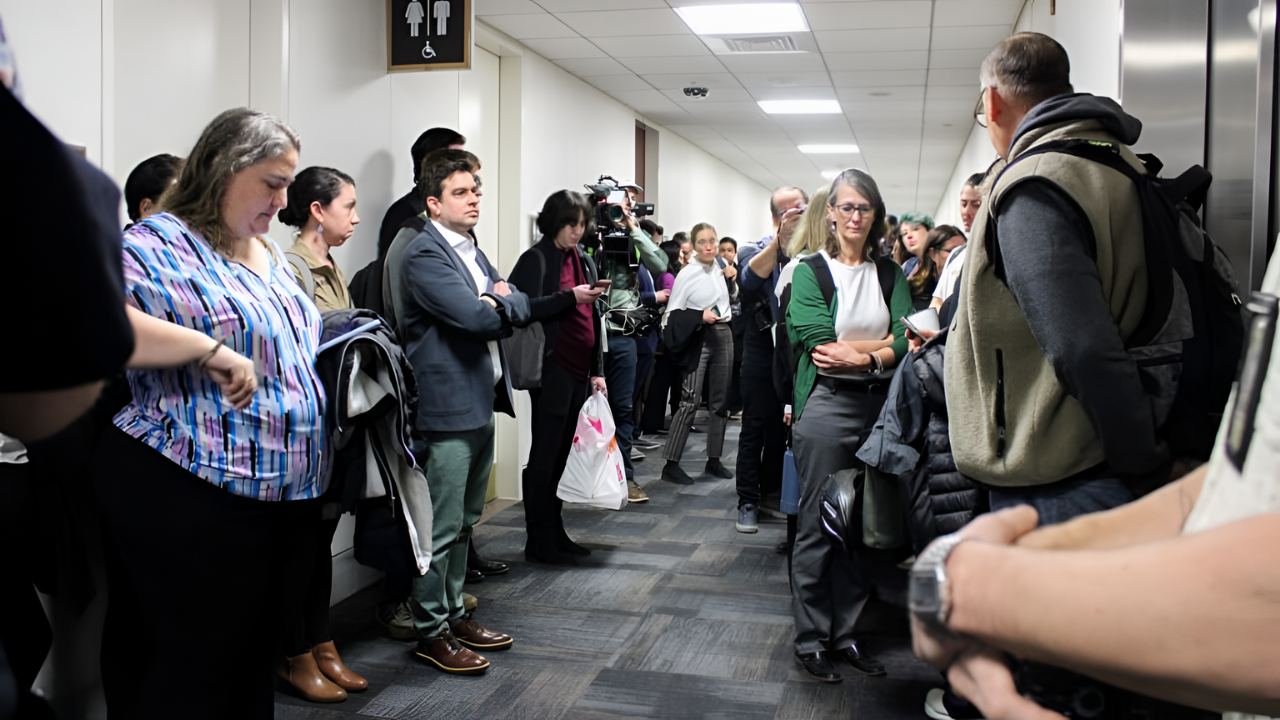
In January 2026, a pivotal moment in workforce reduction took place as Angi (formerly Angie’s List), a major contractor listing platform, announced significant job cuts.
Artificial intelligence, once considered a distant challenge, has now explicitly been blamed for workforce reductions. This marks a major shift in how companies are navigating the evolving landscape of AI’s role in corporate operations.
The Global Consensus

A 2025 World Economic Forum survey revealed that 41% of companies worldwide planned to cut jobs due to AI advancements by 2030, with 48% in the U.S. acknowledging similar plans.
AI is no longer a looming threat; it’s actively reshaping labor markets, making job reductions a global reality.
The $80 Million Gamble

On January 7, 2026, Angi confirmed it was laying off 350 employees, about 12.5% of its workforce. This decision, tied to AI-driven efficiency improvements, is expected to save the company $70-$80 million annually.
However, the severance costs—ranging from $22-$30 million—reflect the high price of integrating AI into corporate strategies.
The Human Cost

The impact of AI-driven layoffs extends beyond Angi. Tailwind Labs, a smaller tech startup, cut 75% of its engineering team (3 of 4 engineers) due to automation taking over manual coding tasks.
CEO Adam Wathan shared the stark reality, stating: “75% of the people on our engineering team lost their jobs here yesterday because of the brutal impact AI has had on our business.” This personal anguish underscores the complex human toll of these technological shifts.
Meta and Citi’s AI Cutbacks
In the wake of Angi’s announcement, other companies like Meta and Citigroup also continued or announced plans for large-scale job cuts.
Meta’s Reality Labs division is planning to slash around 10% of its workforce in early 2026, while Citigroup’s ongoing restructuring includes the loss of 20,000 jobs by the end of 2026. Both companies cite efficiency improvements as a primary driver of these cuts.
A Hidden Truth: Non-Hiring
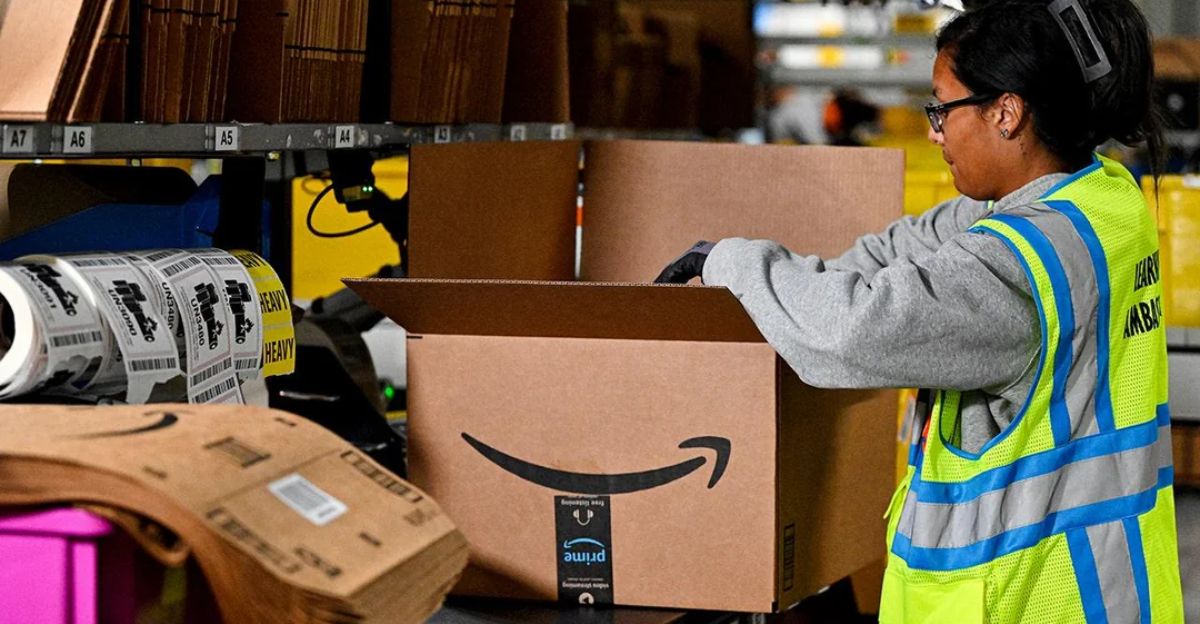
In contrast to publicized layoffs, many companies are choosing to reduce hiring rather than cut jobs. Internal documents reveal Amazon aims to automate 75% of its warehouse operations by 2033 by avoiding hiring warehouse workers—simply by not hiring replacements for positions eliminated through automation.
This more subtle approach makes the effects of automation less visible but just as impactful. Separately, Amazon’s October 2025 corporate layoffs of 14,000 employees were attributed by CEO Andy Jassy to organizational restructuring rather than AI displacement.
Internal Confusion and Conflict
Internally, many companies are grappling with the implications of AI-driven job cuts. Adam Wathan of Tailwind Labs voiced frustration over AI’s rapid impact on his team.
Amazon’s internal communications also revealed growing concerns, with over 1,000 employees signing an open letter in late 2025 about AI potentially replacing jobs that had previously been considered secure, sparking internal debates over the value of “efficiency.”
Leadership’s Confidence

Despite resistance and uncertainty among workers, corporate leaders remain resolute in their belief that AI will drive growth. Citigroup’s CEO Jane Fraser described the ongoing layoffs as part of a broader “transformation” strategy, while Angi’s filing underscored the necessity of these cuts for “long-term growth.”
Amazon and Meta continue to increase investments in AI, indicating that workforce reductions may only be the beginning.
The Skeptic’s View
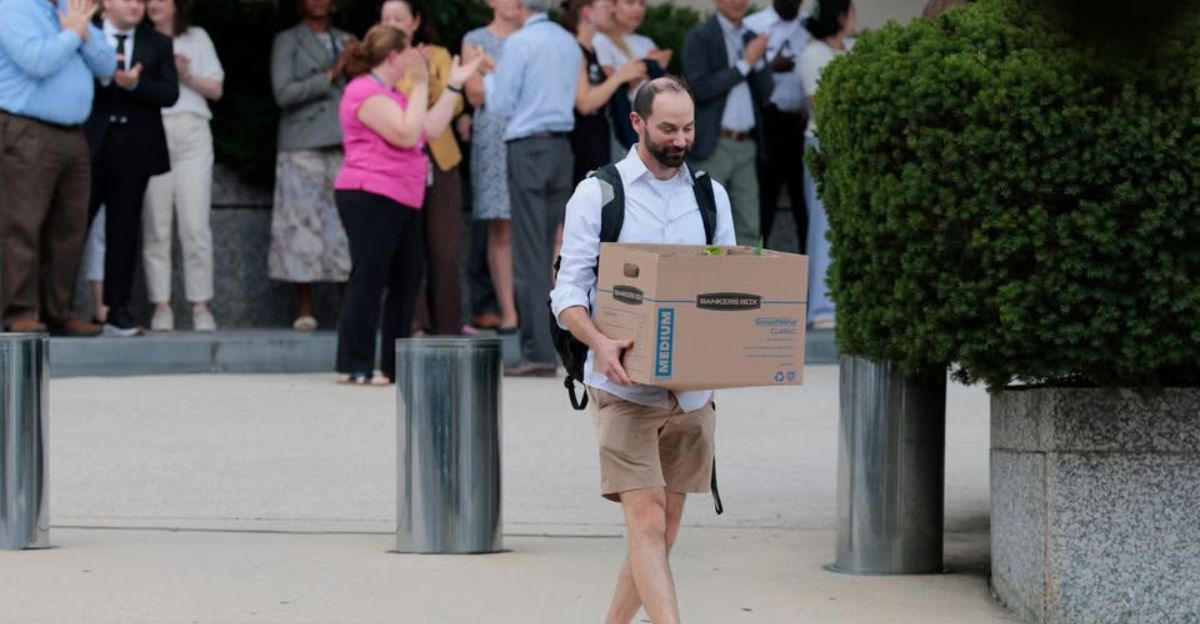
Experts caution that AI may not be the sole factor behind these layoffs. A recent survey found that 69% of employees believe companies are using “AI layoffs” as an excuse for cost-cutting.
Labor economists argue that profit maximization and power consolidation are equally to blame, with companies using AI as a convenient justification for cutting costs, overshadowing other economic motivations such as streamlining operations and reducing overhead.
Policy and Global Impact

The rise of AI-driven layoffs has sparked calls for stronger government intervention. Policy experts and advocacy groups are discussing retraining programs and other support mechanisms for displaced workers.
This issue is global in nature, affecting not only the U.S. but also emerging markets grappling with outsourcing challenges.
Legal Implications

AI’s role in layoffs is raising complex legal questions. Employment lawyers are scrutinizing whether AI efficiency improvements could be challenged under existing labor laws.
The potential for age discrimination is a key concern, especially if older workers are disproportionately affected by these cuts. Legal experts predict that AI-driven layoffs will significantly reshape employment law in the years to come.
The Ethical Dilemma
Companies that once touted their commitment to social responsibility are now justifying mass layoffs as necessary for growth and survival. This shift raises ethical questions about corporate decision-making.
By framing layoffs as inevitable outcomes of technological progress, companies can deflect blame and position themselves as responding to market forces rather than making discretionary choices.
What’s Next?

The January 2026 layoffs are likely just the beginning. Industry experts forecast additional rounds of job cuts across sectors, as evidenced by over 100 companies filing WARN notices for 2026 layoffs, with major companies like Citigroup and Meta having already signaled more reductions.
MIT’s Iceberg Index study found that AI could already perform tasks representing 11.7% of the U.S. labor market, with significant exposure in administrative, financial, professional services, and manufacturing roles, though the full global impact across all sectors remains uncertain.
Crossing the Line

January 2026 represents a turning point in the workforce debate: the once-abstract threat of AI replacing jobs is now a tangible reality.
As workers across industries face potential displacement, demand is growing for workers with AI-related skills, potentially deepening economic divides.
The Bigger Picture

AI-driven workforce reductions will continue to shape the corporate landscape in 2026 and beyond. The way these transitions are managed will have long-lasting effects on the future of work.
Whether AI leads to greater inequality or more equitable outcomes will depend on the decisions made today and the policies enacted to protect displaced workers.
Sources:
“The company behind Angie’s List is cutting 350 jobs ‘in light of AI-driven efficiency improvements’.” Business Insider, 7 Jan 2026.
“41% of companies worldwide plan to reduce workforces by 2030 due to AI.” CNN Business, 8 Jan 2025.
“Tailwind lays off 75% of its 4-person engineering team, citing ‘brutal impact AI has had on our business’.” Business Insider, 7 Jan 2026.
“MIT study finds AI can already replace 11.7% of U.S. workforce.” CNBC, 26 Nov 2025.