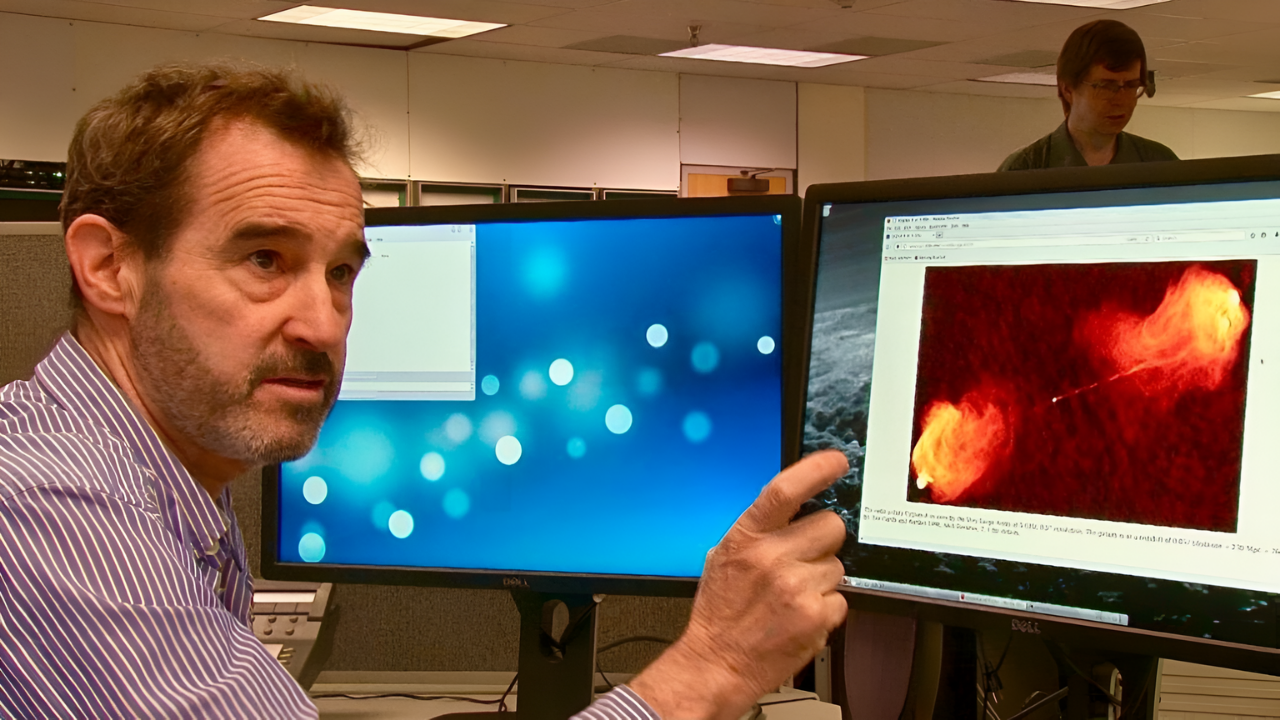
In July 2025, astronomers made history with a world-first, the radio detection of an interstellar object known as 3I/ATLAS. Unlike any asteroid or comet known before, ATLAS didn’t form in our solar system but traveled here from another star. Detected by the Asteroid Terrestrial-impact Last Alert System (ATLAS), this icy traveler carried a weak but distinct radio signal, like a faint whisper from deep time.
These objects are rare; only two others, 1I/‘Oumuamua in 2017 and 2I/Borisov in 2019, have ever been confirmed. ATLAS is the third, a fragile, icy messenger that offers scientists clues about cosmic chemistry that began billions of years before Earth existed.
South Africa’s Breakthrough Moment
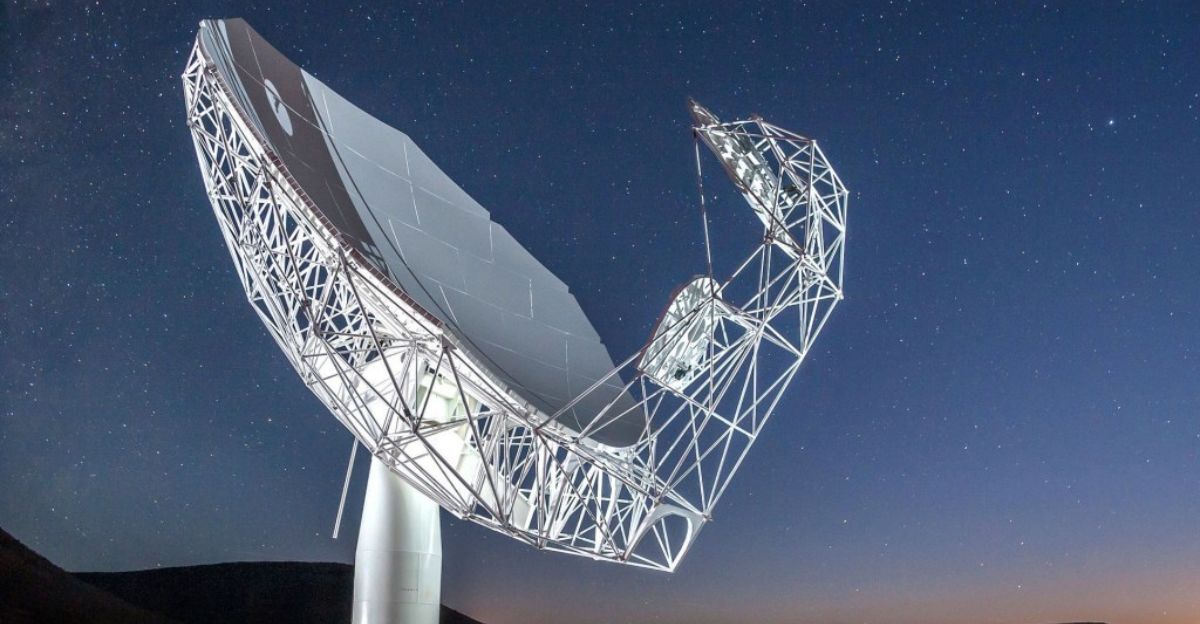
On October 24, 2025, South Africa’s MeerKAT radio telescope in the Karoo Desert made a discovery so precise it sent ripples through astronomy. MeerKAT detected hydroxyl (OH) absorption lines, clear signs of water molecules breaking apart in sunlight, from 3I/ATLAS. It was humanity’s first-ever radio signal from an interstellar body.
Two previous attempts had failed in September due to the comet’s distance from the Sun, but the timing in late October was perfect. As ATLAS passed just 3.76° from the Sun, sunlight energized its frozen surface, producing a faint chemical fingerprint. Dr. Angeline Burrell of SARAO called the event a defining moment for radio astronomy, where chemistry from another world spoke through our skies.
Why This Find Matters
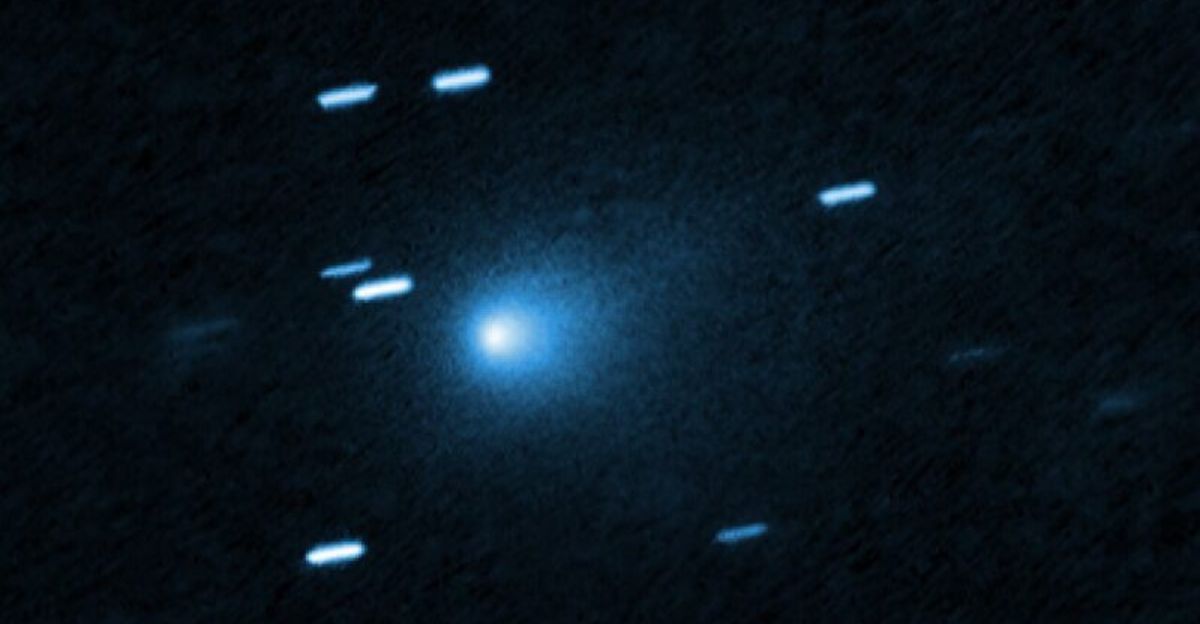
The MeerKAT detection didn’t just confirm 3I/ATLAS’s presence, it revealed what it truly was. The radio lines matched patterns produced when comets release water vapor, forming a glowing cloud called a coma. That placed ATLAS firmly in the comet category, bringing an end to weeks of speculation.
According to the European Space Agency, hydroxyl emissions help astronomers measure how sunlight breaks down water in space, letting them gauge a comet’s temperature and outgassing speed. “Hydroxyl lines are like fingerprints, we can read a comet’s chemistry from light-years away,” explained ESA scientist Dr. Maria Womack.
Failure Before Success
Progress rarely comes without setbacks. On September 20 and 28, astronomers tried twice to spot a radio signature from ATLAS but came up empty-handed. The comet was still too far from the Sun, and its frozen ices weren’t active enough to produce detectable gas.
As it edged closer to the Sun, however, it began to heat up, reaching 230 Kelvin (around -43°C). That warming triggered its transformation from a quiet rock to an active comet, releasing gases strong enough for radio detection. When MeerKAT finally caught the signal, it wasn’t luck, it was timing and persistence.
The Sun’s Close Encounter
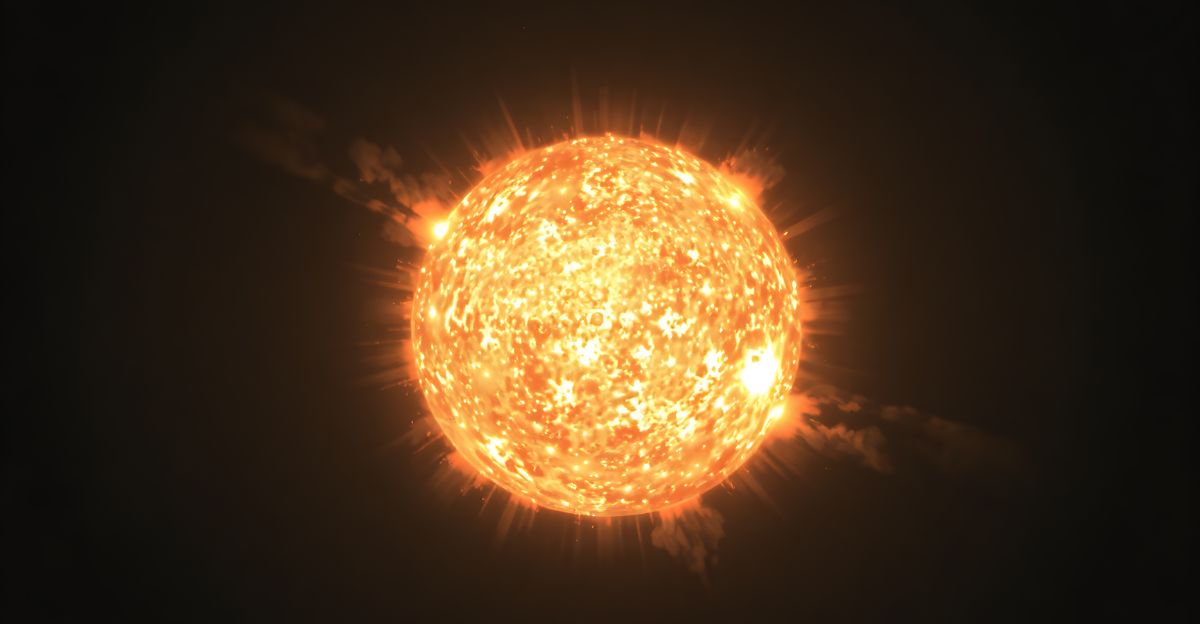
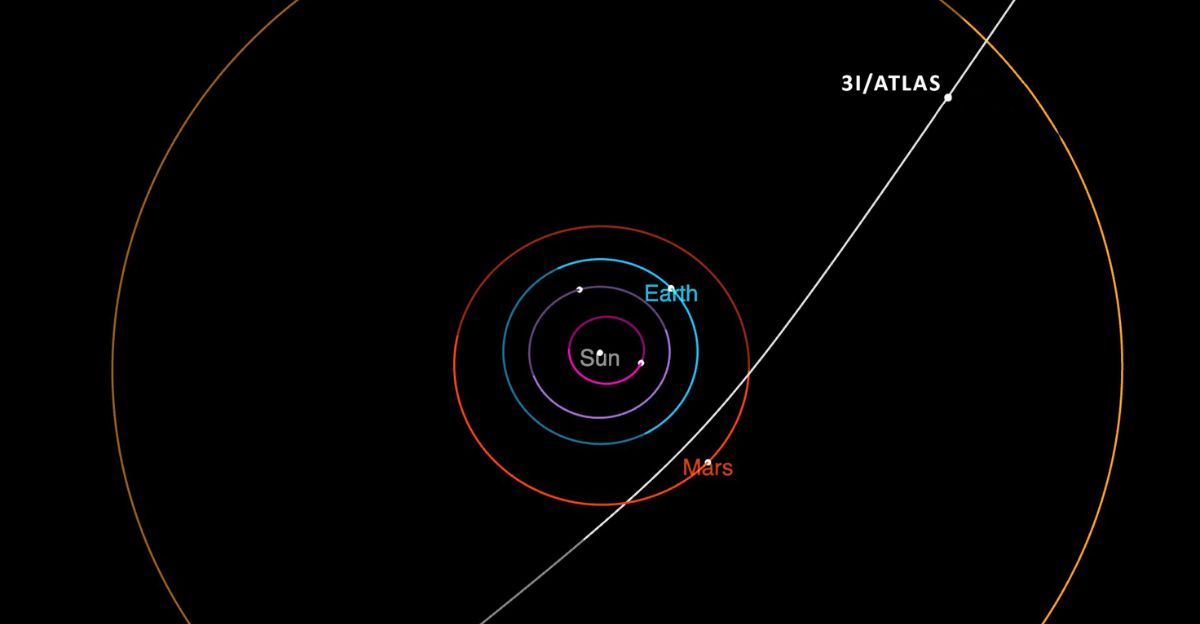
On October 29, 2025, 3I/ATLAS made its closest pass around the Sun, called perihelion. It came within 1.38 astronomical units, about 207 million kilometers. That’s outside Earth’s orbit, but still close enough for sunlight to spark its icy surface into life.
For a brief few days, telescopes caught brilliant details of its structure and composition. Cosmic dust surrounded it in a faint blue haze as gases puffed out from its evaporating surface. This was a short-lived but precious opportunity because once ATLAS moved on, it would fade into the cosmic night.
What The Radio Waves Told Us
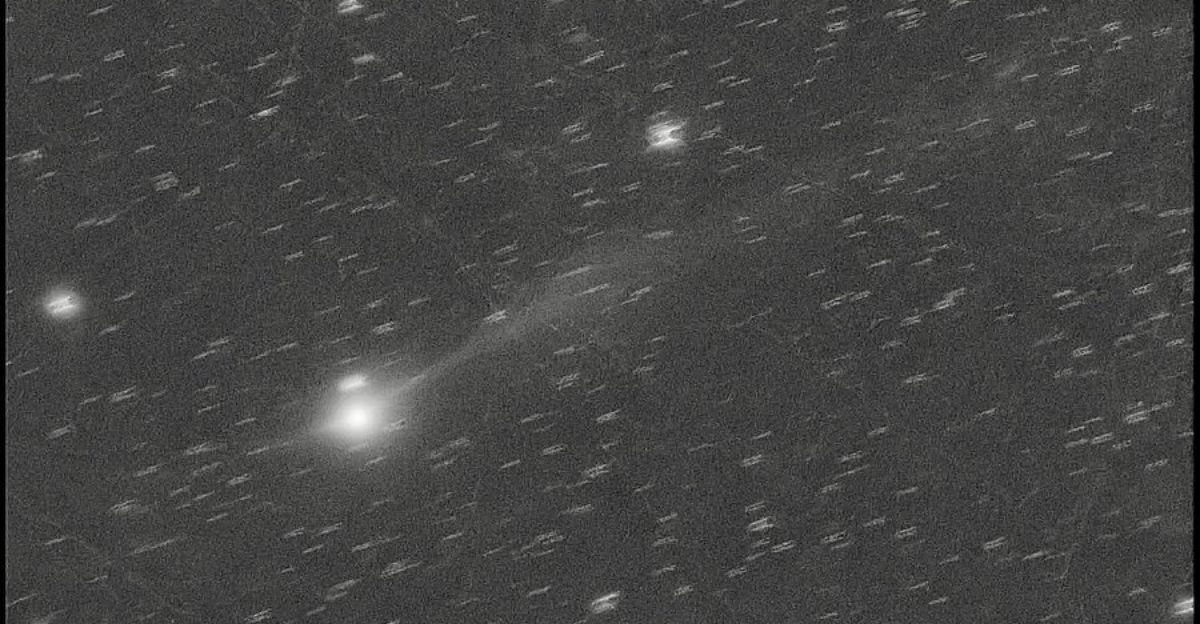
The hydroxyl absorption lines detected by MeerKAT revealed that ATLAS was releasing water vapor from beneath its crust. The pattern of these lines showed molecules moving at about 0.8 kilometers per second, consistent with a gently warming comet.
There were no artificial tones or signals, ruling out technological origins. The finding reassured scientists that ATLAS was a natural product of cosmic evolution, a frozen remnant of ancient planetary building blocks, not a probe or alien artifact.
The Alien Theories Debunked
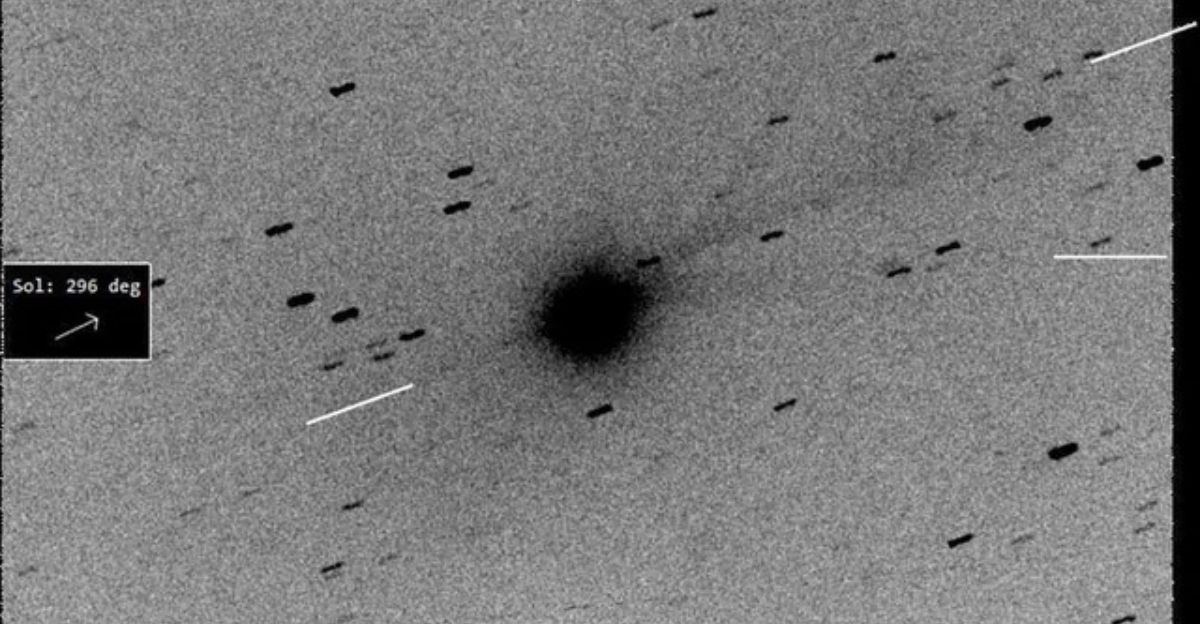
When word spread of a radio signal from a foreign object, the internet quickly filled with alien spacecraft theories. Similar speculation had surrounded ‘Oumuamua in 2017. But rigorous analysis of ATLAS’s signal proved it came from ordinary molecular interactions, not anything engineered.
Scientists emphasized that interstellar comets are made of organic compounds, ices, and dust, not metal or machinery. This clarity allowed research to focus on what truly made the discovery extraordinary, its chemistry and origin story.
Older Than the Earth

Perhaps most astonishing is ATLAS’s age. Modeling suggests it’s more than 10 billion years old, formed long before Earth existed. That means it carries material from a time when the universe itself was young, less than half its current age.
Its frozen layers have preserved atomic clues from its home system, perhaps one that no longer exists. In a way, ATLAS is like a time capsule from another galaxy’s youth, offering scientists a glimpse of what cosmic dust and ice were like during the universe’s formative years.
Endless Voyage Across the Stars

Traveling through space at an estimated 26 kilometers per second, 3I/ATLAS may have drifted across 8 trillion kilometers over billions of years. That’s the equivalent of about 820 light-years, an unimaginable journey through cold interstellar space.
Along the way, cosmic rays battered its surface, transforming it into a darker, tougher shell. Beneath that carbonized crust, though, ancient ices remain intact, locked in time. This long exposure to radiation gave ATLAS its dull appearance but may have preserved unaltered chemistry inside.
How Interstellar Comets Differ From Local Ones
Comets born in our solar system share a lot in common, but interstellar ones like 3I/ATLAS are fundamentally older and wearier. Scientists study their isotopes to learn where they formed. Local comets have fingerprints that match our Sun’s chemical recipe, but interstellar ones do not.
The European Space Agency compared ATLAS to 2I/Borisov, a much more active comet, and found ATLAS had far less gas and dust activity. This suggests its surface has been hardened by billions of years of radiation. Despite that, both still carry water ice, showing that moisture is not unique to our solar neighborhood.
Why Radio Astronomy Is Essential
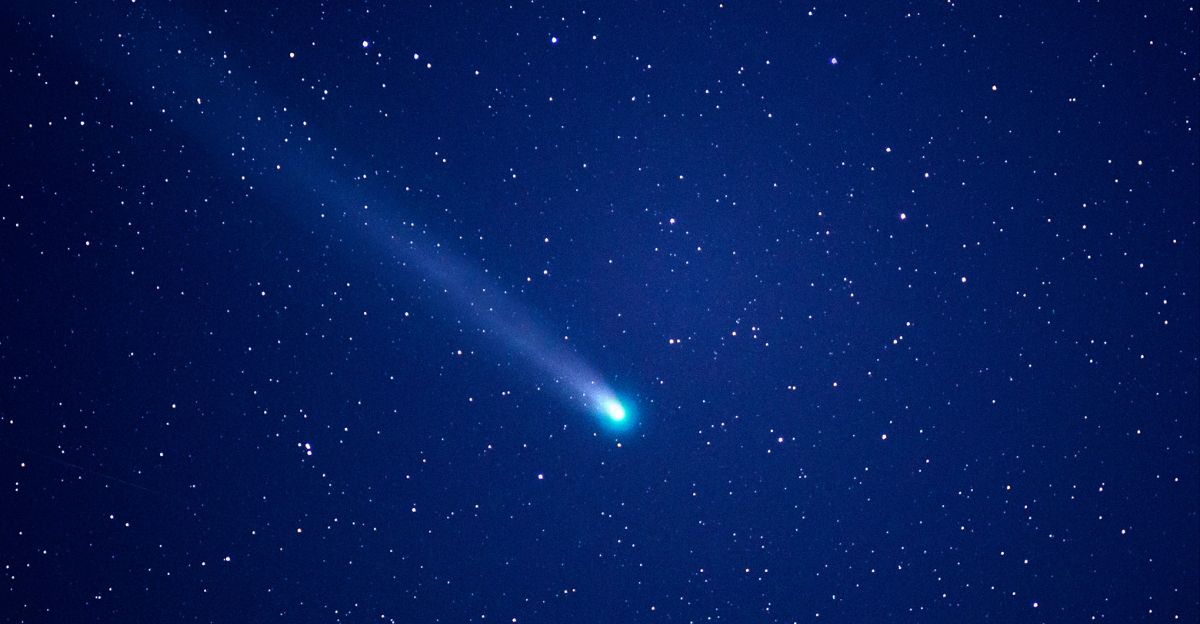
Optical telescopes can show us what a comet looks like, but radio telescopes like MeerKAT tell us what it is made of. When sunlight hits a comet’s surface, it releases invisible molecules that emit or absorb radio waves. By studying these signals, scientists can measure temperature, gas flow, and molecular makeup.
For 3I/ATLAS, this meant identifying water and calculating how quickly it was turning into vapor, millions of kilograms every second. This technology gives astronomers a deeper sense of context, helping them see patterns not just in light, but in energy and chemistry.
Water Across the Cosmos
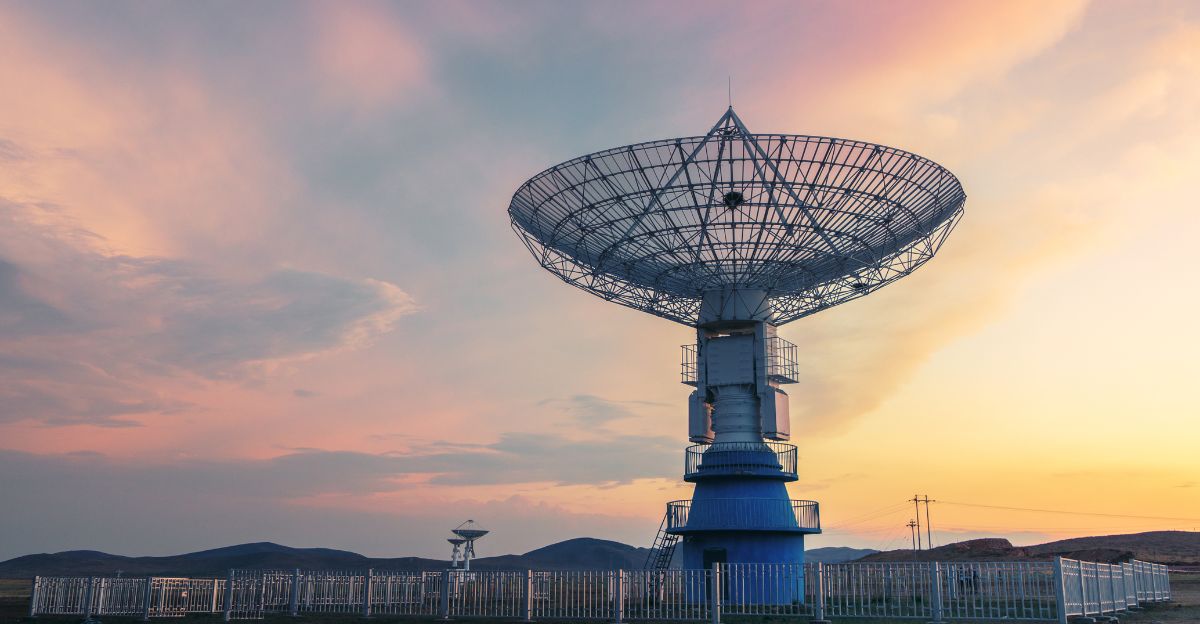
The most exciting part about the hydroxyl detection was what it revealed about water. When sunlight breaks water molecules into hydrogen and oxygen, hydroxyl (OH) appears as a byproduct. So finding OH around an interstellar comet means water ice exists beyond our solar system.
That discovery supports the long-held idea that water is common throughout the galaxy, a key ingredient for life. This strengthens the possibility that life-friendly ingredients exist wherever stars and planets form, not just around the Sun.
What We Learned From a Fleeting Visit
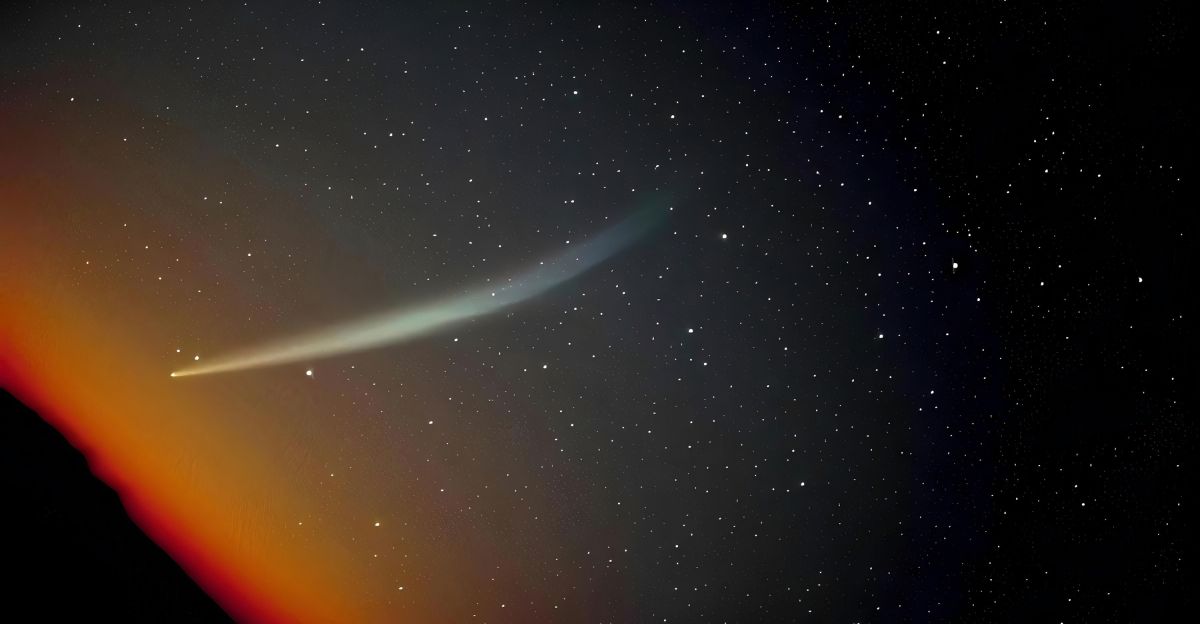
3I/ATLAS’s visit is a one-time event. Its orbit is hyperbolic, which means it won’t return. Astronomers around the world raced to collect as much data as possible before it disappeared. Observatories used every tool to document its structure and motion.
Once it passed behind the Sun, the object dimmed beyond detection limits. “Still, those short observations offer a lifetime of insight, revealing how material from foreign star systems behaves when warmed by our Sun for the first time.
Comparing Our Three Interstellar Guests
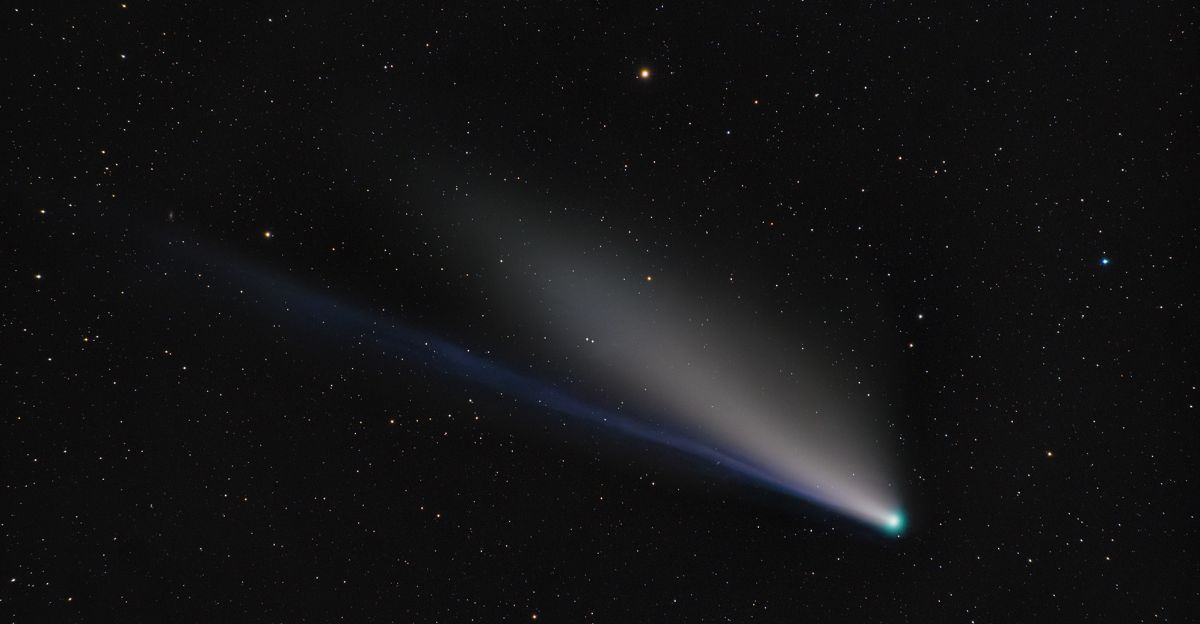
So far, astronomers have welcomed only three confirmed visitors from beyond the solar system. In 2017, 1I/‘Oumuamua’s odd acceleration sparked wild theories about alien technology. In 2019, 2I/Borisov looked and behaved like a normal comet, venting gases freely. Now, 3I/ATLAS sits between them, it’s less active than Borisov but more clearly cometary than ‘Oumuamua.
Together, they represent an unexpected spectrum of possibilities. Comparing their shapes, colors, and chemistries helps astronomers understand how planetary systems form and evolve across our galaxy.
MeerKAT’s Remarkable Achievement
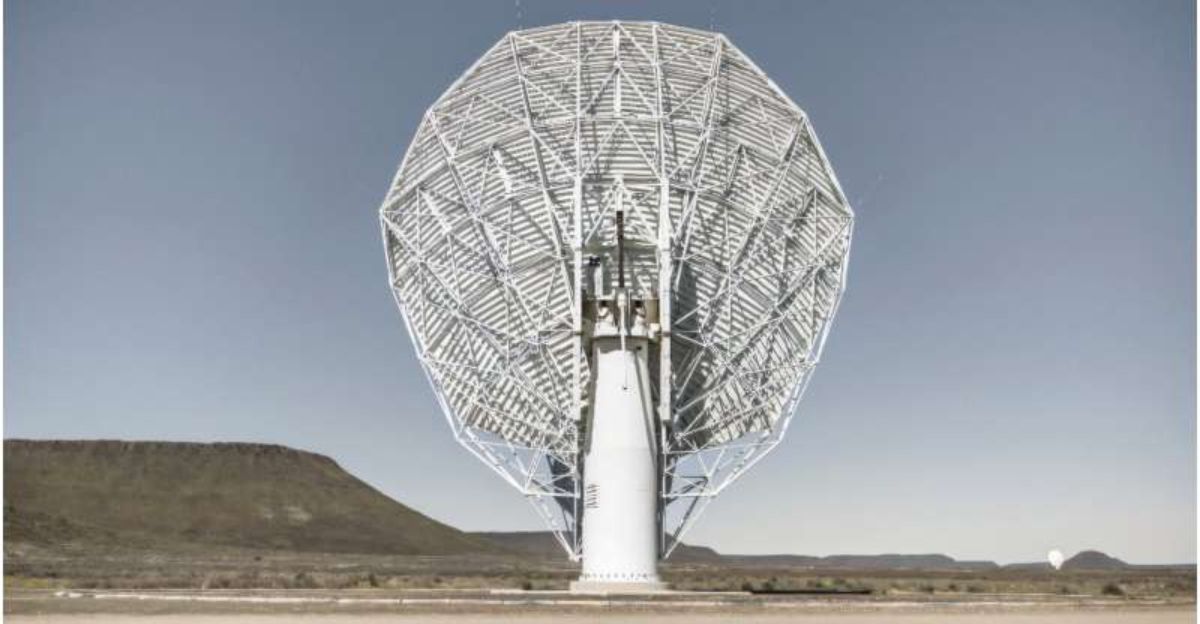
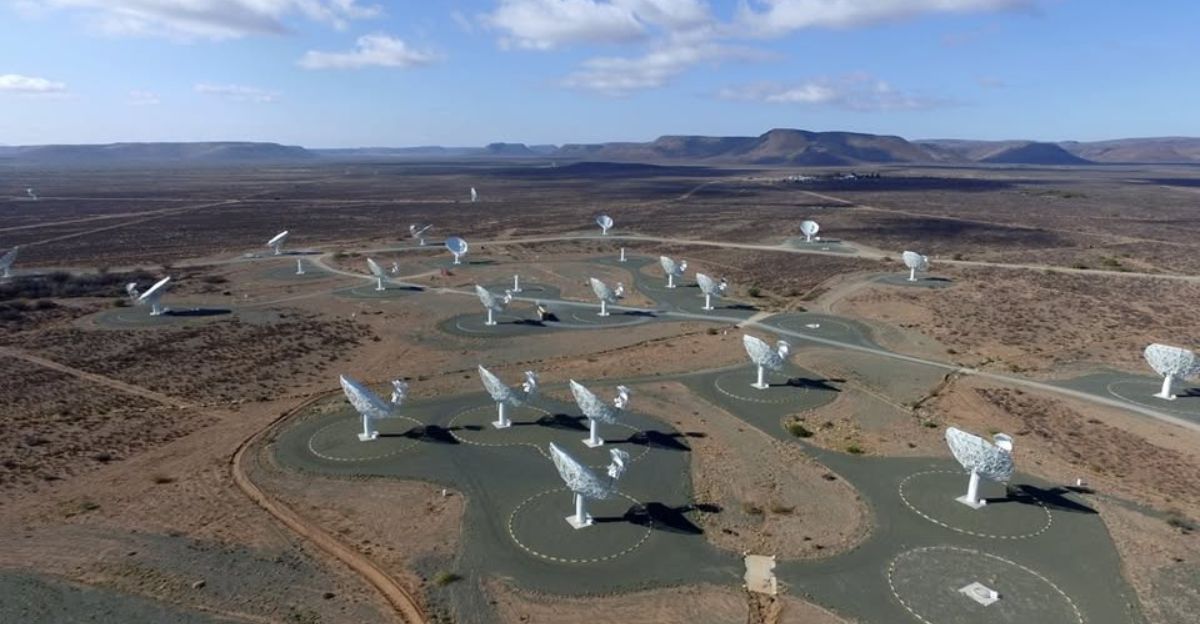
MeerKAT’s detection of ATLAS was made possible by its powerful 64-antenna setup and advanced sensitivity. Located in the quiet Karoo region of South Africa, MeerKAT avoids city interference and can operate close to the Sun’s glare. This is rare for most radio observatories.
Its wide-frequency coverage helped separate the narrow hydroxyl lines from background noise, producing a clean detection. “MeerKAT has once again proven its value for cutting-edge cosmic research,” said SARAO Director Dr. Rob Adam.
When Silence Teaches Us Something
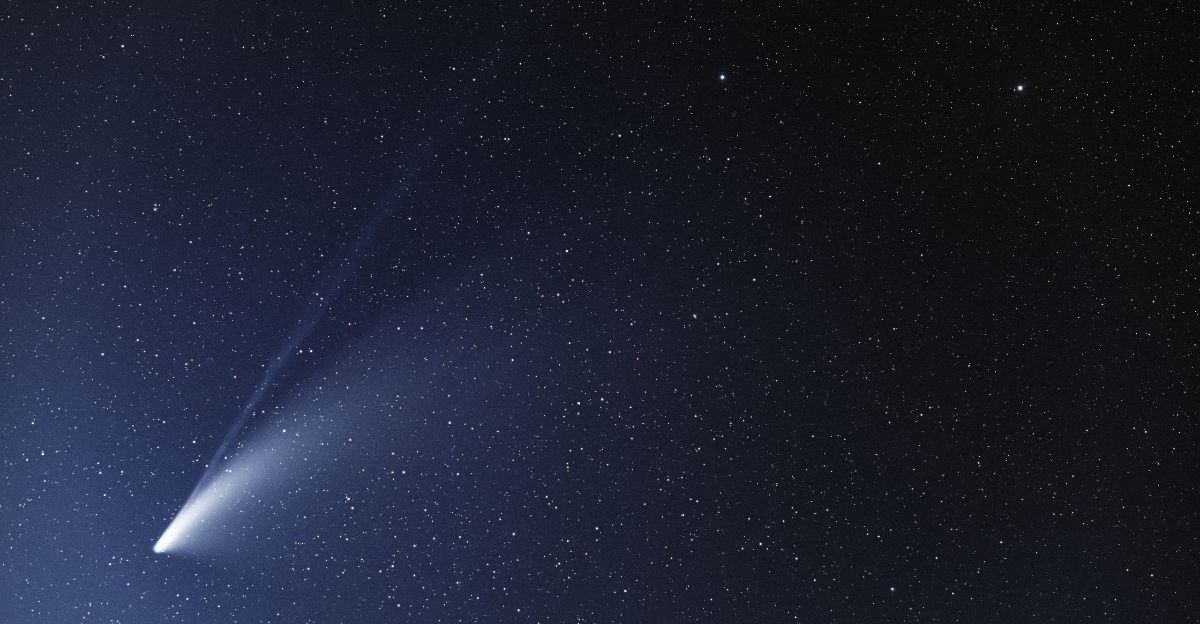
The two failed detection attempts in September 2025 were far from wasted. They gave scientists vital calibration data, defining the instrument’s sensitivity and background noise levels. These early tries also taught researchers how comet activity changes with sunlight intensity.
When the signal finally came through in October, astronomers could be confident it wasn’t noise. n science, a null result can be as valuable as a positive one,” said Dr. Teboho Moeketsi. Every quiet ence and precision are as essential as the telescope itself.
Searching For Life’s Ingredients
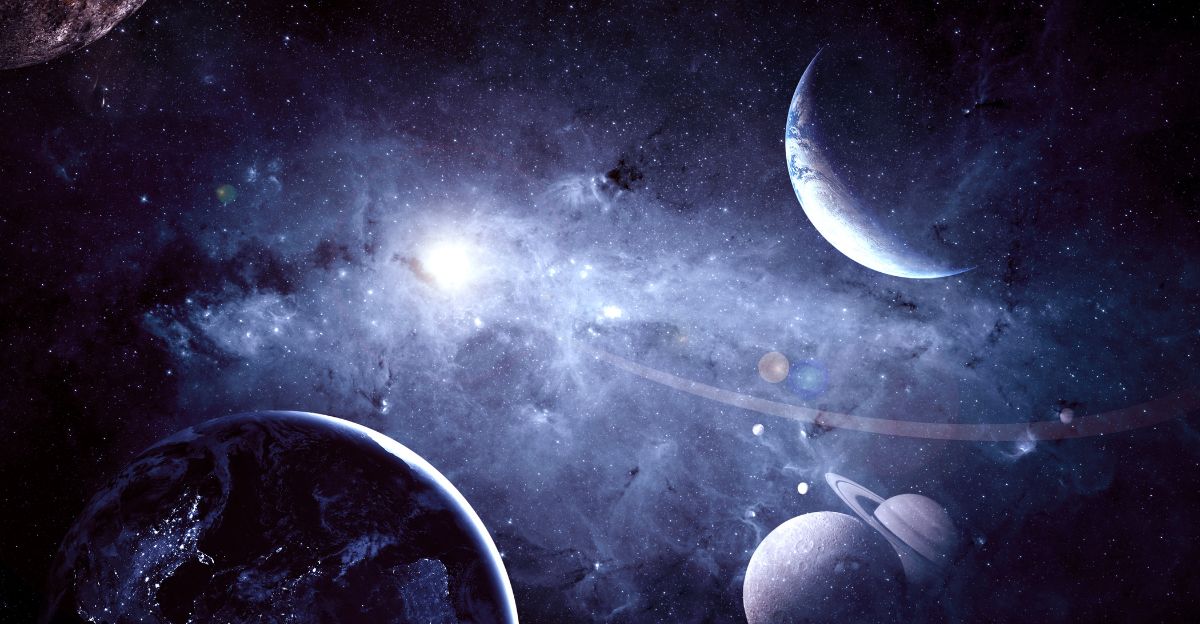
This discovery carries huge meaning for astrobiology, the science of life in the universe. Old comets like ATLAS may contain prebiotic molecules, the raw materials for amino acids and sugars. As they travel through space, cosmic radiation can transform simple molecules into complex organic compounds.
Scientists want to know whether those organics survive interstellar travel and if they could seed new worlds. Studying ATLAS helps refine models of how life’s building blocks spread between stars, hinting that Earth’s chemistry might not be unique at all.
Humanity’s Moment in Cosmic Time
For ATLAS, a billion years is a blink. For humanity, observing it marks an incredible milestone. This object began its journey when our galaxy was forming its spiral arms.
To think that, after wandering for eons, it passed close enough for us to detect a radio whisper is astonishing. Each observation connects our brief human story with billions of years of cosmic history, showing how science can bridge epochs in a single heartbeat of data.
Awe Instead of Fear
When news of a radio signal from space breaks, some people imagine alien invasion scenarios. But the truth of 3I/ATLAS is far more wondrous. Understanding that doesn’t make the discovery less exciting, it makes it profoundly human.
The Legacy of 3I/ATLAS
As ATLAS fades into deep space, its discovery leaves a permanent mark. It became the first interstellar object detected through radio waves, a testament to technology and collaboration. Future telescopes like the Square Kilometre Array will build on this success, listening for fainter signals from beyond.
These detections could reveal the chemistry of faraway worlds and the frequency of water-bearing objects in our galaxy. The cosmos remains vast and mysterious, but thanks to 3I/ATLAS, humanity has learned how to listen, and the universe has answered back.