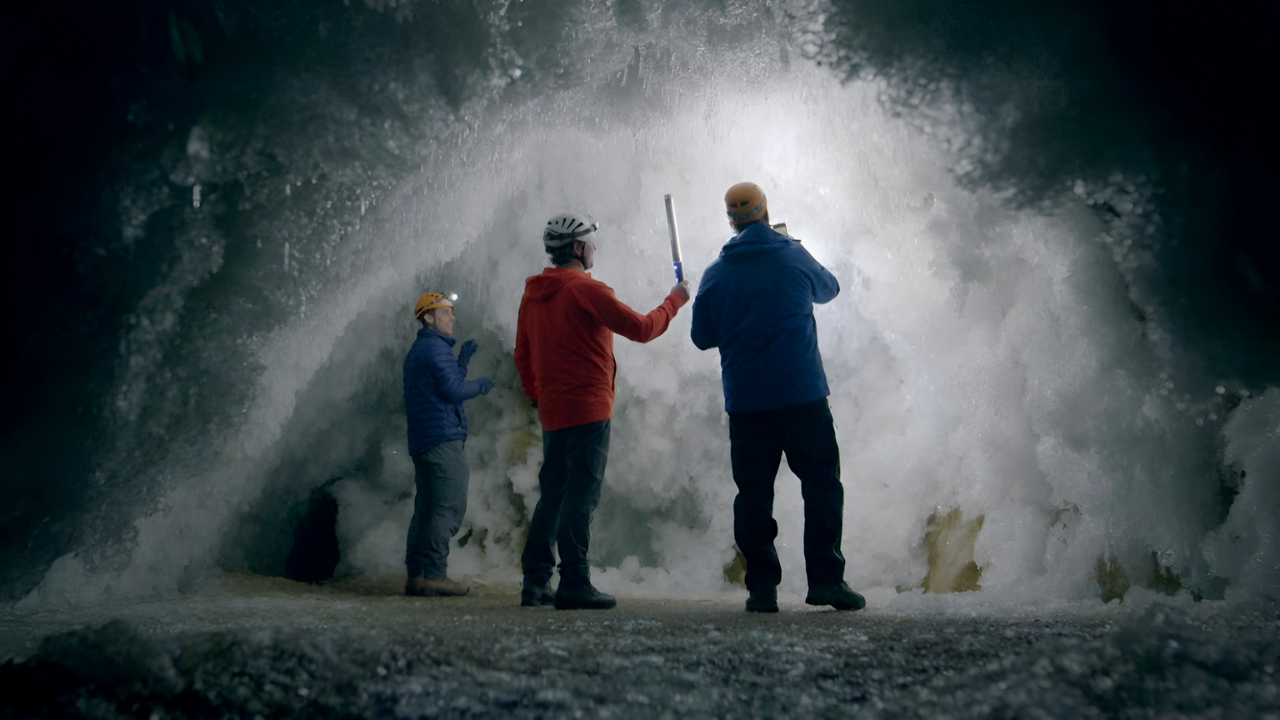
In the summer of 2009, scientists made an important discovery on Bylot Island, which is located in a very remote part of the Canadian Arctic. A landslide happened because the frozen ground, called permafrost, began to thaw due to warmer temperatures. This landslide took away layers of soil and rock, uncovering a hidden layer of glacier ice that had been buried for a very long time.
The discovery wasn’t planned as scientists just happened to be in the right place at the right time. The leader of the research, a geomorphologist named Daniel Fortier, quickly understood that this was something special. The ice was protected under the ground and had survived many freezing and thawing cycles. It offered a rare chance to study what the Earth’s climate was like hundreds of thousands of years ago, long before humans appeared.
What made this glacier ice so special was its age. Tests showed it was at least 770,000 years old, making it more than twice as old as the oldest known fossils of modern humans. The chance exposure reminded everyone how easily hidden pieces of our planet’s past can be uncovered by natural changes like warming and thawing, and also showed just how much is still lying hidden under the Arctic’s frozen ground.
Revealing the Age and History
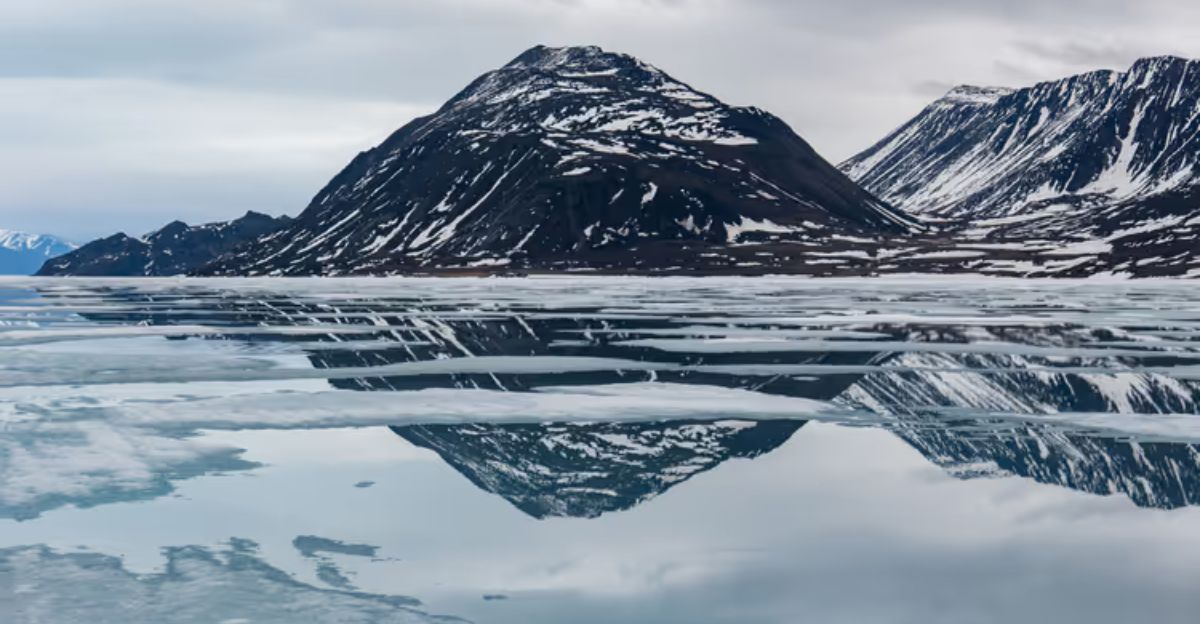
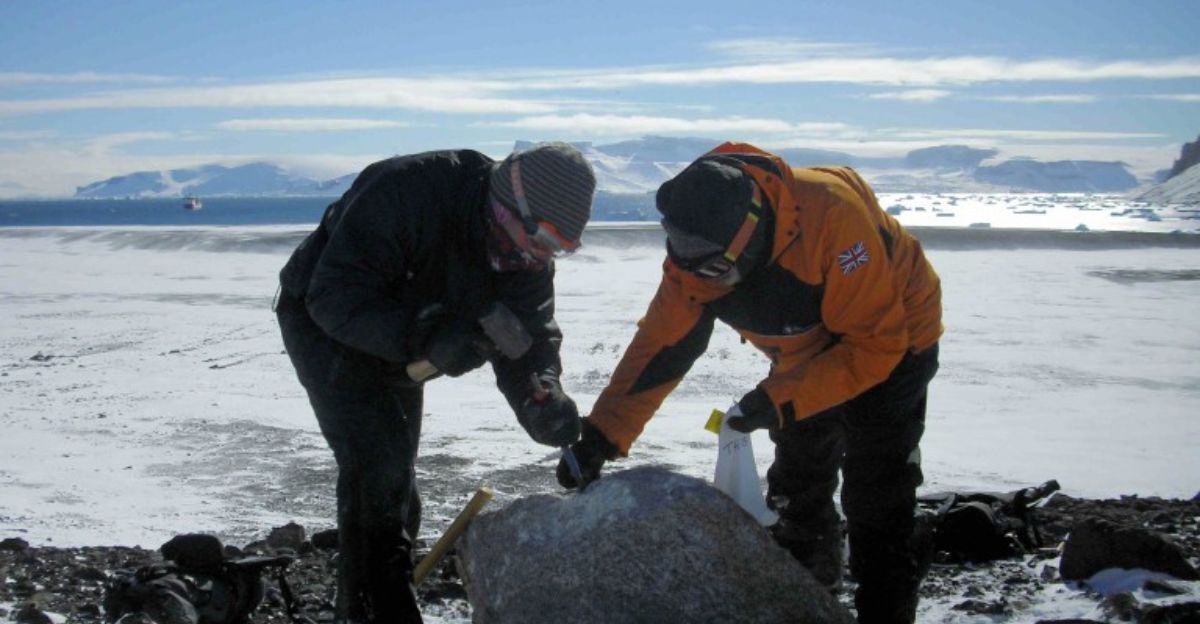
Figuring out how old the Bylot Island glacier was took careful investigation. Scientists studied the dirt and materials above the ice and found evidence for a major flip in Earth’s magnetic field, something that happened about 770,000 years ago. This told them the ice was at least that old, the oldest glacier ice ever found in Arctic permafrost.
Under this glacier ice, there was an even bigger surprise: fossilized remains of an ancient forest. Using special dating methods, researchers learned that this forest had lived between 2.8 and 2.4 million years ago, showing that the region was once much warmer and had plenty of plants. Inside the glacier, scientists also found bits of ancient organic material, which radiocarbon dating showed to be over 60,000 years old.
Most of the ice in permafrost is much younger, usually going back just to the last ice age. Each layer of the glacier works like a page in a very old book, recording evidence of ancient air, plants, and changes in climate. Bubble pockets trapped in the ice give scientists samples of what the air was like many thousands of years ago—including how much greenhouse gas was present at different times.
Surviving Extreme Changes
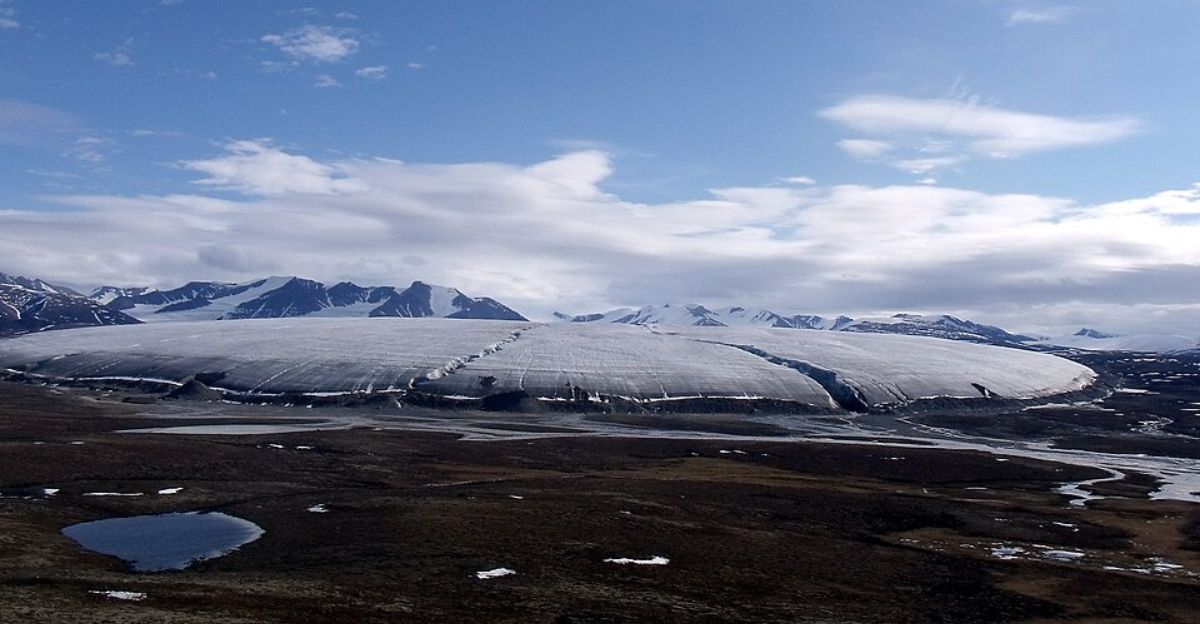
One of the most remarkable things about the Bylot Island glacier is how it managed to last so long. The glacier made it through several periods when the Arctic was much warmer than it is now. Most scientists thought that any buried ice and frozen ground would have melted away during those hot times, but this glacier’s survival suggested Arctic permafrost might be tougher than previously thought. It’s possible that, with the right conditions, large blocks of ice can stay frozen underground for hundreds of thousands of years, even when the climate outside changes a lot.
However, the glacier’s appearance above ground is also a warning. The same warming that exposed the ice now threatens to melt it away completely. Global warming caused by humans is heating the Arctic faster than ever before, and scientists know they have only a short window to collect and study samples before the glacier disappears. If these ancient ice layers are lost, so is our chance to learn from them.
Learning from the Past, Preparing for the Future
The Bylot Island glacier is much more than just a relic of the past, it’s an amazing scientific resource. Inside its layers, scientists are finding tiny fossils, ancient bacteria, and chemical markers that help them understand how plants, animals, and climates changed over millions of years. Each piece of information gives clues about how life and the environment responded to big shifts in temperature and atmosphere in the past.
By studying trapped air and other evidence from the glacier, researchers can see patterns of past climate changes and compare them to what’s happening today. This helps improve their ability to predict how the Arctic and the planet as a whole, might react to the rapid warming that is happening now. The glacier’s story holds both hope and concern.
Its survival in the past shows the impressive strength of nature, but human-driven warming could soon overwhelm even the toughest natural archives. Saving what remains, and learning as much as possible from this ancient ice, may be key to understanding, and preparing for, the environmental challenges that lie ahead.