Encased in a 99-million-year-old piece of amber, scientists have uncovered a fossil so strange, it’s being called a creature “beyond imagination.” Preserved in perfect detail, the insect, a newly identified species of wasp, boasts body parts never before seen in nature, fossilized or alive.
This stunning discovery is more than a paleontological oddity. It challenges everything we thought we knew about insect evolution and ancient ecosystems in the Cretaceous period, a reminder that some of life’s wildest innovations are still waiting to be found.
Amber: Nature’s Time-Lock on Life
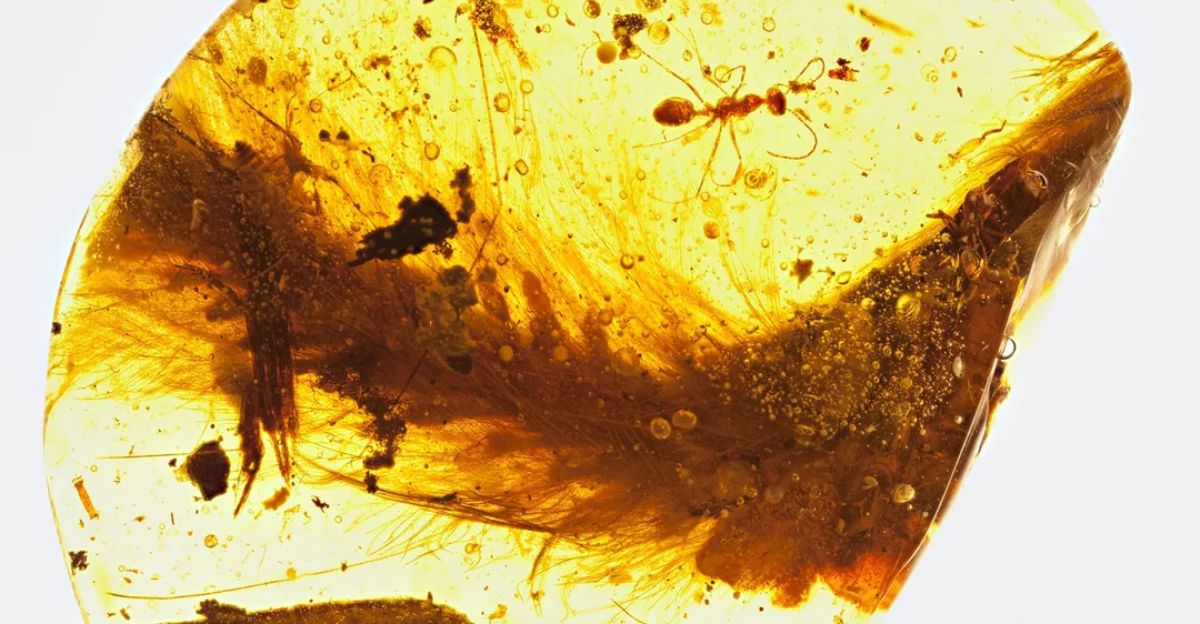
Amber, hardened tree resin from millions of years ago, serves as nature’s most reliable time capsule. It preserves delicate animal structures, like wings, hairs, and antennae, that rarely survive fossilization in rock.
These snapshots in resin allow scientists to see extinct creatures in three dimensions, down to microscopic details. The result: unparalleled insight into life as it was lived, moment by moment, in prehistoric times.
A Glimpse Into Prehistoric Ecosystems
Amber doesn’t just show individual organisms, it reveals entire worlds. Inside, researchers can trace food webs, environmental conditions, and even behavioral clues from Earth’s deep past.
The latest discovery, pulled from Myanmar amber, opens a unique window into the evolutionary experiments of the Cretaceous, one of the most dynamic periods in Earth’s biological history.
A Wasp Unlike Any Other
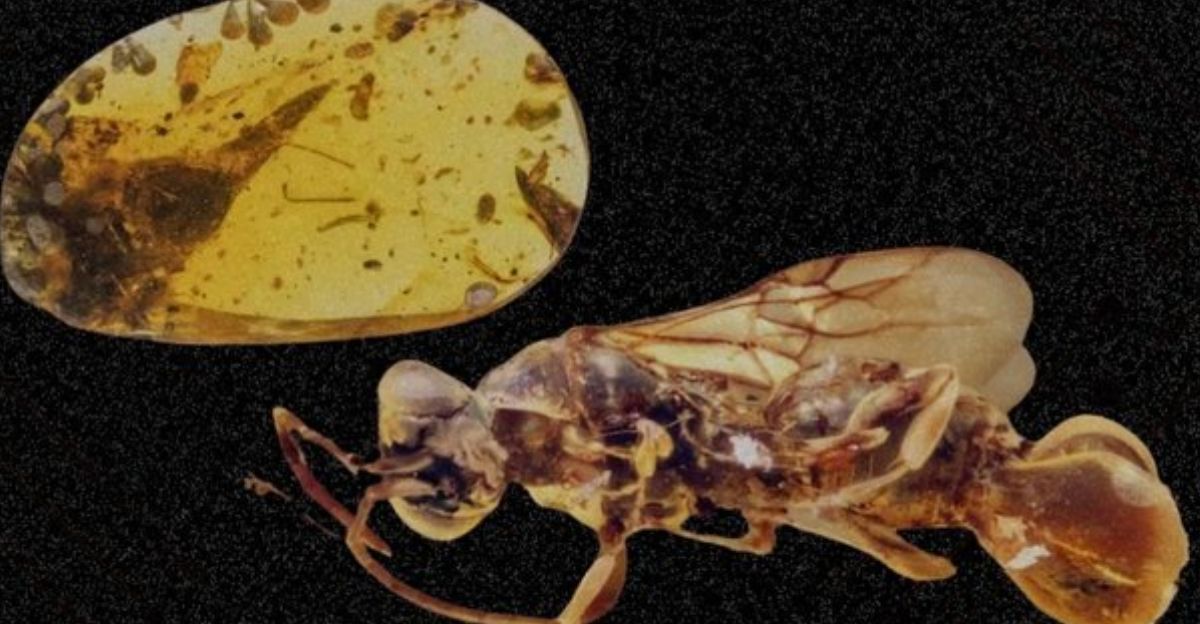
Scientists have named the new wasp species Sirenobethylus charybdis—after the monstrous whirlpool in Greek mythology. The comparison isn’t accidental.
Encased in the amber’s golden trap is a creature straight out of science fiction, with bizarre anatomy that breaks the mold of known insect design. It immediately stood apart as something entirely new to science.
The Flytrap Abdomen That Stunned Experts
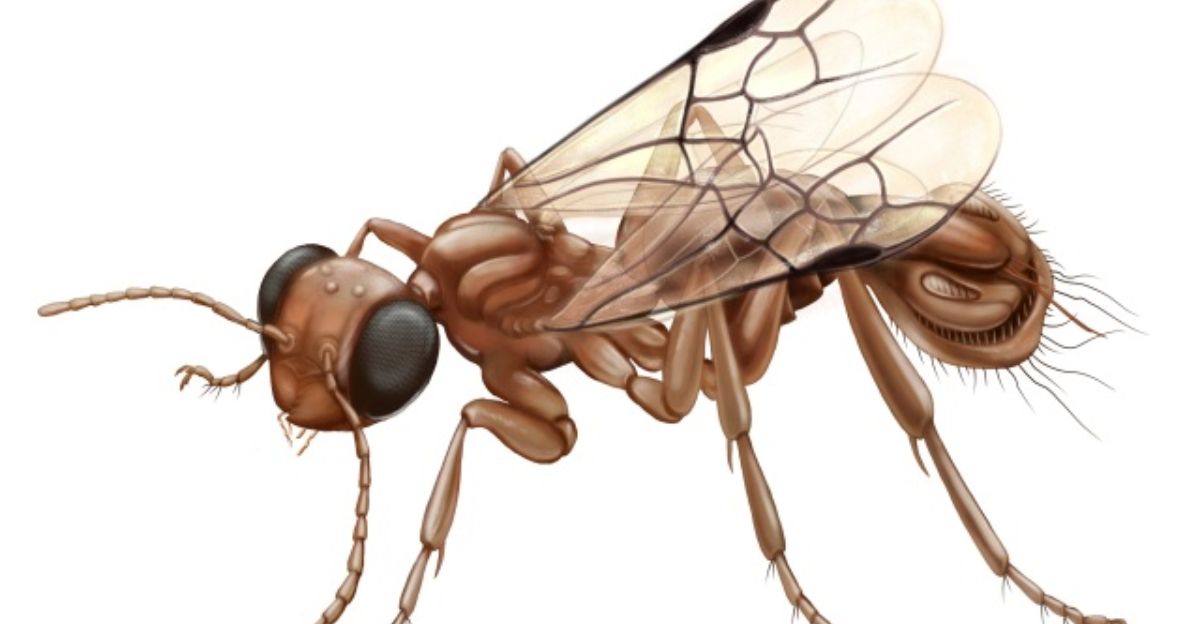
The wasp’s most extraordinary feature? Its abdomen. Shaped like paddle-like blades and lined with spines and sensors, it forms a kind of living trap—in function, almost like a Venus flytrap.
According to researchers, no other insect, extinct or living, features this kind of mechanical structure, making it not just rare, but truly without precedent.
Snaring Prey With Surgical Precision
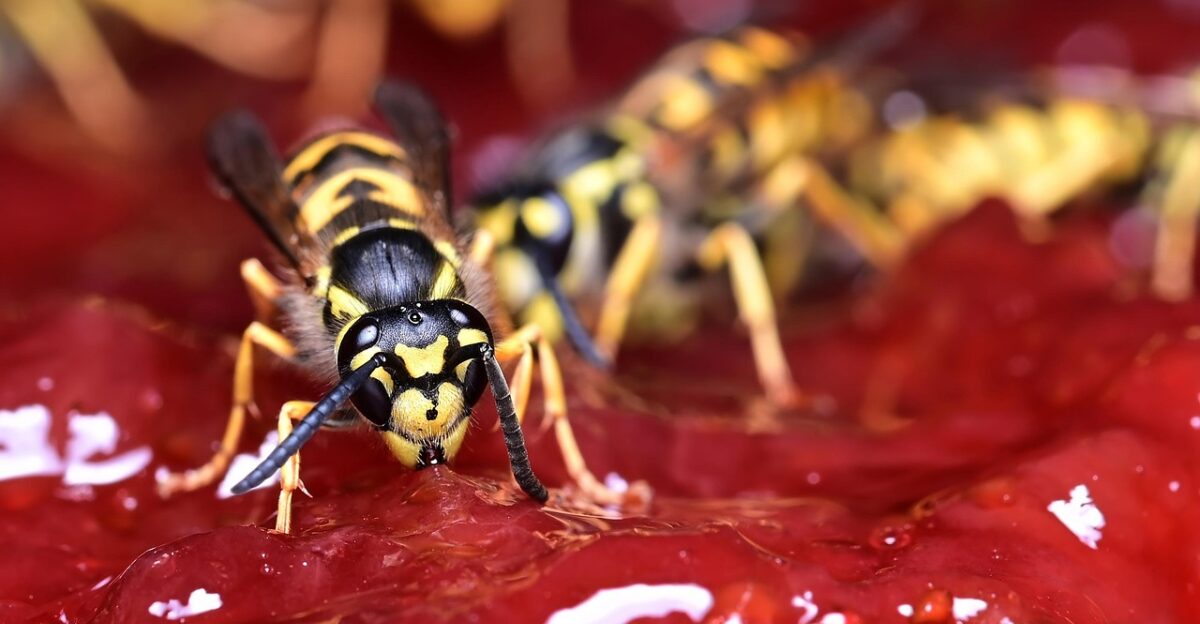
Scientists believe this flytrap-like device wasn’t ornamental—it had a deadly purpose. Evidence suggests the wasp used it to catch insect hosts, snapping shut its segmented abdomen to immobilize them.
That gave the creature just enough time to inject its eggs—a sophisticated strategy in the harsh game of survival. But its toolkit was anything but typical for its kind.
The Ruthless World of Parasitic Wasps
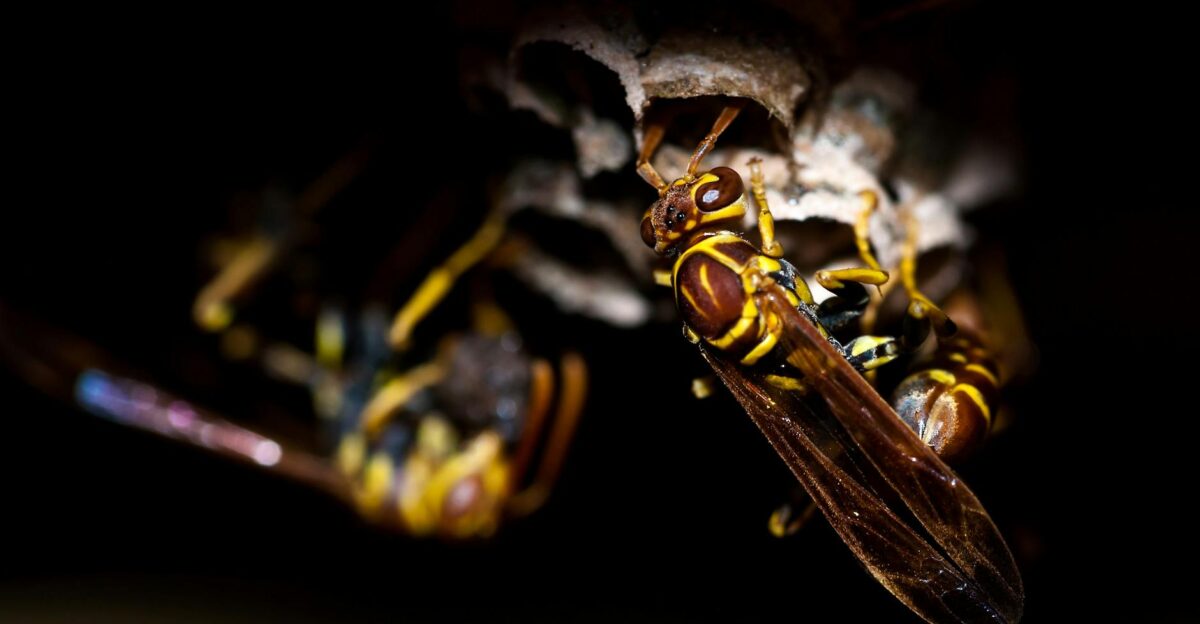
Most parasitic wasps specialize in body-snatching. They lay their eggs on or inside other bugs, letting their larvae feast from within while the unfortunate host remains alive.
S. charybdis appears to have followed this grim strategy—but with a brutally effective twist. Its abdominal trap suggests a higher level of precision and speed in catching hosts than any other known wasp.
One-of-a-Kind Evolutionary Experiment
Among thousands of known wasps, modern and ancient, none share S. charybdis’s anatomy. This fossil reveals a completely unique evolutionary trial—one that left no lineage, only a fossilized record.
Evolution isn’t always gradual. Sometimes, it throws curveballs: wild, radical designs that may work for a while, then disappear forever. This is one such case.
A “Cretaceous Weirdo” That Defies Logic
Nicknamed affectionately by experts as a “Cretaceous weirdo,” this wasp’s body pushes past the limits of what scientists thought insects could evolve into.
It’s not just a strange bug, it’s a game-changer, suggesting that ecosystems 99 million years ago housed more diversity and experimentation than we ever imagined.
Was It Doing Something Even Stranger?
Catching prey may have been only part of the story. Some believe the abdominal appendages could’ve served other roles—attracting mates, defending territory, or releasing signals.
When structure is so unfamiliar, purpose remains an open question. Even today, this one fossil continues to stir debate and speculation among scientists.
Amber Preserves the Unthinkable
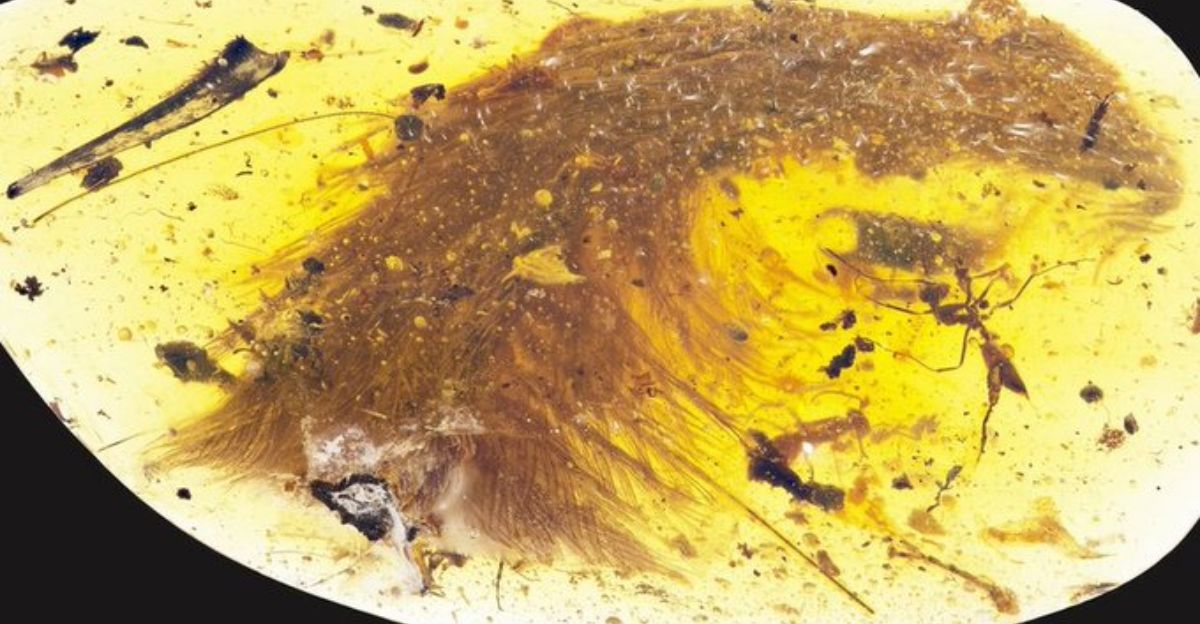
Without amber’s unique preservation, S. charybdis’s bizarre form would likely have vanished without a trace. The fossil captures something almost never fossilized: soft tissues and fine mechanisms.
In this case, it preserved an evolutionary innovation that otherwise would’ve gone extinct unnoticed. Amber didn’t just store a bug—it captured an entire chapter of evolutionary history.
Uncovering Forests Lost to Time
Fossils like this illuminate the web of life in Cretaceous forests—from insect-plant interactions to predator-prey relationships.
The wasp’s story hints at a wildly complex ecosystem. Every new discovery in amber deepens our understanding of the tropical landscapes that once teemed with now-vanished diversity.
Cracking the Code of Ancient Life
Even with high-resolution scans and modern technology, decoding anatomy from nearly 100 million years ago isn’t easy. “How do you explain how this animal worked when you have nothing like it today?” asked one researcher, articulating the ongoing challenge.
Function may be guessed, but certainty remains elusive—a humbling reality of paleoscience.
Myanmar Amber and Its Controversial Origins
Yet this story comes with a shadow. Much Myanmar amber comes from conflict-ridden regions, raising major ethical questions in the scientific community.
Scientists must wrestle with whether studying these fossils justifies the human costs—and how best to balance discovery with responsibility.
Science Needs Transparency in Its Fossils
When fossils come from undocumented sources or conflict zones, questions of authenticity and accuracy arise. Scientific results depend on knowing exactly where a specimen came from and how old it really is.
Without proper documentation, valuable data can be lost—and the entire process may risk enabling exploitation.
Striking a Balance Between Ethics and Urgency
Time is often short. Fossils disappear into private hands daily, making it tempting for researchers to act fast. But doing so responsibly—honoring human rights and local cultures—is a rising priority.
The paleontology field is now working to create better ethical frameworks for fossil collection around the globe.
Evolution’s Wild Side on Full Display
Sirenobethylus charybdis proves that evolution doesn’t always stick to the rules. It throws out boundary-pushing designs, and sometimes those designs work… briefly.
This fossil captures that moment in time when nature took a gamble. Whether evolutionary success or failure, its trace now reshapes modern understanding.
Experts Say It Rewrites the Rulebook

The discovery is already changing insect taxonomy. Some researchers argue it warrants an entirely new wasp family: Sirenobethylidae.
More than just a fascinating bug, it’s a shift in scientific thinking about how parasitic wasps evolved—and just how weird those paths can get.
A Fossil That Shakes Up Prehistory
Singular specimens like this aren’t just cool—they challenge the very frameworks of evolutionary science. They plug gaps, overturn assumptions, and spotlight parts of the tree of life we didn’t even know were missing.
Every amber insect has the potential to unravel an entire branch of prehistory—and this one certainly has.
Evolution’s Best-Kept Secrets Still Emerge
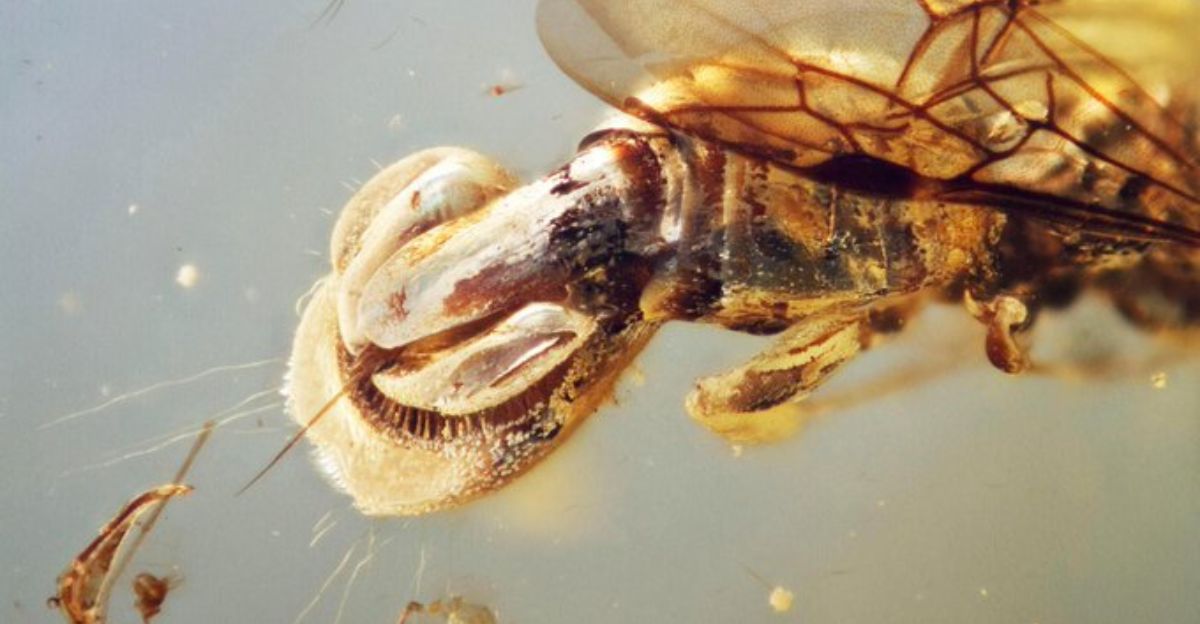
A wasp with a Venus flytrap abdomen reminds us that the natural world still holds unfathomable secrets. Encased in gold for 99 million years, S. charybdis breaks open the familiar story of insect evolution and shows that nature’s imagination is far from exhausted.
As more fossils surface and more questions arise, this ancient predator offers a clear truth: in evolution’s laboratory, nothing is off-limits—and we’ve only just begun to understand what life was capable of becoming.