America’s chip makers are racing against time. China now makes 16% of the world’s chips, up from 8% ten years ago. U.S. makers dropped to just 12%.
During the pandemic, chip shortages cost car makers $210 billion. Now, New York is building a $100 billion chip factory. The problem? It won’t make chips for years.
The Stakes Amplify

Government leaders call this a turning point. Commerce Secretary Howard Lutnick said the Micron project proves “American greatness is back.” The company got $6.165 billion in federal money on December 10, 2024.
States and local areas added an additional $25 billion. But doubters ask: Can one factory fix decades of lost chip-making power? TSMC and Intel are spending $165 billion and $100 billion in America, too.
The Industry Reckoning

The U.S. led chip manufacturing in 1990, accounting for 37% of global output. Today it’s just 12%. Taiwan makes 12%, South Korea makes 19%, and China makes 16%.
Companies moved factories overseas to cut costs. America now relies on foreign chips for phones and weapons. In 2022, President Biden’s CHIPS Act gave $280 billion to bring manufacturing back home.
When Supply Chains Break

A single fire at a Japanese chip plant hurt car makers worldwide during the pandemic. China’s military exercises around Taiwan show how risky foreign supply can be. Leaders now see chip-making as a national security need.
But making chips in America costs far more than buying them overseas. Without the government paying about 50% of building costs, these factories don’t make money.
The Gamble Breaks Ground
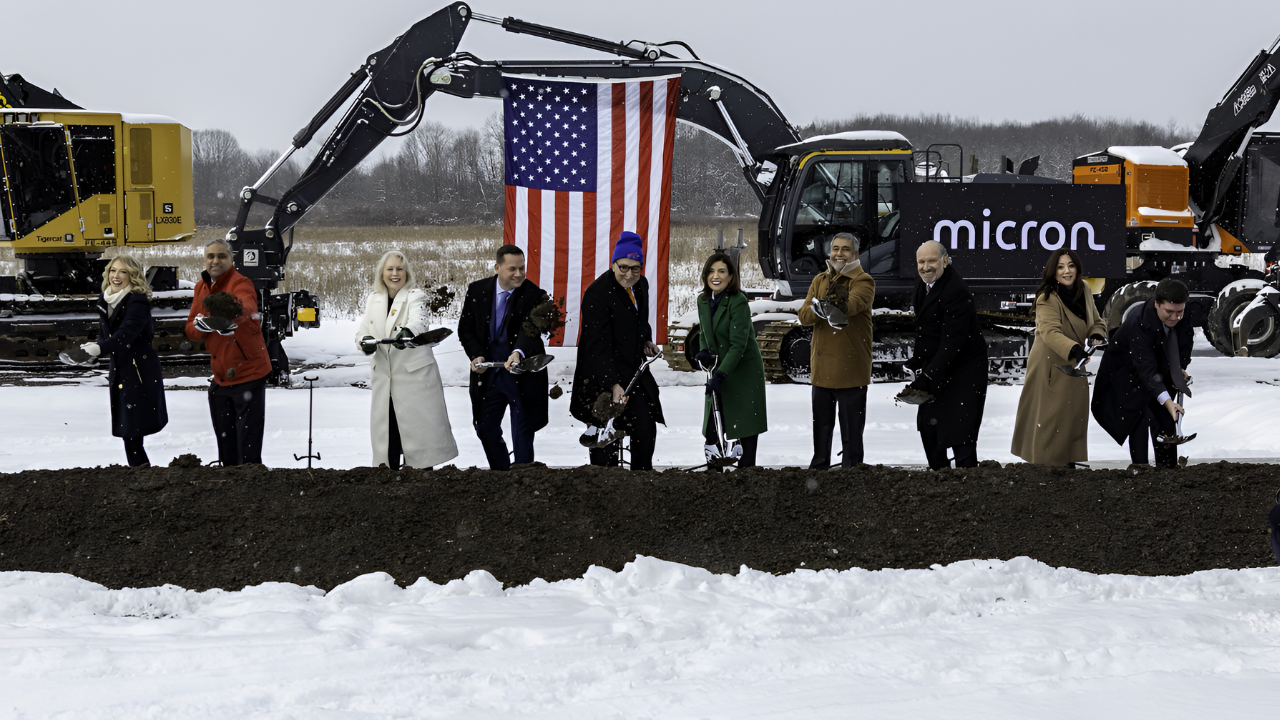
Micron broke ground on January 16, 2026, in Clay, New York. The site covers 1,400 acres and will be America’s biggest chip factory ever built. The $100 billion project will eventually hold four separate plants.
The first will make chips in 2030. This bet assumes America can rebuild its chip-making power at a scale not tried in 20 years.
Central New York’s Waiting Game

For Onondaga County residents, this project is personal. Micron promises 9,000 direct jobs paying $100,000 yearly—twice the local average. Another 40,000 jobs will come from construction and supply chains over 15 years.
Syracuse has lost factories for decades. But workers must wait until 2030 for jobs to start. That’s four more years of waiting before hiring picks up speed.
The Local Voices

County Executive Ryan McMahon called the project “life-changing.” But local green groups worry about cutting 445 acres of forest. One builder said, “We’ve heard promises before. I’ll believe in jobs when I see them.”
The Syracuse Chamber of Commerce is now training workers, betting that Micron will keep its word. Hope and doubt battle here, where past factory promises fell short.
The Competitor Response

Taiwan’s TSMC is building a $165 billion plant in Arizona, the biggest foreign investment in U.S. history. Intel is spending $100+ billion across four states. Samsung wants to expand here, too.
The CHIPS Act started a chip factory race in America. But it’s zero-sum: if Micron misses deadlines or spends too much, government money might flow to faster rivals instead.
The Market Pressure

Memory chip prices jump up and down fast. In 2022, when Micron announced this project, prices were high. Now AI is driving demand up again, which supports the big spending. But chips won’t ship until 2030—four years away.
If prices crash or AI demand dies, Micron will add supply to a flooded market. This bet depends on AI staying hungry for chips for years.
The Environmental Reckoning

Here’s what complicates things: The factory needs to clear 445 acres of trees. The land is home to two endangered bat species. New York law stops tree cutting from March 31 to November 1 to protect bats.
Environmental reviews have already delayed the groundbreaking by two years, from 2024 to 2026. More delays could push the 2030 target back, threatening jobs and returns on federal money.
The Trust Deficit

Micron promised a $15 billion plant in Idaho in 2022, with production by 2027. That project faced delays and cost overruns. Some worry the New York 2030 date is too fast. An industry expert told Reuters: “Chip makers often miss targets by 18 to 24 months.
Micron will likely be no different.” If 2030 slips to 2032 or 2033, frustration will grow, and money might shift to faster builders.
The Leadership Bet

CEO Sanjay Mehrotra built his career on this project. He shifted Micron from just memory chips to serving AI and cloud markets. The New York plant aims to lock in deals with Microsoft, Amazon, and Google.
But new leaders at Micron or these companies could change strategy. A new CEO might cut costs instead. Rivals could get supplies elsewhere. Then Micron’s $100 billion bet becomes a waste.
The Pivot Possibility

Micron might speed up its Idaho factory or make smaller, specialty chips if New York delays. The company says the plant is “scalable” and can shift production based on demand. But a smaller output means less profit and fewer jobs.
If Micron scales back in New York, the promised 9,000 jobs could vanish. New York officials know this and tied Micron to job targets through state contracts.
The Skeptic’s Question

Wall Street splits on this bet. Some say CHIPS Act money will pay off for decades. Others say it props up factories that can’t compete. The Brookings Institution warns that without a real tech edge, U.S. chip plants lose to leaner Asian rivals.
The real question stays open: Can America make memory chips at a profit, or only with endless government cash? If it’s the latter, this looks like welfare, not revival.
The Bigger Gamble

As Micron digs into New York soil in January 2026, a bigger question emerges: Is the CHIPS Act fixing a real problem or just slowing decline? The chip world picks winners based on tech smarts, not location.
Taiwan and South Korea lead because they invested in talent and supply chains for decades, not just buildings. America is playing catch-up, spending hundreds of billions to beat entrenched rivals. Success is a symbol of American return. Failure means a lesson in when the government bets wrong.
Sources:
- Council on Foreign Relations, semiconductor industry analysis, February 2024
- Reuters, Micron coverage and CHIPS Act reporting, January 2026
- Syracuse.com, Micron groundbreaking coverage, January 16, 2026
- Micron investor relations, official company announcements, January 16, 2026
- Bloomberg, “Micron Has to Resolve a Bat Problem,” June 20, 2024
- Yahoo Finance, Micron jobs and investment reporting, January 15-18, 2026