
Rows of secured servers hum inside classified facilities, processing streams of satellite feeds, intercepted communications, and decades of archived intelligence. Every second, more data arrives than analysts can realistically absorb. Processing classified datasets at scale remains a significant operational challenge.
Then, on November 24, 2025, Amazon disclosed a move that could change this balance overnight: a $50 billion commitment to classified AI supercomputing. The implications extend far beyond cloud infrastructure.
The Arms Race Nobody’s Talking About

While public attention fixated on consumer chatbots, China accelerated military AI development. Procurement records and defense assessments show Beijing integrating large language models into cyber operations, command support, and influence campaigns.
Pentagon analysts warn these systems could compress decision timelines and reshape future conflicts. AI-driven simulations and intelligence fusion are becoming strategic assets. The concern inside Washington is blunt: this race is happening now, and the margin for delay is shrinking fast.
A Decade of Precedent
Amazon’s role in U.S. classified computing is not new. In 2014, AWS launched its first air-gapped Top Secret cloud region for intelligence agencies. A Secret Region followed in 2017.
A second Top Secret Region came online in 2021. Together, these environments form the backbone of classified U.S. cloud operations, handling data that can never touch the public internet—and setting the stage for today’s expansion.
Infrastructure Pressure Mounts Across Government

By 2025, modernization pressure reached a breaking point. The Office of Management and Budget required all federal agencies to publish AI strategies, yet federal surveys identified security concerns and workforce challenges as the primary obstacles to AI adoption.
Government data systems remain fragmented across incompatible databases and disconnected platforms, slowing cross-agency analysis. Intelligence data processing timelines frequently extend from weeks to months for complex datasets. The federal stack simply was not designed for AI-era speed.
Amazon’s $50 Billion Government AI Gamble

On November 23–24, 2025, Amazon announced plans to invest up to $50 billion building AI and supercomputing infrastructure exclusively for U.S. government use. Construction is set to begin in 2026.
The expansion will add nearly 1.3 gigawatts of capacity across AWS Top Secret, Secret, and GovCloud regions. It is the largest single infrastructure commitment ever made by a cloud provider to the U.S. government.
What $50 Billion Buys: Real-Time Intelligence at Scale

This infrastructure changes what’s possible. Agencies will be able to analyze decades of classified data in hours instead of months. Machine-learning models trained on sensitive datasets can flag emerging threats in real time.
Defense planners gain faster battlefield simulations, and researchers accelerate drug discovery by analyzing massive pharmacological datasets securely. According to AWS leadership, the goal is simple: remove the compute bottleneck that has slowed government decision-making for years.
The Analyst Who Gets Answers Today

For years, analysts investigating terrorist financing relied on emails, spreadsheets, and manual data reconciliation across agencies. Correlating patterns could take months.
With AI-enabled classified cloud infrastructure, those same analysts can query unified datasets instantly, detect suspicious financial flows in minutes, and deliver actionable intelligence within hours. Federal analytics reports consistently identify this use case—breaking data silos—as the highest-impact opportunity for AI in government.
Microsoft, Google, and Oracle Scramble to Compete
Amazon’s move intensifies competition under the Pentagon’s Joint Warfighting Cloud Capability contract, awarded in 2022 to AWS, Microsoft, Google, and Oracle. Worth up to $9 billion, JWCC allows agencies to choose providers per task.
But Amazon’s $50 billion expansion raises the bar. Rivals may match software features, yet few can replicate this scale of classified, purpose-built infrastructure.
America’s AI Action Plan
The White House’s July 2025 AI Action Plan emphasized three priorities: accelerating innovation, building AI infrastructure, and leading globally on security. Amazon’s investment aligns directly with the second pillar.
Agencies are now expected to deploy AI, but adoption stalls without secure, scalable computing. The new capacity fills a critical supply-side gap precisely as federal demand for AI accelerates across defense, intelligence, and civilian agencies.
Trainium Chips and Cost at Scale
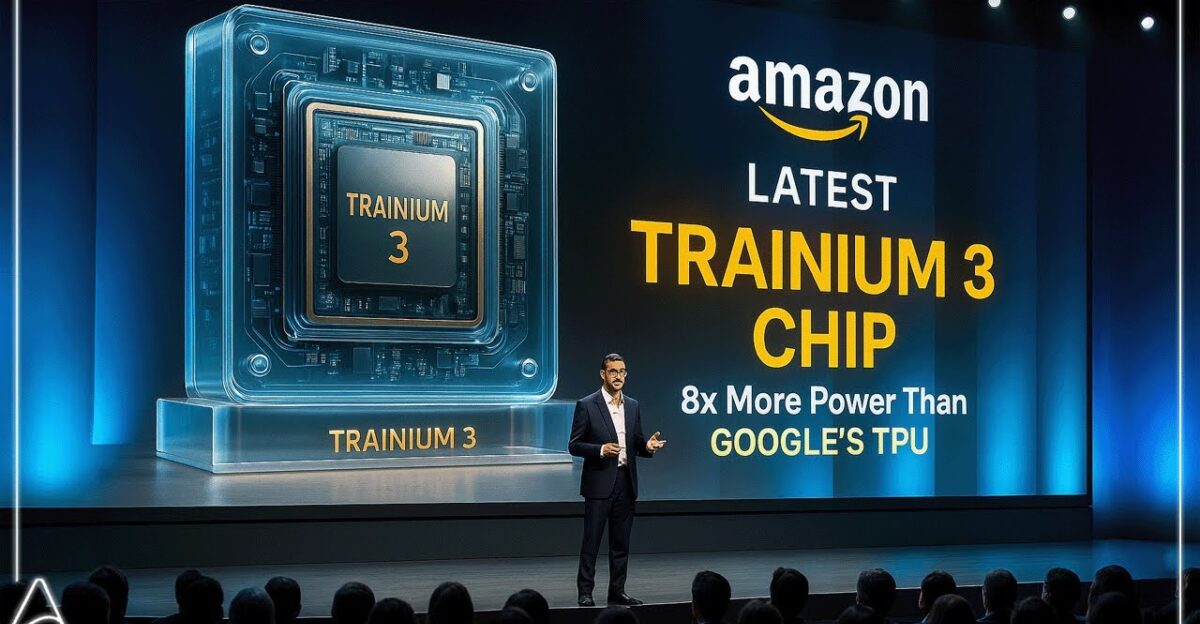
A quieter detail in AWS’s announcement matters: Trainium. Amazon’s custom AI chip now powers major inference workloads including Anthropic’s Claude models, reducing costs and improving efficiency for customers.
The new government infrastructure will combine Trainium with NVIDIA accelerators, giving agencies flexibility. This is a strategic bet that performance and economics—not just compliance—will determine long-term dominance. Unlike competitors, Amazon controls both the cloud and the silicon.
AWS’s Own Capacity Crunch
Behind the announcement lies real strain. AWS added roughly 3.8 gigawatts of compute capacity in the past year, yet demand continues to surge. Utilities report increasing grid constraints, and cooling interconnection requests are slowing new projects industry-wide.
AWS leadership acknowledges demand “across the stack.” Amazon is betting it can build faster than power-constrained rivals—a race where infrastructure speed determines market leadership.
Matt Garman’s Vision

AWS CEO Matt Garman, appointed in mid-2024, has made government AI a centerpiece of his strategy. He described the $50 billion investment as eliminating “technology barriers that have held government back.”
Under Garman, AWS shifted from responding to agency demand to proactively building sovereign AI infrastructure—what he calls AI factories. The bet is that scale, not incremental features, defines the next era of government computing.
Can Construction Keep Pace?
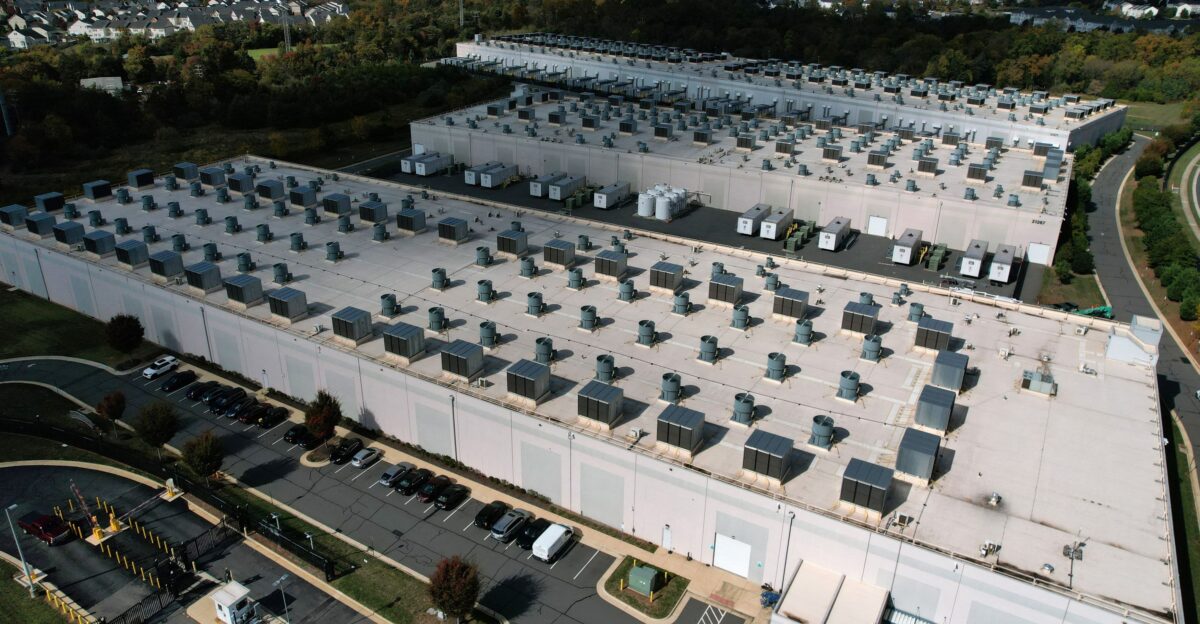
Amazon plans to break ground in 2026, but federal data center projects face permitting delays, environmental reviews, and grid connection waits that can stretch five years. A July 2025 executive order aims to accelerate approvals.
Execution risk remains. The timeline assumes streamlined permitting and reliable power access. Any delay pushes capacity into 2027, narrowing the strategic window as agency demand continues to rise.
Execution Risk Remains

Industry analysts note that AI mega-data centers often require 0.2 to 2 gigawatts each. Amazon’s 1.3-gigawatt plan likely implies one massive facility per region.
Delivering that scale—securely, on time, and fully accredited—is ambitious. Power sourcing, cooling, and classified networking all add complexity. Even a single delay could cascade into a year-long slip, testing Amazon’s aggressive timeline.
Will It Change How America Wages War?

The real test arrives in 2027 and 2028, when capacity comes online. Can intelligence agencies compress decision cycles using AI-driven classified workloads?
Can the Pentagon integrate these tools faster than adversaries adapt? Technology alone does not change doctrine. Organizational culture, training, and trust matter. The infrastructure enables speed—but whether institutions use it effectively remains an open question.
Trump Administration Priorities

The Trump administration’s AI agenda emphasizes American leadership and infrastructure investment. Amazon’s commitment fits neatly within that framework and currently enjoys political tailwinds.
Yet future administrations could reassess the scale of private involvement in classified systems. For now, alignment is strong. Long-term success depends on sustained bipartisan support for public-private partnerships in national security technology.
Allies Take Notice

U.S. allies are watching closely. Australia already committed AU$2 billion over ten years for an AWS top-secret cloud. The U.K. and Canada are exploring similar models.
Amazon’s U.S. investment signals that sovereign AI infrastructure is becoming standard for modern defense. This could trigger a second wave of allied deals, potentially creating a global market worth tens of billions in government-exclusive AI infrastructure.
The Legal and Compliance Challenge
Scaling classified infrastructure requires maintaining strict compliance with ICD 503 and NIST SP 800-53. Every new region demands separate accreditation, cleared staff, and continuous audits.
Expanding to 1.3 gigawatts multiplies that complexity. A single compliance failure—whether insider risk or supply-chain compromise—could force capacity offline. AWS’s strong track record helps, but the stakes rise with scale.
A Generational Shift in Government Technology

This investment resets expectations. Federal IT once evolved slowly, with systems lasting decades. AI has changed that rhythm.
Agencies now expect vendors to deliver sovereign-scale, mission-specific infrastructure at speed. The relationship shifts from contract fulfillment to outcome velocity. Amazon’s move sets a new benchmark—one that other agencies and providers will soon demand across the federal ecosystem.
What This Really Signals

Amazon’s $50 billion bet reveals a hard truth: future national advantage depends on intelligence speed, not just weapons. Processing power, data fusion, and AI-driven insight now shape security outcomes.
By building the infrastructure that enables that speed, Amazon is wagering that the U.S. government will act faster once the barriers fall. That assumption—not the hardware—is the real gamble.
Sources:
AWS Official Announcement, “Amazon to invest up to $50 billion to expand AI and supercomputing infrastructure for U.S. government agencies,” November 23, 2025
U.S. Department of Defense, “Military and Security Developments Involving the People’s Republic of China 2025 – Annual Report to Congress,” December 25, 2025
The White House, “Winning the AI Race: America’s AI Action Plan,” July 22, 2025
AWS Public Sector Blog, “Announcing the New AWS Secret Region,” November 19, 2017
AWS Public Sector Blog, “Announcing second AWS Top Secret Region, extending support for U.S. government classified mission workloads,” December 5, 2021
U.S. Department of Defense, “Pentagon Awards JWCC Cloud Computing Contracts to Amazon, Google, Microsoft, and Oracle,” December 7, 2022