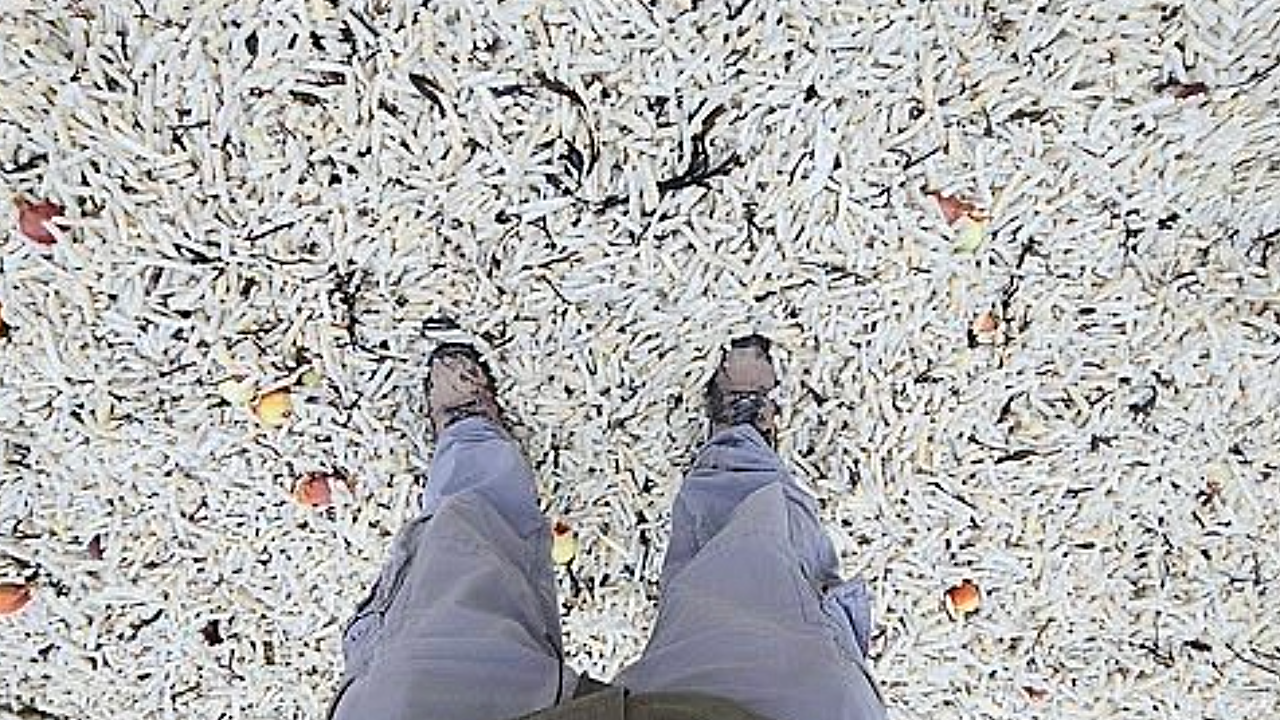
Thousands of bags of frozen French fries and onions have blanketed beaches in East Sussex, England, after a cargo ship lost refrigerated containers in rough English Channel seas during early January 2026 storms. The unusual debris has drawn crowds, sparked viral images, and prompted a large-scale cleanup amid questions about shipping safety in worsening weather.
The Spill Unfolds
The incident began when a container vessel encountered high winds and waves exceeding 3-4 meters in the Channel, one of Europe’s busiest and most hazardous shipping routes. Several containers broke free, carrying frozen foods bound for UK distribution centers. Currents carried the bags to shores near Eastbourne, where they mixed with sand, ice, and plastic packaging. Initial recovery efforts from one beach section alone yielded about 1.9 tons of fries and onions, with debris spreading across kilometers of coastline. Offshore, satellite images revealed floating patches still posing risks.
Cleanup Challenges
East Sussex councils mobilized excavators, loaders, and contractors to tackle the mess, working around tides to remove contaminated sand and segregate waste. Organic matter risked decay, while plastics threatened marine life through entanglement or ingestion. Operations followed a phased approach: scooping debris, sorting for disposal or recycling, and monitoring until beaches met safety standards for recreation and wildlife. Local teams coordinated with tidal cycles, prioritizing high-impact areas to prevent further spread.
Public Response and Warnings
Word spread rapidly online, attracting curious visitors to the beaches. Officials issued urgent advisories against touching or eating the cargo due to contamination and health risks from heavy machinery. Social media buzzed with lighthearted posts about a “free chip buffet,” but authorities emphasized the hazards. Residents mixed humor with concern, viewing the event as a stark reminder of coastal fragility amid global trade flows.
Broader Disruptions
The spill rippled through UK food supply chains, forcing distributors to source alternatives and reroute imports. Billions of pounds in perishables cross the Channel yearly for supermarkets and eateries, making such losses costly. Economists highlighted potential price hikes and strained logistics. The shipping operator launched an investigation into loading, securing, and forecasting, pledging cooperation with authorities. Insurers began reviewing data on vessel movements and weather, with liability disputes likely to drag on.
Future Implications
This event echoes past Channel losses—from toys to footwear—and amplifies calls for reform amid fiercer winter storms linked to shifting climate patterns. Experts question if container-securing standards match larger vessels and extreme conditions, advocating real-time monitoring, stronger lashings, and storm-aware routing. UK ministers are scrutinizing pollution laws for better operator accountability, while French and EU bodies push cross-border drills and inspections. For East Sussex, the stakes involve restored beaches and funding relief; for shipping, it’s adapting to volatile seas to safeguard trade and environments.
Sources:
CNN, English beach covered in French fries and onions after cargo ship spill, 2026-01-19
Cornwall Council, Coastal Pollution Incidents, 2024-05-01 (plan updated, accessed 2026)
Cornwall Council, Cornwall Council Coastal Counter Pollution Plan, 2018-01-31 (guidance document, accessed 2026)
Containerlift, Containers Lost at Sea? Causes & Impact, 2025-02-11
World Shipping Council / TT Club, TT Talk: Industry reports shed new light on container losses at sea, 2025-10-07