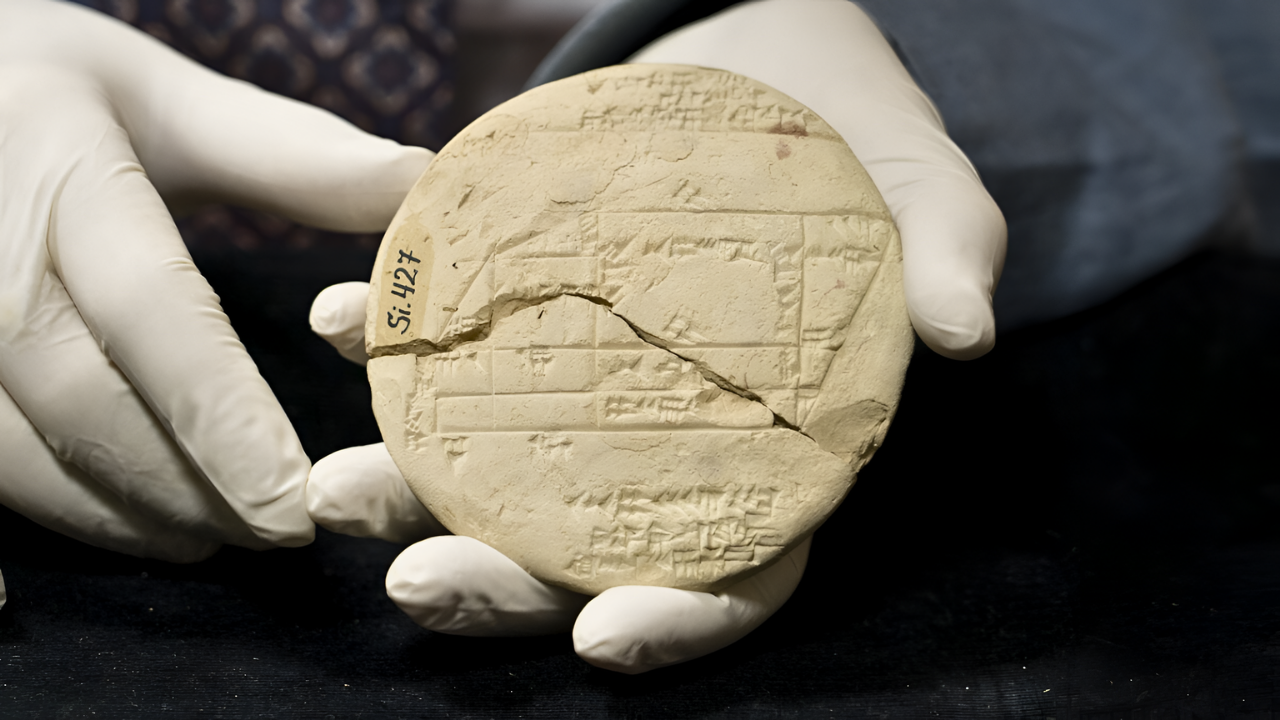
In late autumn 2021, receding waters of Georgia’s Bashplemi Lake exposed a small stone slab etched with unfamiliar symbols, transforming a fishermen’s routine outing into a pivotal archaeological find. The 24-by-20-centimeter basalt tablet, carved with 60 signs in seven registers, has sparked global debate over an unknown ancient script from the Caucasus region.
A Compact Artifact’s Profound Puzzle
Crafted from hard vesicular basalt, the tablet demanded skilled labor, with microscopic analysis revealing a two-step carving process: conical drills outlined characters in pits, followed by round-headed tools to form smooth, even lines. Transferred to Tbilisi State Medical University, Professor Ramaz Shengelia’s team— including Levan Gordeziani, Nikoloz Tushabramishvili, Nodar Poporadze, and Othar Zourabichvili—photographed, measured, and scanned it meticulously. Of the 60 signs, 39 are unique, arranged deliberately rather than randomly, pointing to a structured writing system.
The team published findings in the Journal of Ancient History and Archaeology in 2024, noting the inscription “does not repeat any script known to us” after comparing it to over 20 systems from the Near East, Mediterranean, India, Egypt, and Iberia. Visual parallels exist with Caucasian scripts like Georgian Mrgvlovani and Albanian-related forms, plus Proto-Kartvelian traditions, but no direct match emerges.
Echoes of a Literate Bronze Age
Around 1200–800 BCE, during the Late Bronze to early Iron Age, Mediterranean powers like Egypt and Mesopotamia documented taxes, armies, and rituals on durable surfaces. The Caucasus, between Europe and Asia, left scant direct evidence, relying on Greek accounts of literate Colchis and Iberia societies without preserved texts. The Bashplemi tablet fills this void, suggesting a local literate culture thrived near the lake, challenging views of the region as a peripheral zone.
Contextual clues date it to the first millennium BCE: nearby pottery and a stone mortar align with sites like Didnauri settlement (14th–12th centuries BCE). Local basalt composition ties it to the lakeshore. Repeated signs hint at numerals, common words, or formulas, leading to proposals of content like war booty lists, construction records, or deity dedications.
Ongoing Lakebed Investigations
Uncertain dating frustrates precise links to cultures or events, as the exposed find lacks sealed stratigraphic context. Shengelia’s group has expanded efforts, surveying Bashplemi’s shores with drones, ground teams, and mapping for settlements, workshops, or ritual sites. Vegetation patterns and stone alignments guide targeted digs, aiming to uncover related artifacts.
In May 2025, Shengelia presented at the University of Helsinki’s “Deciphering Lost Languages” seminar, framing the tablet among undeciphered scripts like the Phaistos Disk or Indus Valley signs. Without bilingual texts—a “Rosetta Stone”—decoding stalls, and skeptics warn a single artifact may represent an isolated experiment.
Shifting Narratives on Ancient Literacy
The discovery undermines Eurocentric histories centering writing in Mesopotamia, the Nile, and Mediterranean hubs, elevating the Caucasus. It implies lost scripts decayed or await discovery, urging inclusive frameworks. International conferences now feature it in Bronze Age literacy panels, drawing linguists and archaeologists.
Ethical questions arise from its chance discovery by non-experts, losing initial context like depth or micro-artifacts. Retroactive surveys via aerial imagery and fieldwork mitigate gaps, but underscore proactive excavation needs.
The Bashplemi tablet stands as evidence of overlooked voices, its undeciphered message a call for sustained exploration amid incomplete records. Future finds could unlock its secrets, reshaping understandings of early Caucasian societies and their place in global history.
Sources
Earth com, 60 carved signs on stone slab defy every known script, 2026-01-20
Indian Defence Review, Is This a Lost Language? Ancient Stone Tablet Pulled from Lake with Mysterious Symbols, 2026-01-20
The Travel, Experts Are Still Uncertain Over Language In Rare Stone Tablet at Lake Bashplemi, 2025-05-18
Helsinki University, AMME Seminar 6.5.2025 “Deciphering Lost Languages”, 2025-04-25