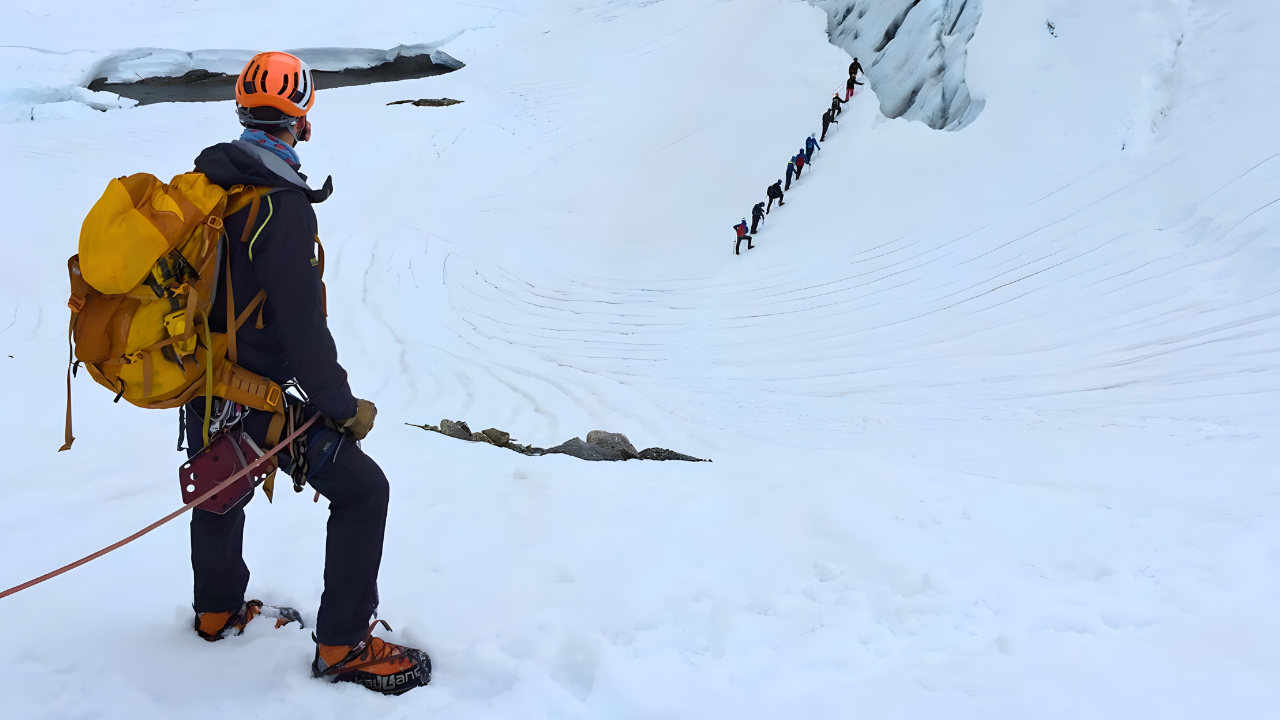
In autumn 2024, Helge Titland, a 76-year-old mountaineer, spotted wooden stakes poking through melting snow at 4,600 feet on Norway’s Aurlandsfjellet plateau. What seemed ordinary sparked an extraordinary discovery: an Iron Age wooden trap system preserved nearly intact for 1,500 years. Europe’s only known wooden mass-capture structure offered unprecedented insight into ancient Scandinavian hunting.
Yet the same climate forces that revealed it now threaten its survival, creating urgency for archaeologists. As Titland reported the find to the University Museum of Bergen, excavation delays caused by snow left the trap exposed for over a year. Here’s what’s happening as researchers race to document a prehistoric feat before it disappears.
Massive Funnel Traps Reveal Hunting Scale

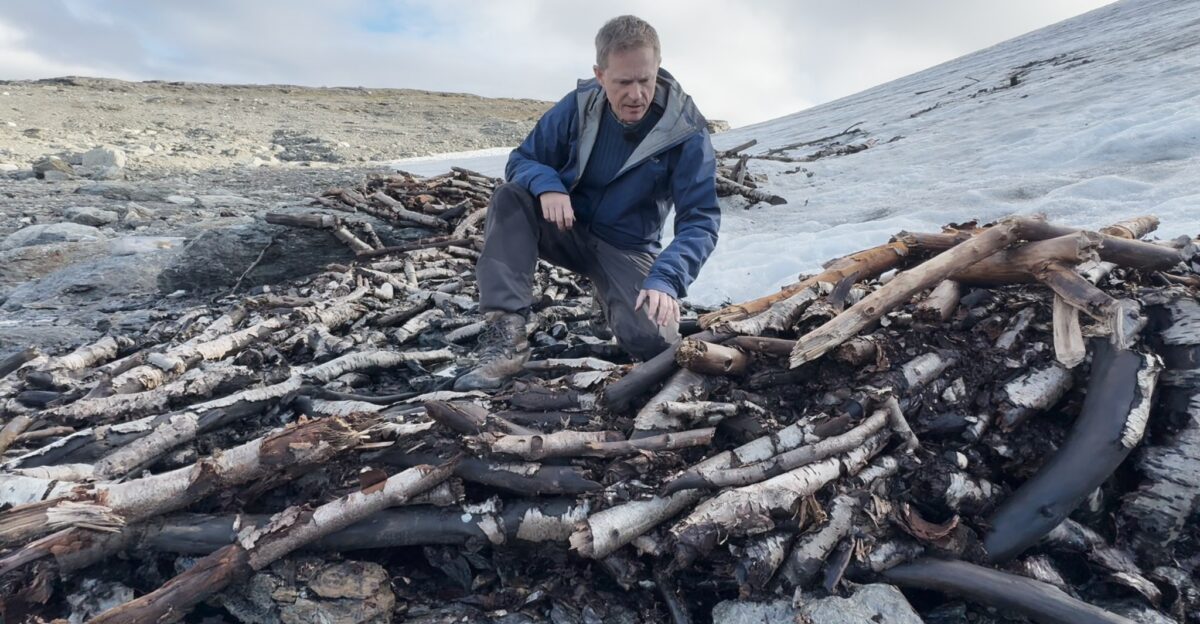
When teams returned in summer 2025, they uncovered far more than a few stakes. Two parallel wooden fences stretched in a wide funnel formation designed to drive reindeer into a narrow pen. Hundreds of logs and branches, weighing several tons in total, had been carried uphill by hand. Archaeologists described it as “industrial-scale harvesting infrastructure,” reflecting the organizational skill of Early Iron Age hunters.
Evidence of human planning was everywhere. Debris fields and hundreds of antlers bore cut marks consistent with axes. Hunters likely positioned themselves at chokepoints to complete the kill, selectively targeting young reindeer and females. Larger buck antlers may have been preserved for tools and trade, suggesting broader economic networks connected to this mountaintop enterprise.
Tools and Craft Point to Coordination
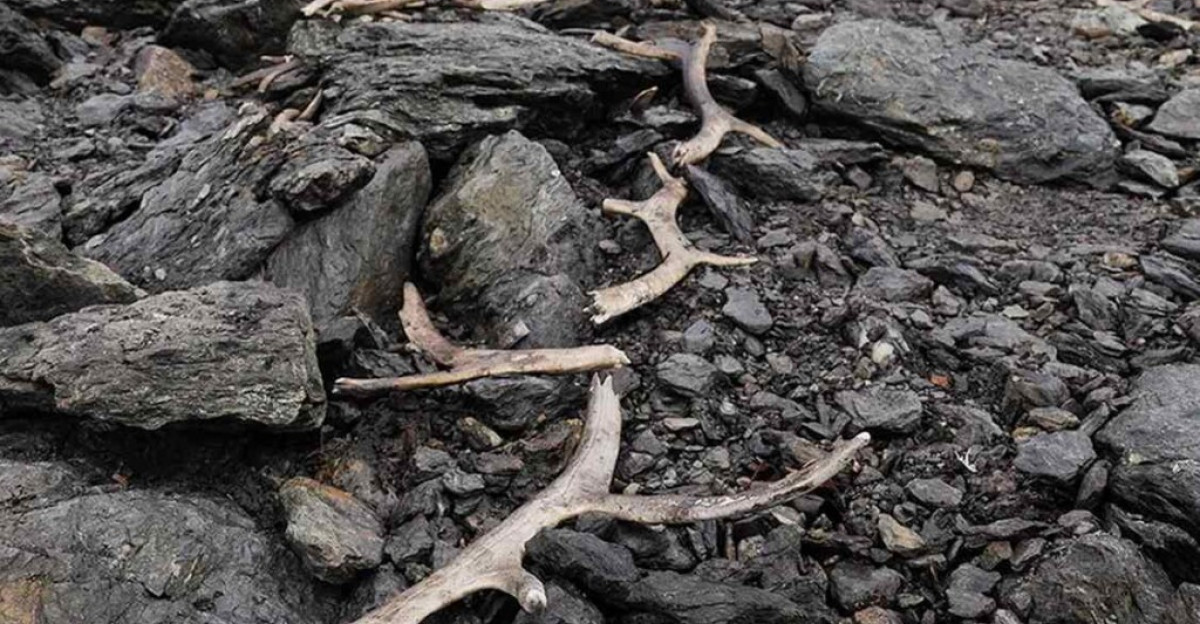
The site yielded iron spearheads, wooden arrow and bow fragments, and carved wooden implements of unknown purpose. Three complete bows suggested coordinated hunting, while arrow shafts displayed meticulous wood selection, implying repeatable, planned strategies.
One puzzling artifact—a decoratively carved wooden oar found at 1,400 meters—indicates that aesthetic or symbolic meaning extended beyond function. Archaeologists speculate that Iron Age hunters combined practicality with cultural expression, even in extreme mountain environments. Each item adds to the narrative of an organized, multi-person hunt executed with precision, skill, and foresight.
Exceptional Preservation Unlocks Ancient Life
Cold, dark, and damp ice halted decay for centuries, preserving wood, bone, and traces of coordinated planning. Archaeologist Øystein Skår noted, “This facility represents the first time a mass-capture structure made of wood has emerged from Norwegian ice, and likely stands unique in a European context.”
Abandoned around 500 CE, the trap was buried by persistent ice that froze the site exactly as hunters left it. Modern warming now reverses that ancient preservation, exposing delicate artifacts. Recognition followed quickly: the site earned “Find of the Year” honors at the November 2025 Norwegian Archaeology Meeting in Tromsø, underscoring both its rarity and research potential.
Climate Threatens Millennia of History
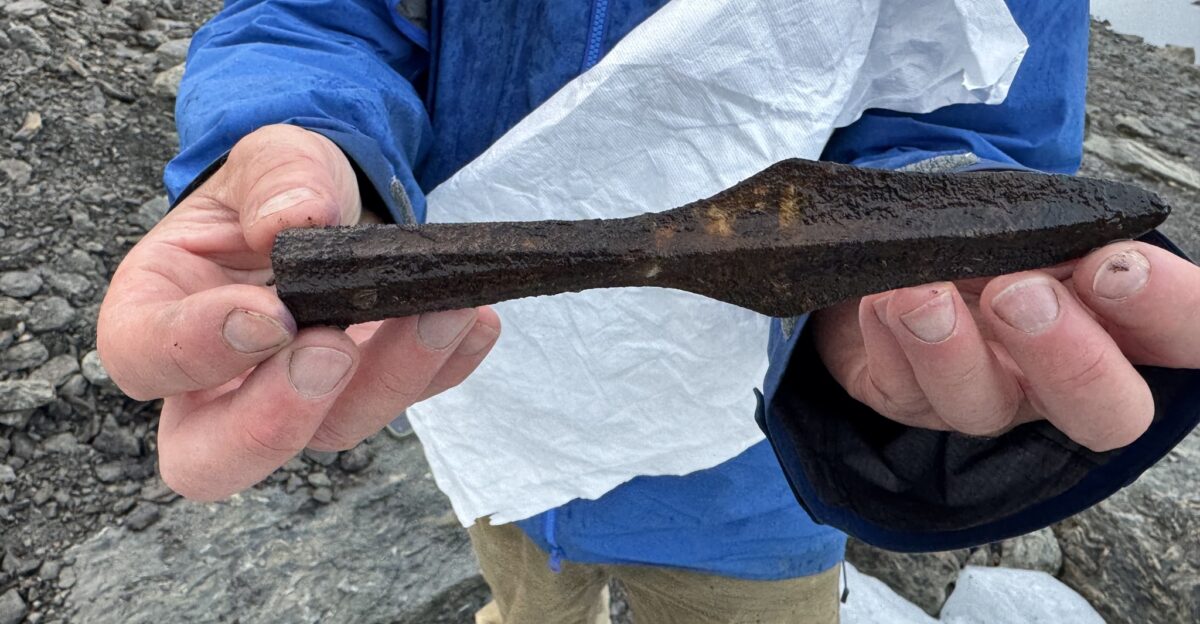
Once exposed, artifacts deteriorate rapidly. Freezers at the University Museum of Bergen protect finds during controlled thawing. Wood must be stabilized to prevent cracking, antlers can flake, and iron spearheads risk corrosion. Conservation is meticulous and time-sensitive, with delays capable of destroying evidence within days.
Key questions remain: How did Iron Age communities coordinate labor at extreme elevation? What is the origin and purpose of the decorated oar? Researchers hope tree-ring dating, isotope analysis, and DNA studies may clarify these mysteries, but survival depends on swift intervention before climate-driven decay erases centuries of evidence.
Ice Patches as Global Archaeological Windows
Aurlandsfjellet joins worldwide discoveries from melting ice. Canadian glaciers yielded a 1,500-year-old moccasin and 9,000-year-old hunting tools, while Alpine sites continue producing Bronze Age weapons and textiles. Yukon ice patches preserved arrows with sinew and fletching intact, and Peru’s high-altitude glaciers revealed rare Inca artifacts.
Glacial archaeology now supports an international peer-reviewed journal launched in 2014, highlighting a global race against time. The trap embodies two intertwined narratives: Iron Age ingenuity and climate vulnerability. Whether this discovery becomes a lesson in cultural preservation—or a fleeting curiosity—depends on the choices researchers make today as Norway’s ice continues to retreat.
Sources:
Wooden Reindeer Trap Found in Norway’s Melting Ice. Archaeology Magazine, November 17, 2025
Norwegian archaeology find of the year: ‘So well-preserved that they appear to have been made yesterday’. Science Norway, December 4, 2024
Climate indicators. Norwegian Polar Institute, accessed January 2026
Global glacier change in the 21st century: Every increase in warming matters. Science Magazine, 2024