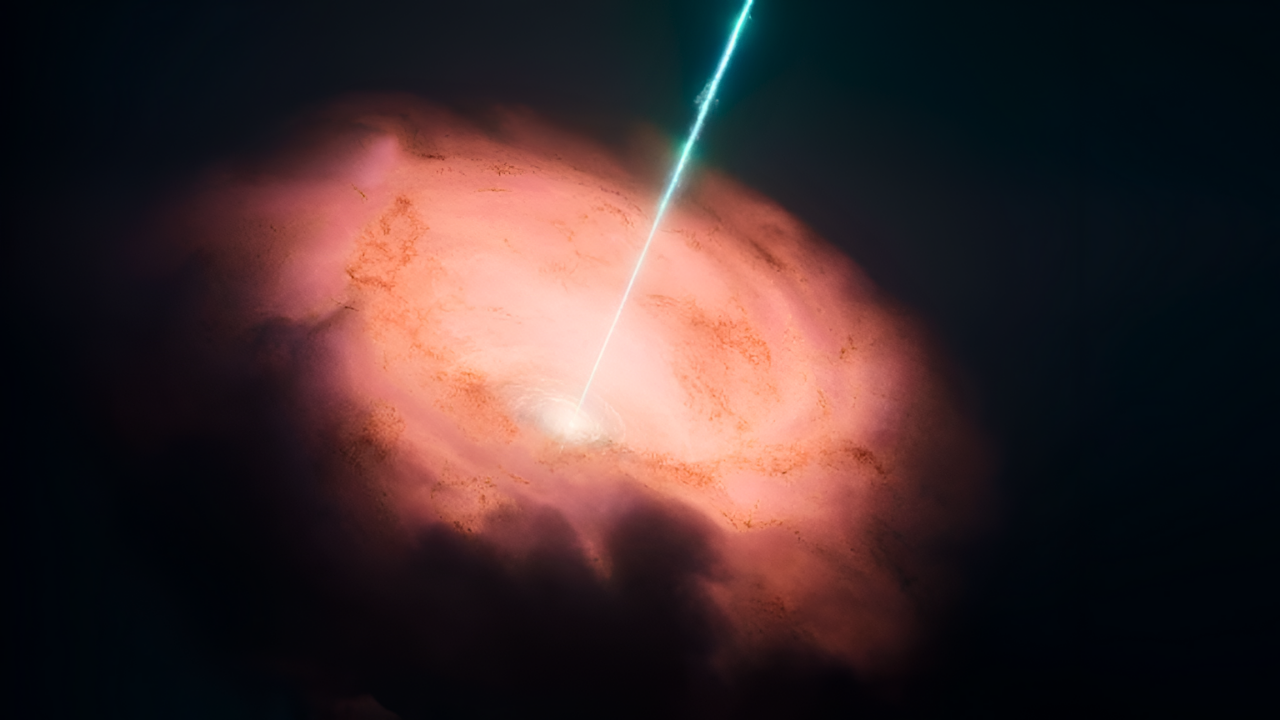
Protoplanetary disks are rotating structures of gas and dust that surround young stars and serve as the raw material for planet formation. NASA’s Hubble Space Telescope has now confirmed that IRAS 23077+6707 hosts the largest planet-forming disk ever observed, measuring roughly 400 billion miles across.
Unlike previously studied disks, this one displays extreme turbulence and asymmetry, challenging long-standing models that assumed relatively smooth, orderly planet nurseries during early stellar evolution.
Discovery Timeline
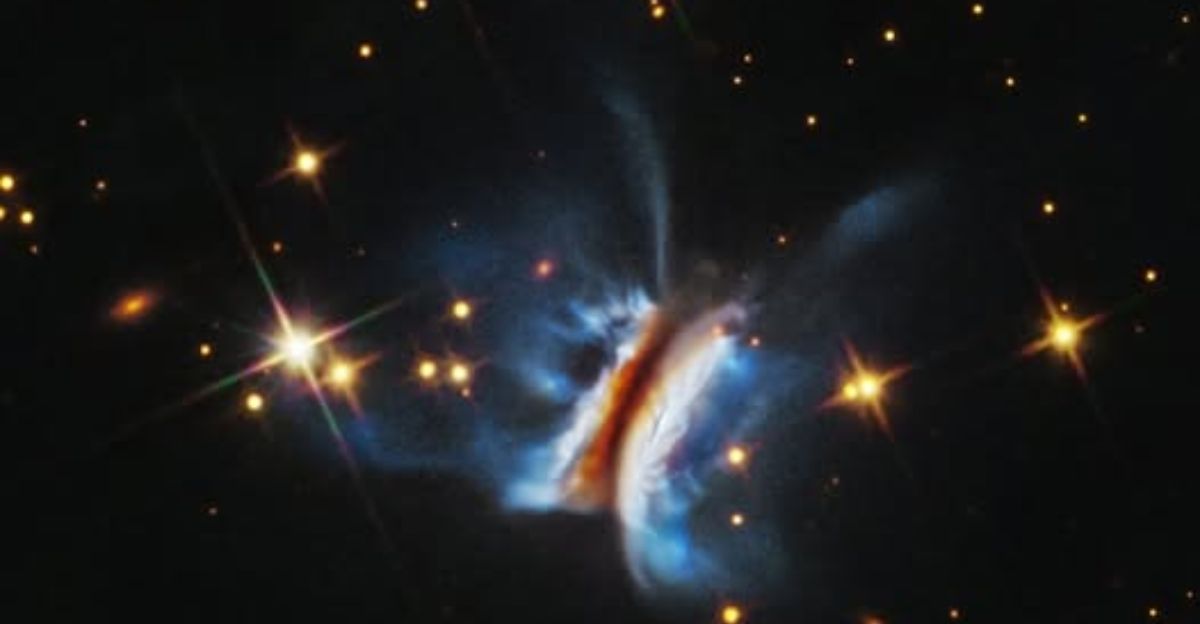
IRAS 23077+6707 was first identified in infrared surveys in 2016, but its true nature remained unclear. New Hubble observations published on December 23, 2024, provided the first visible-light confirmation that the object is a massive, edge-on protoplanetary disk.
These data revealed unprecedented structural detail, allowing astronomers to confirm both its extraordinary size and its unexpectedly chaotic behavior, marking a major step forward in understanding extreme planet-forming environments.
Disk Dimensions
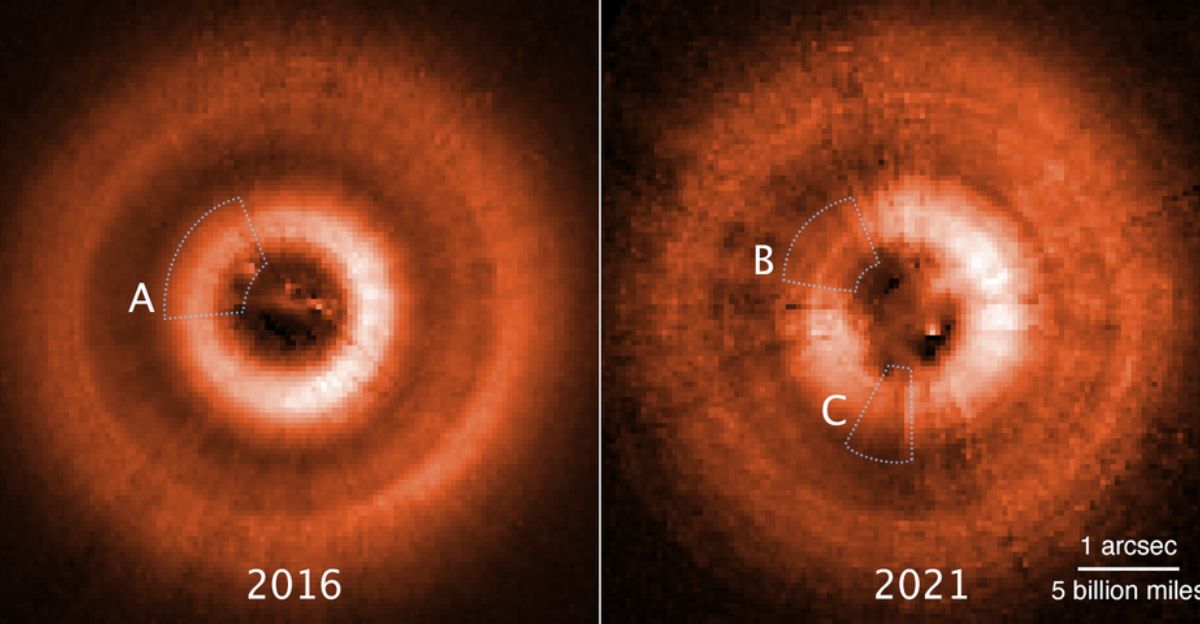
The disk surrounding IRAS 23077+6707 spans approximately 400 billion miles (about 640 billion kilometers) from end to end—about 40 times the diameter of our entire solar system.
This scale far exceeds previously known planet-forming disks, most of which measure only a few hundred astronomical units across. The disk is so large and dense that it completely obscures its central stellar source when viewed edge-on, emphasizing its immense mass and opacity.
Unexpected Activity
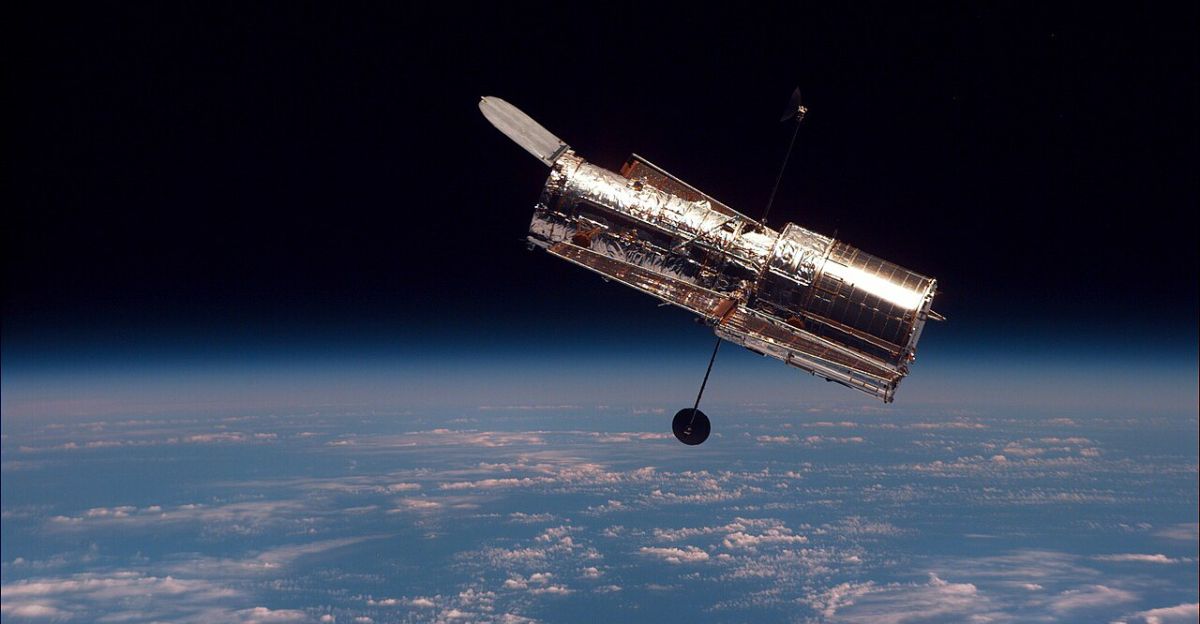
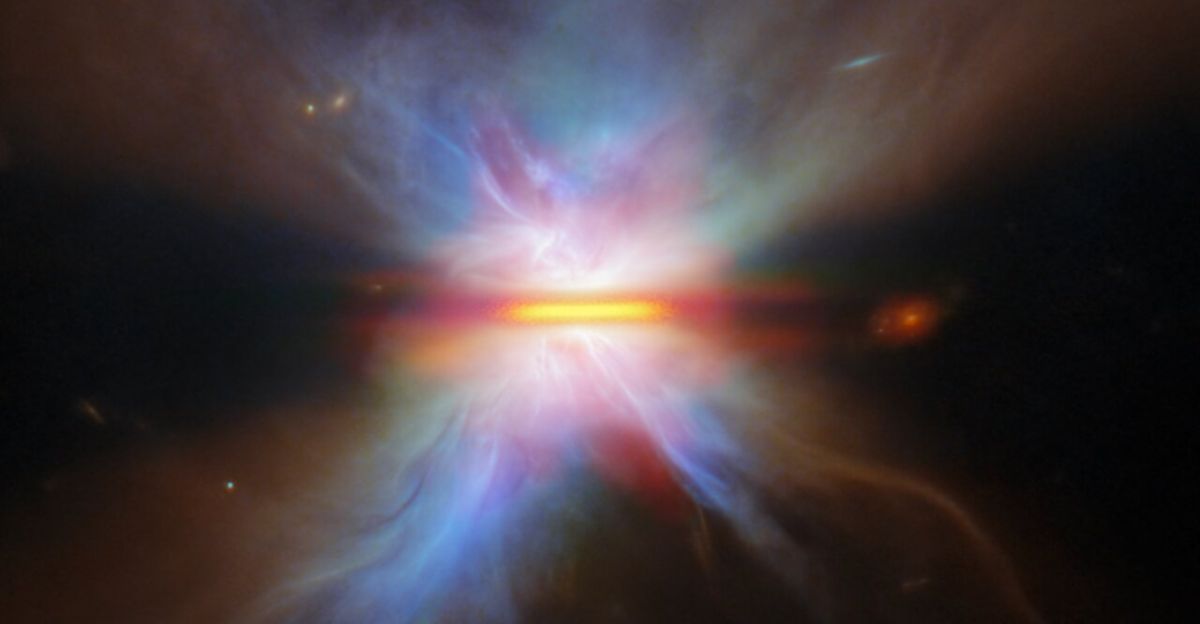
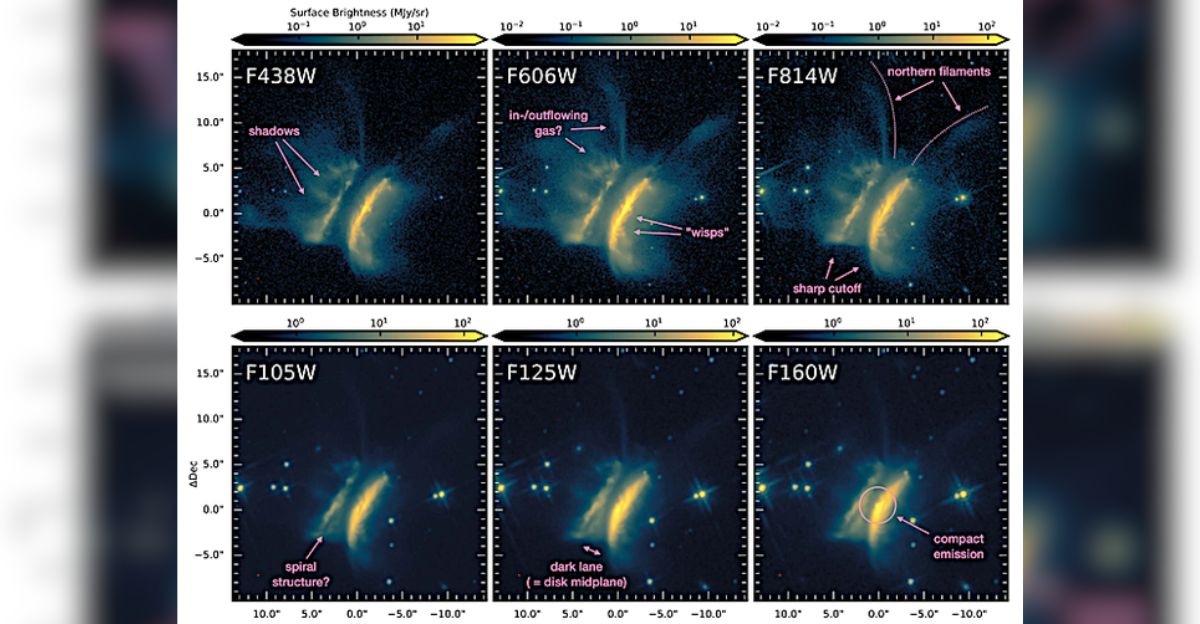
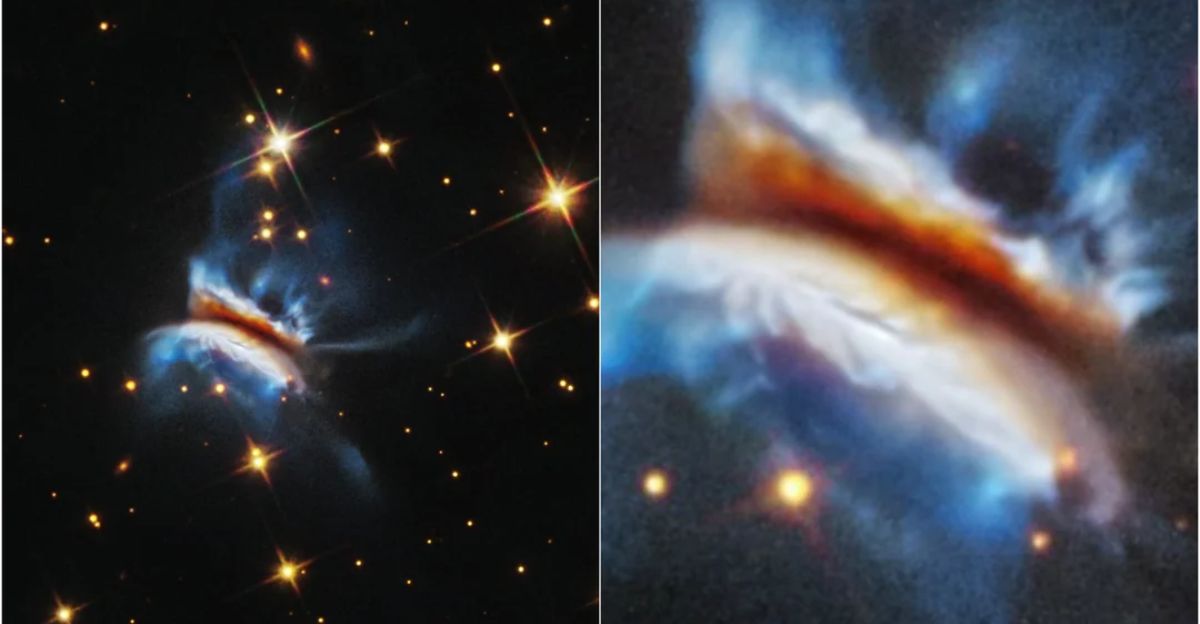
Hubble images reveal bright, asymmetric wisps of material extending far above and below the disk’s midplane. These structures indicate a level of dynamism rarely seen in protoplanetary systems.
Lead researcher Kristina Monsch described the disk as “much more active and chaotic than expected,” noting sharp edges on one side and diffuse material on the other. Such features suggest complex internal motions or ongoing interactions with surrounding material.
Structural Asymmetry
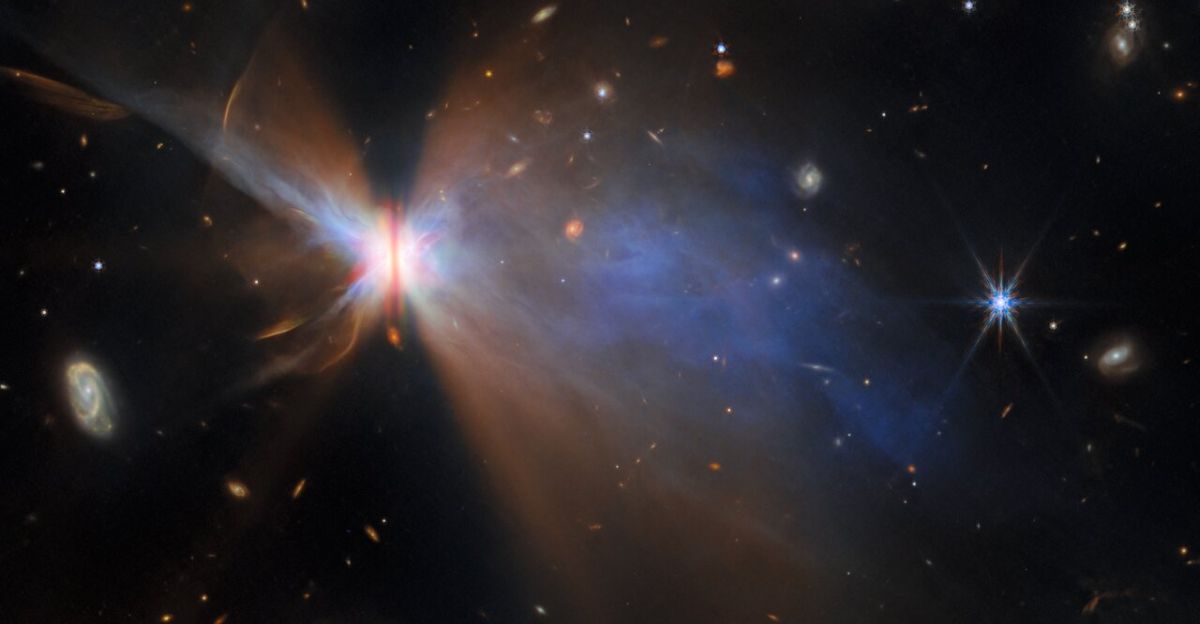
Most planet-forming disks exhibit near symmetry, reflecting relatively stable rotation and gradual evolution. In contrast, IRAS 23077+6707 displays dramatic one-sided features, with extended filaments on one flank and a sharply truncated edge on the opposite side.
This imbalance challenges standard disk models and implies that large-scale instabilities, external inflows, or stellar influences may be shaping the disk’s evolution in ways not previously observed at this scale.
Central Stellar Mystery
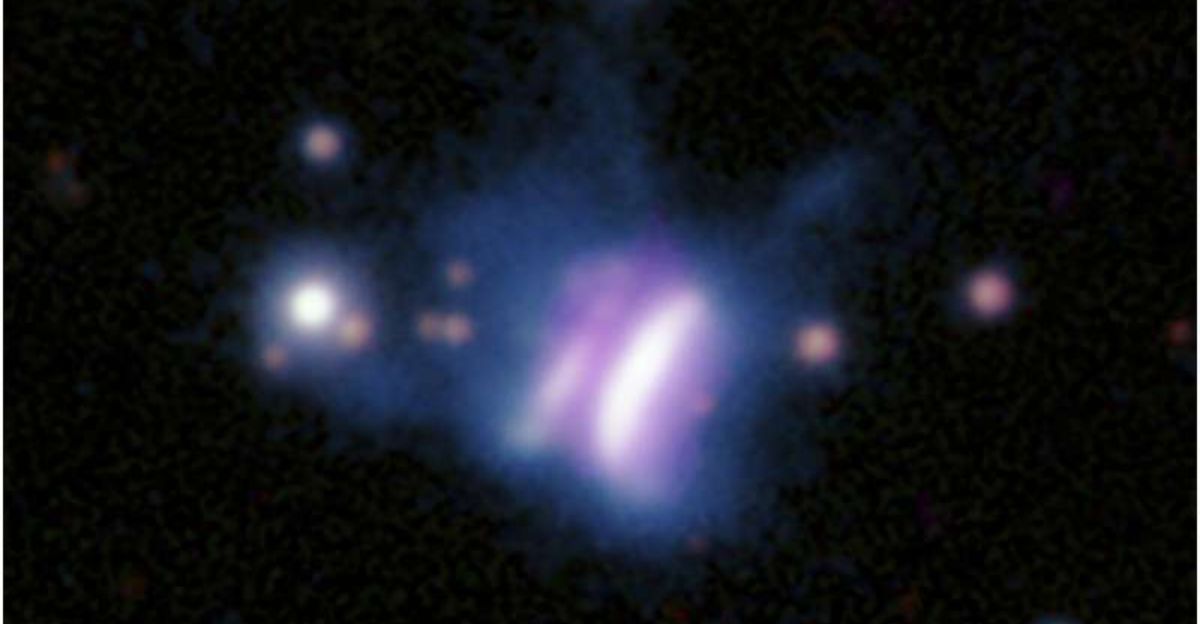
The star—or stars—at the center of IRAS 23077+6707 remains hidden by the disk’s dense material. Based on infrared emission, astronomers infer that the central object is likely a young, hot, and possibly massive star, or potentially a binary system.
Its properties are critical to understanding why the disk has grown so large and turbulent, but direct observation remains impossible until further multiwavelength studies penetrate the surrounding dust.
Disk Mass and Potential
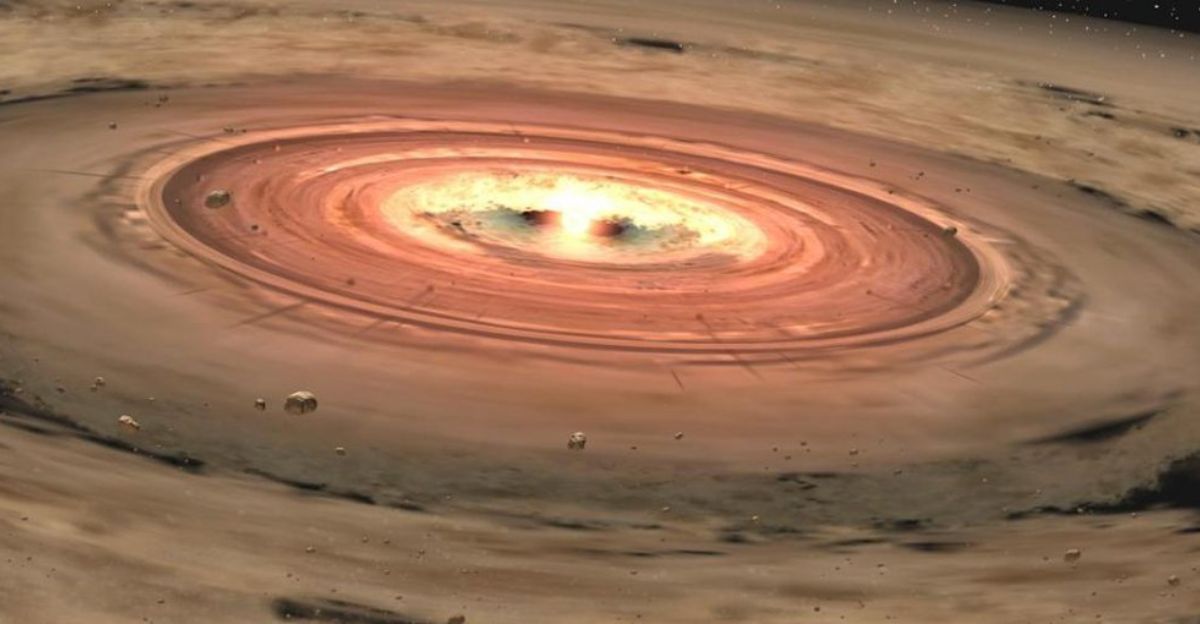
Although precise measurements are still being refined, the disk’s brightness and opacity suggest an enormous reservoir of gas and dust. Such mass implies the raw material needed to form large numbers of planets, including gas giants.
While scientists avoid assigning exact planet counts, the disk’s scale indicates a capacity for producing planetary systems far more extensive than our own, potentially with architectures unlike anything currently observed.
Comparison to Known Disks
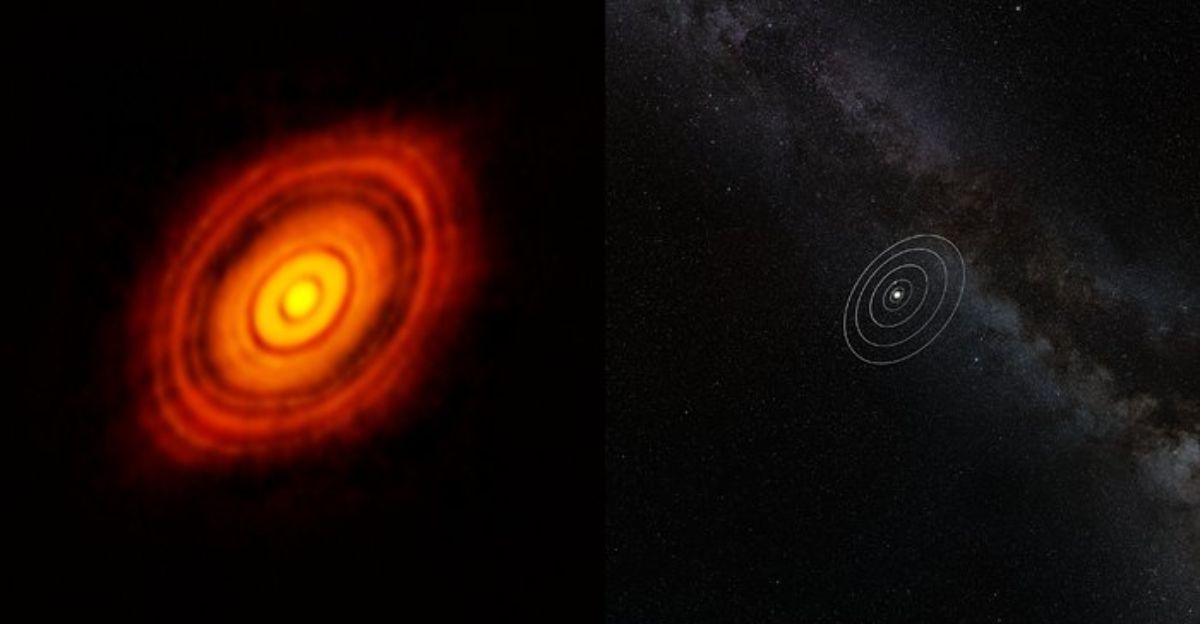
Previously studied systems such as HL Tauri and PDS 70 revealed rings, gaps, and embedded protoplanets, but on far smaller scales. IRAS 23077+6707 dwarfs these disks in size and differs markedly in structure.
Where others show organized patterns, this disk exhibits disorder and turbulence, suggesting that planet formation may proceed under a wider range of physical conditions than models had assumed.
Longevity Questions
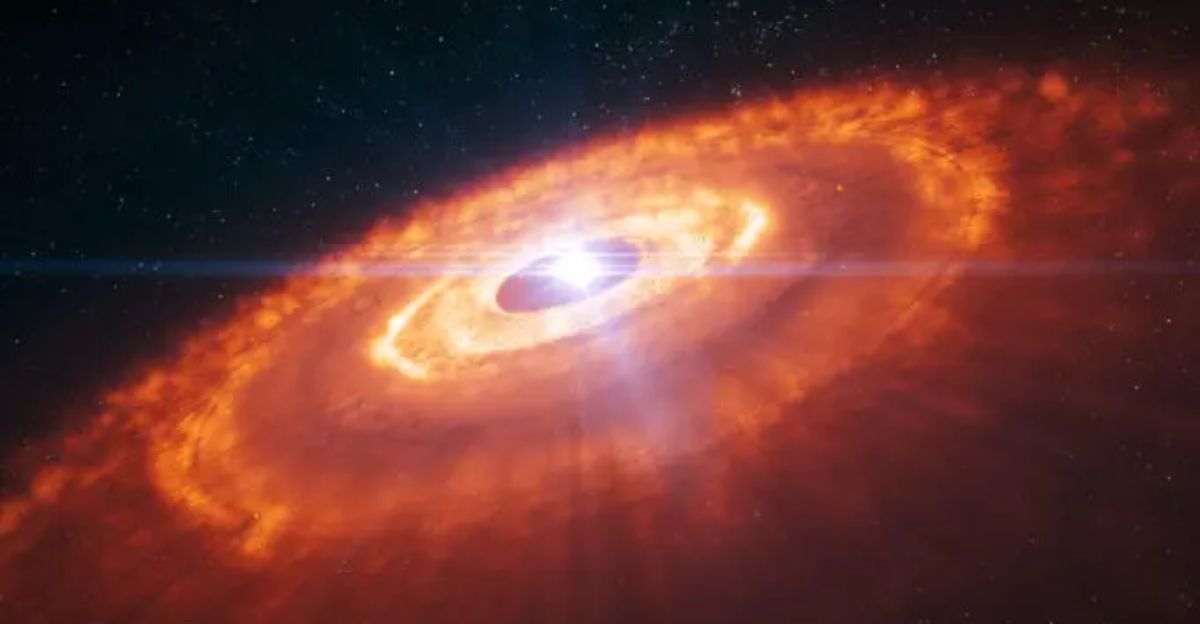
Traditional models suggest protoplanetary disks dissipate within a few million years due to stellar radiation and winds.
The immense size and density of IRAS 23077+6707 raise questions about whether such massive disks can survive longer than expected. If confirmed, extended lifetimes would allow more time for complex planet formation processes, potentially increasing the diversity of planetary systems across the galaxy.
Observational Breakthrough
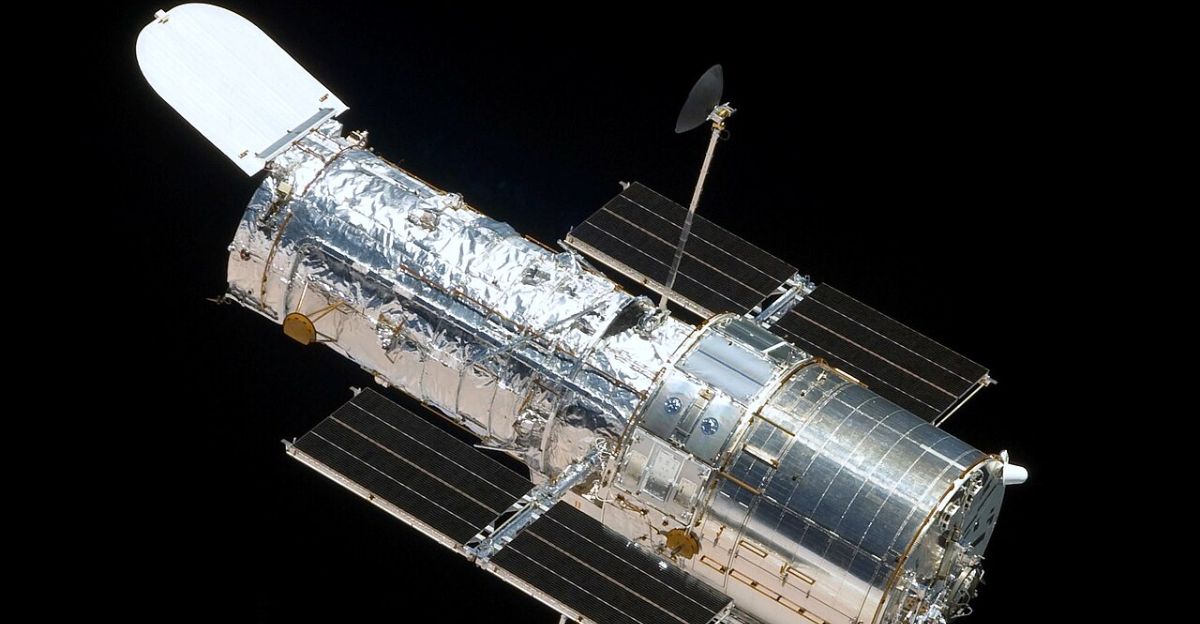
Hubble’s ability to capture the disk in visible light was key to confirming its nature. Earlier infrared observations hinted at a large structure, but lacked the resolution to reveal its detailed morphology.
The new images show scattered light from dust grains in the disk’s upper layers, exposing vertical structures and asymmetries never before seen in such a massive planet-forming environment.
Location in the Galaxy

IRAS 23077+6707 lies approximately 978 light-years from Earth in the constellation Cepheus. At this distance, the disk’s vast size is even more remarkable, as its features remain resolvable despite spanning a region nearly a millennium of light-travel time away.
The system provides a rare nearby laboratory for studying extreme disk physics within our own galaxy.
Naming and Nickname
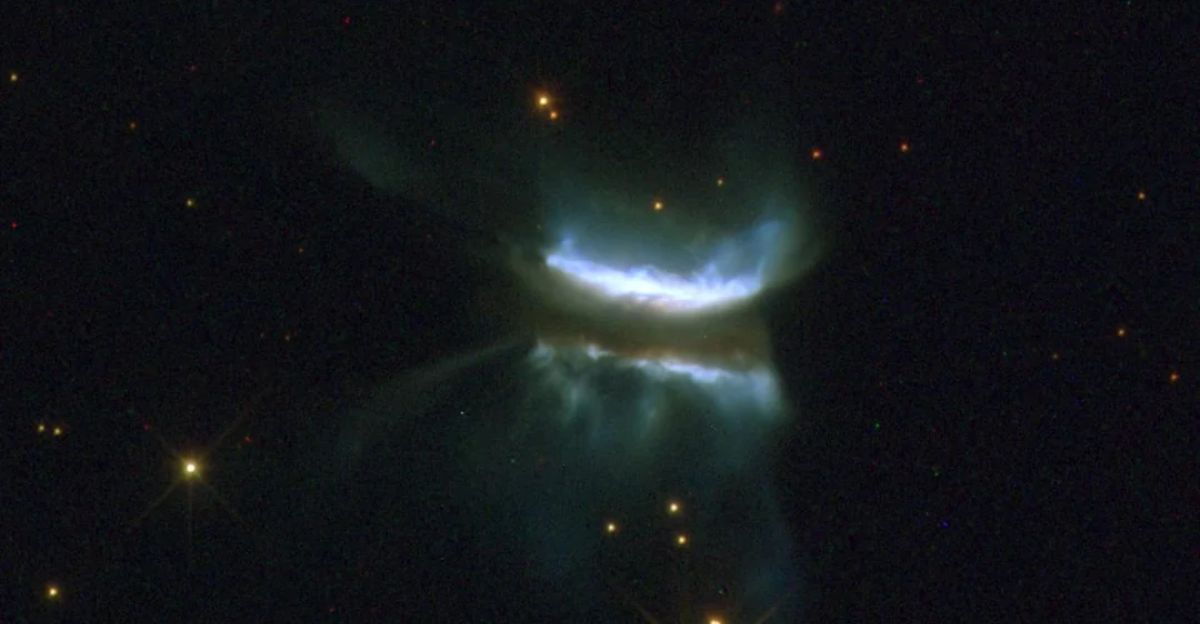
Due to its dramatic appearance and location in Cepheus, the disk has been informally nicknamed “Dracula’s Chivito.” While the nickname captures public imagination, astronomers emphasize its scientific importance.
The system represents an outlier that tests the limits of existing theories, making it a critical target for follow-up observations rather than a mere astronomical curiosity.
Implications for Planet Formation
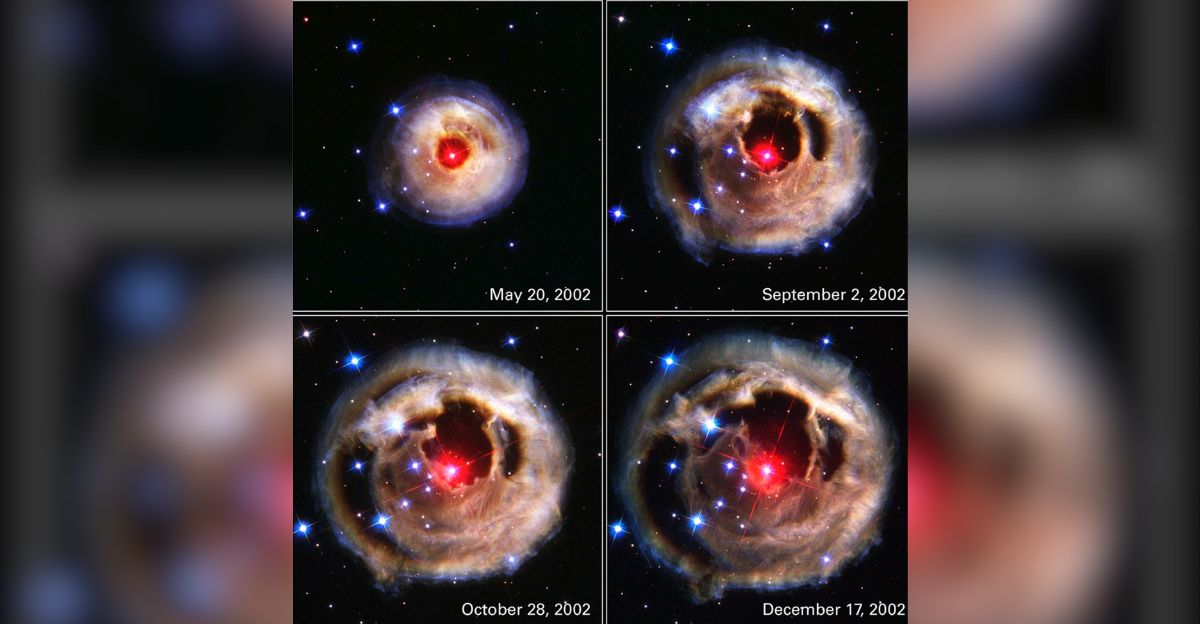
The chaotic structure of IRAS 23077+6707 suggests that planet formation may not always occur in calm, layered disks. Instead, turbulence and asymmetry could play significant roles in shaping planetary systems.
This challenges simplified models and implies that planets forming in such environments might experience complex migration histories, leading to unusual orbital configurations once the disk dissipates.
Role of Turbulence
Turbulence within disks can both hinder and enhance planet formation. In IRAS 23077+6707, extreme motion may prevent material from settling smoothly, but it could also concentrate dust in localized regions.
Understanding how these competing effects operate at such scales is essential for refining models of how planets grow from microscopic grains into full-sized worlds.
Future Observations
Astronomers plan to study IRAS 23077+6707 using additional observatories, including radio and infrared telescopes capable of probing deeper into the disk.
These observations may reveal hidden substructures, such as forming planets or spiral density waves, and help determine whether external forces or internal instabilities drive the observed chaos.
Revising Theoretical Models
The discovery forces theorists to reconsider assumptions about disk size limits and stability.
If such massive disks can form and persist, models must account for new pathways of disk growth and maintenance. IRAS 23077+6707 demonstrates that planet-forming environments can be far more diverse—and extreme—than previously recognized.
Broader Galactic Context
While IRAS 23077+6707 is exceptional, its existence suggests that other massive disks may await discovery.
If even a small fraction of stars host similarly extreme structures, the range of possible planetary systems in the Milky Way could be far broader than current exoplanet surveys imply.
Scientific Significance
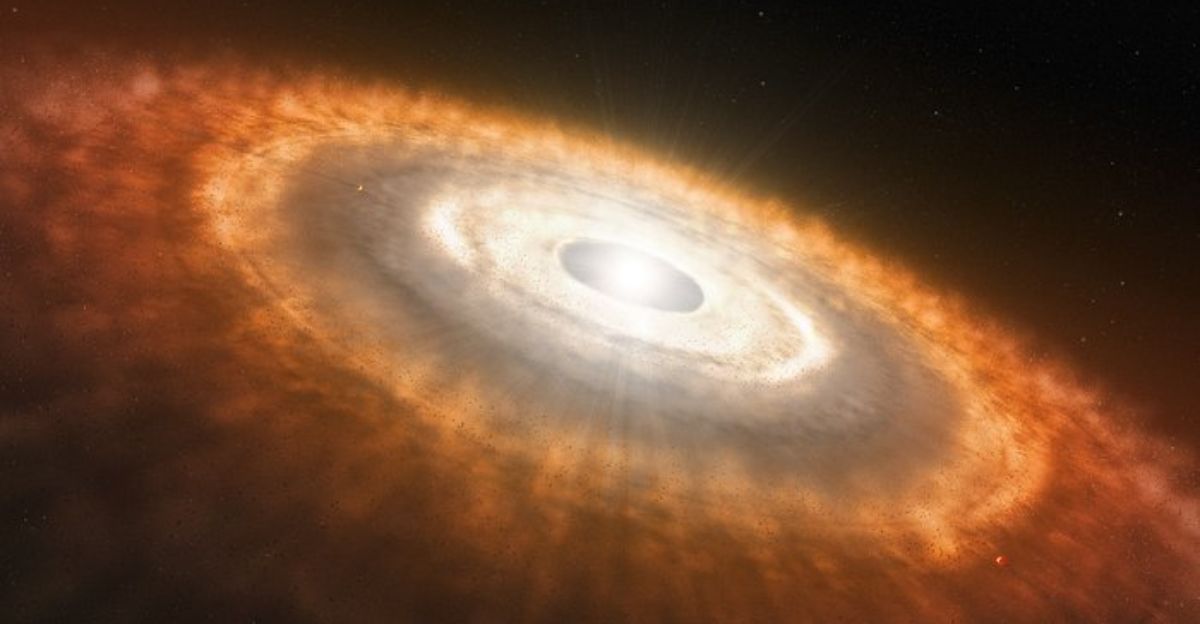
This system provides a rare opportunity to study planet formation at the upper extremes of scale and activity.
By examining how such an enormous disk behaves, astronomers can test whether the same physical laws apply universally or whether new mechanisms dominate in extreme environments.
What Remains Unknown
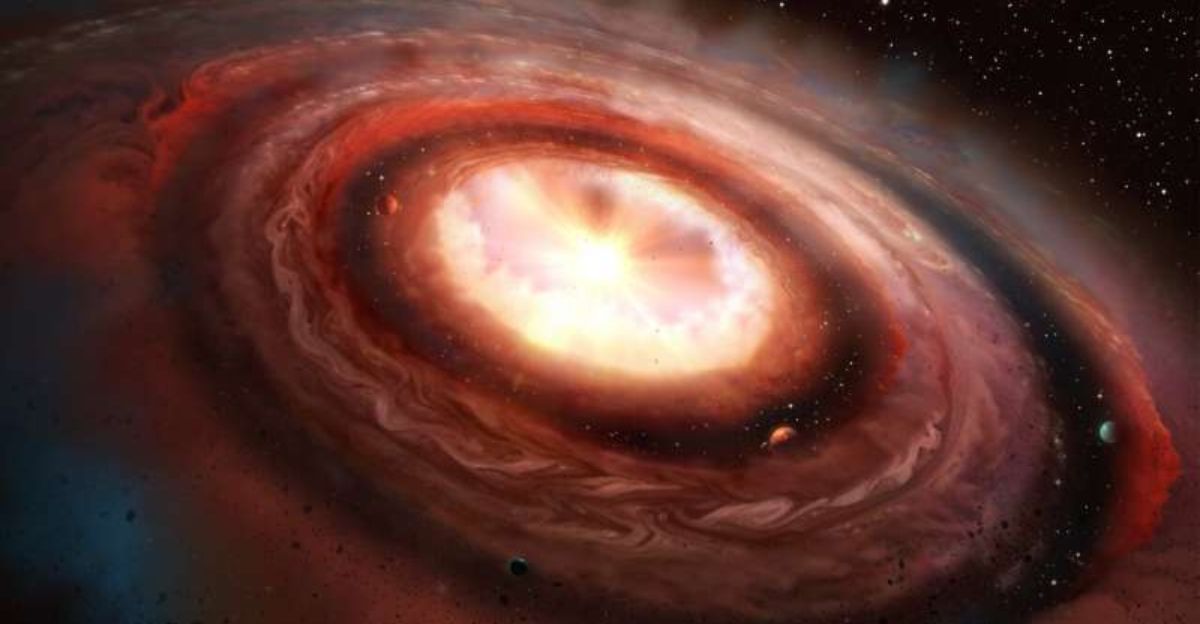
Key questions remain unanswered: What powers the disk’s asymmetry? Is the central object a single star or a binary system? How long can such a massive disk survive?
Addressing these uncertainties will require coordinated observations across multiple wavelengths and continued refinement of theoretical frameworks.
Cosmic Implications
IRAS 23077+6707 confirms that planet-forming disks can be vastly larger and more chaotic than once believed. Rather than neat, orderly structures, some planetary nurseries are turbulent and extreme.
This realization expands the known boundaries of planet formation and underscores how much remains to be learned about the processes that shape planetary systems throughout the universe.
Sources:
NASA’s Hubble Reveals Largest Found Chaotic Birthplace of Planets, Publication: NASA Science
NASA’s Webb Telescope Uncovers a 30-Million-Year-Old Planet Factory That Shouldn’t Exist, Publication: SciTechDaily
SPIRou observations of the young planet-hosting star PDS 70, Publication: Monthly Notices of the Royal Astronomical Society
Baby ‘failed star’ has unusually rich planet-forming disk, Publication: Space.com
Largest Birthplace of Planets: Hubble Reveals Chaos, Publication: NASA Space News