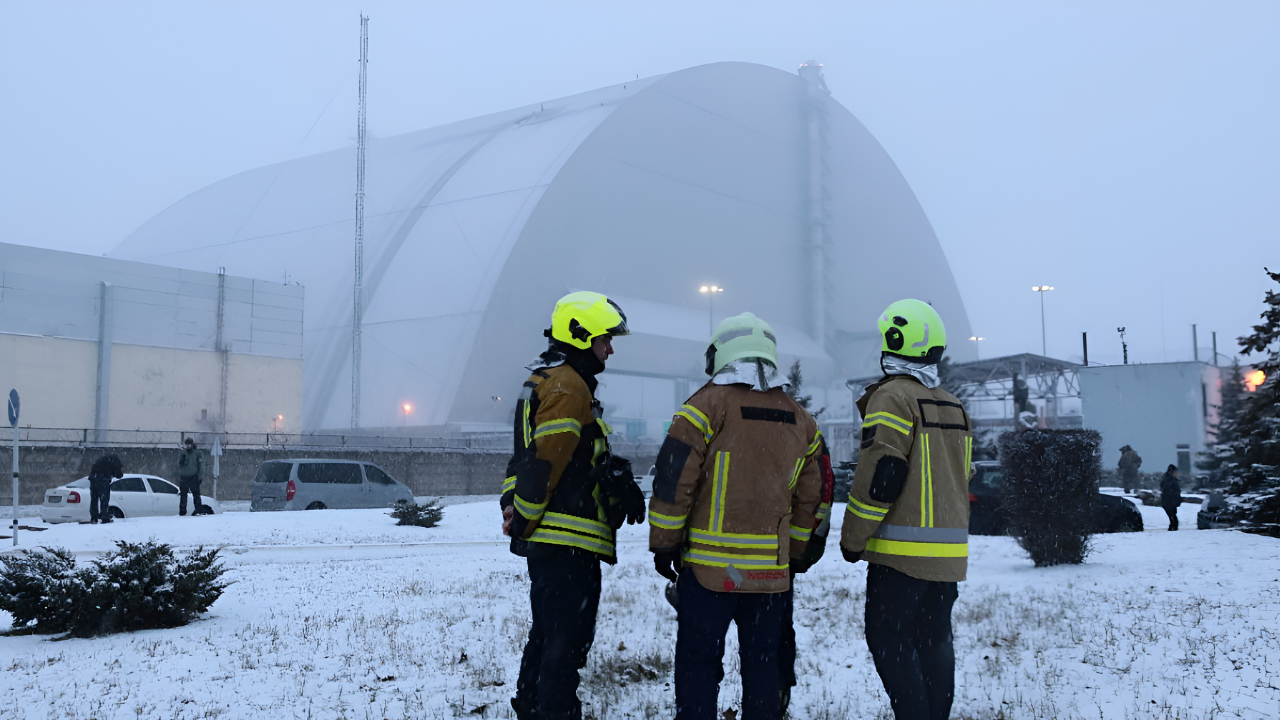
On February 14, 2025, a drone struck the New Safe Confinement (NSC) at Chernobyl, damaging the steel structure that covers the destroyed 1986 reactor.
The IAEA later confirmed the NSC had “lost its primary safety functions, including the confinement capability.” Although radiation levels remained stable, the incident compromised the world’s largest movable land structure, originally designed to contain radioactive debris for 100 years. Permanent IAEA staff continue monitoring the site.
Chernobyl’s Legacy
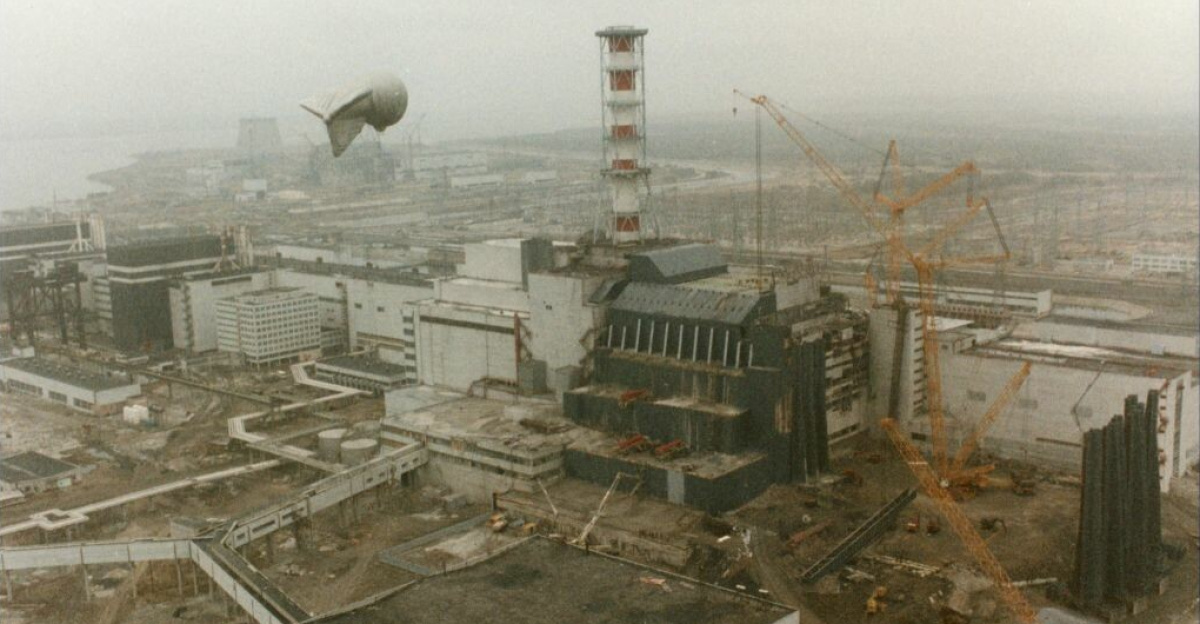
The April 26, 1986 explosion at Chernobyl’s Reactor 4 caused more than 30 immediate deaths in Pripyat and dispersed radioactive material across Ukraine, Belarus, Russia, and Europe.
To reduce long-term environmental risk, the NSC, completed in 2019, was built over the deteriorating original sarcophagus. Funded by 45+ donor countries at a cost of €2.1 billion, it was intended to secure the site during decades of planned decommissioning work.
Drone Strike Details

Ukrainian authorities report that a Geran-2–type drone hit the NSC, igniting a fire and damaging roof and cladding panels. Debris with Russian markings was recovered near the site, while Russia denies deliberately targeting nuclear infrastructure.
The IAEA confirmed structural damage affecting confinement, though monitoring systems recorded no abnormal radiation. The incident represents the first major strike to compromise Chernobyl’s protective dome since its installation.
What Was Damaged
According to IAEA assessments, the strike damaged protective cladding, roof sections, and external panels of the NSC. Importantly, there was no permanent damage to load-bearing structures or most monitoring systems.
While limited temporary roof repairs were completed, the IAEA emphasized that these are not sufficient to restore the NSC’s original safety functions. More complex, long-term restoration work is required to fully re-establish containment.
IAEA’s Formal Warning
In its December 6, 2025 statement, the IAEA warned that the NSC’s confinement performance had been significantly reduced. The agency stressed that “timely and comprehensive restoration remains essential to prevent further degradation and ensure long-term nuclear safety.”
Despite damage, radiation readings remain stable. However, the loss of full confinement capability undermines the structure’s 100-year safety design and complicates future decommissioning operations.
Radiation Monitoring
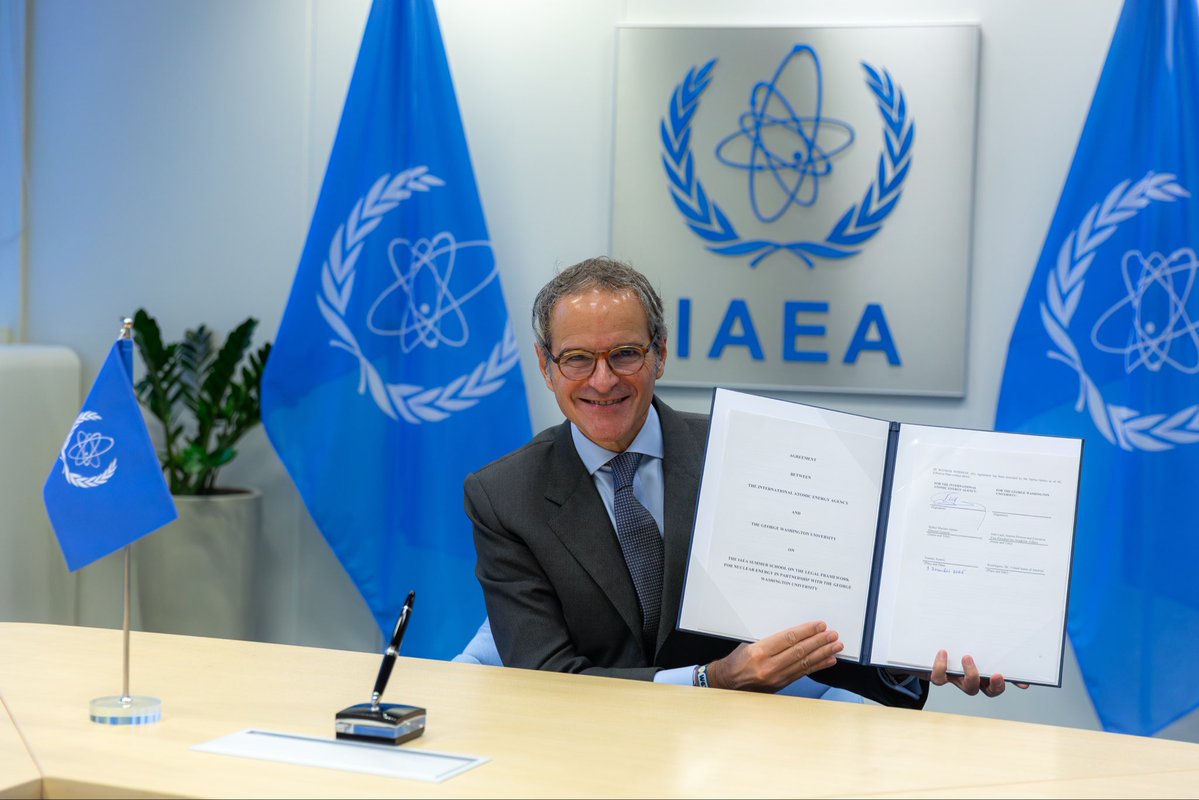
Post-strike measurements show no abnormal radiation around the NSC or in surrounding regions. IAEA sensors inside the structure, as well as European monitoring systems in countries such as Poland and Romania, report readings consistent with long-term background levels.
The stability indicates confined radioactive dust has not escaped into the environment. Continuous 24/7 surveillance remains in place as repair plans are evaluated.
NSC Specifications
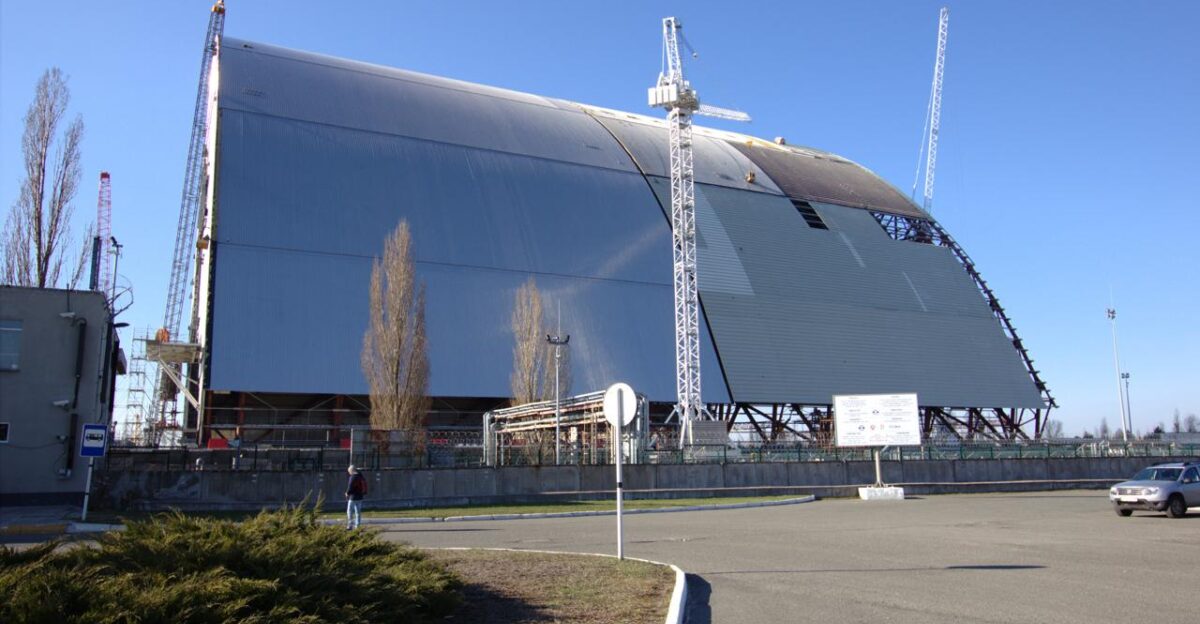
Completed in 2019, the NSC is the largest movable land structure ever built, weighing more than 30,000 tons and spanning 108 meters high.
Constructed between 2010 and 2019, the arch was engineered to withstand extreme weather and radiation for a century. Its purpose was to enclose the crumbling 1986 sarcophagus and create a controlled environment for dismantling highly radioactive materials safely over decades.
Occupation Background
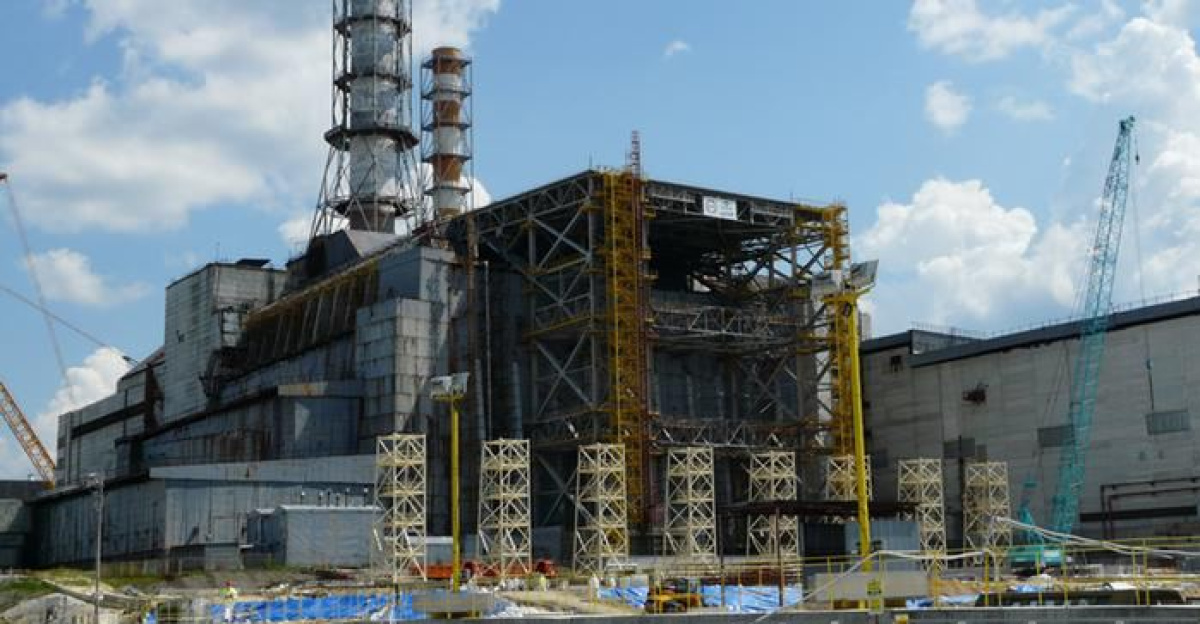
Russian forces seized Chernobyl during the first days of the February 2022 invasion, holding staff for several weeks before withdrawing.
The occupation reinforced global concerns about nuclear sites in conflict zones. Since 2022, the IAEA has recorded more than a dozen safety-related incidents at Ukrainian nuclear facilities. The 2025 drone strike marks the most significant physical damage to Chernobyl’s protective infrastructure since the NSC’s completion.
International Verification
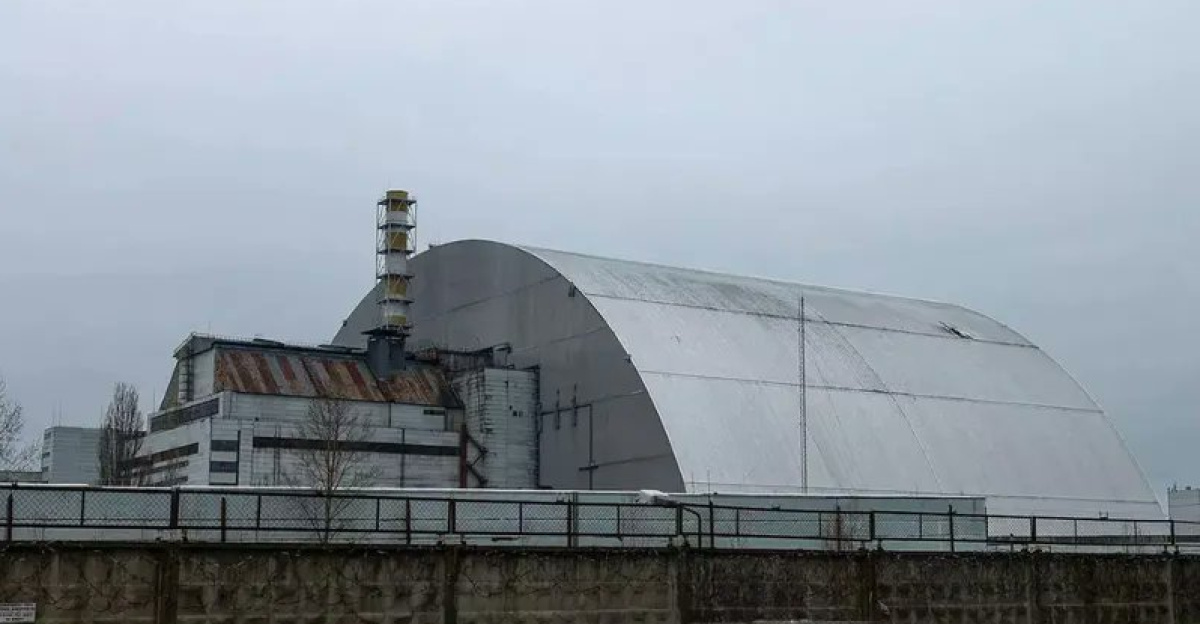
The IAEA maintains a permanent onsite mission at Chernobyl. Combined with satellite imagery, ground sensors, and cross-border European air-quality stations, a multilayered monitoring system independently verifies radiation levels and structural conditions.
As of the latest reports, none of these systems detected radioactive releases after the strike. This verification process has been crucial in providing transparent, evidence-based updates to governments and the public.
Comparison With Other Incidents
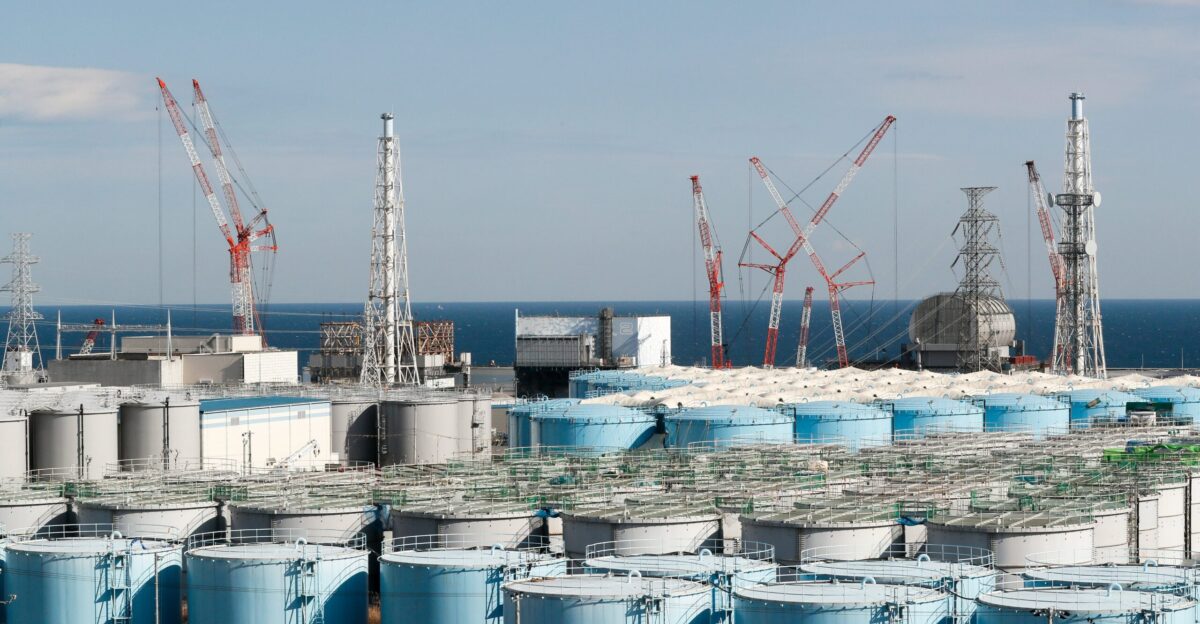
Unlike Fukushima in 2011, which released significant airborne radiation, the 2025 Chernobyl strike did not breach containment to the point of environmental release. And unlike the original 1986 explosion, the reactor remains sealed beneath multiple layers of shielding.
However, the incident still sets a concerning precedent—illustrating how modern conflict can compromise nuclear-safety infrastructure designed for long-term stability rather than deliberate attack.
Economic Implications
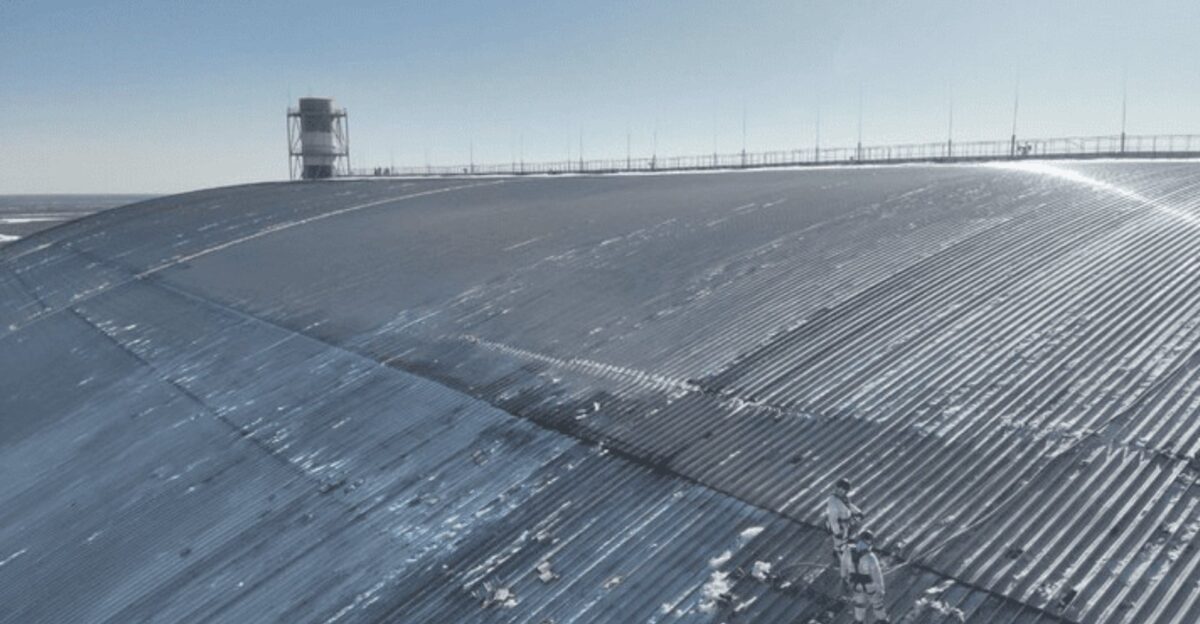
Restoring the NSC to full capability will likely require extensive repairs that exceed simple patching of damaged roof panels.
While initial estimates focus on tens of millions of euros, broader restoration could reach substantially higher figures due to the complexity of nuclear-site work. The exclusion zone—normally a controlled tourism destination—remains closed, limiting potential local economic benefits during ongoing assessments and repairs.
Impact on Decommissioning
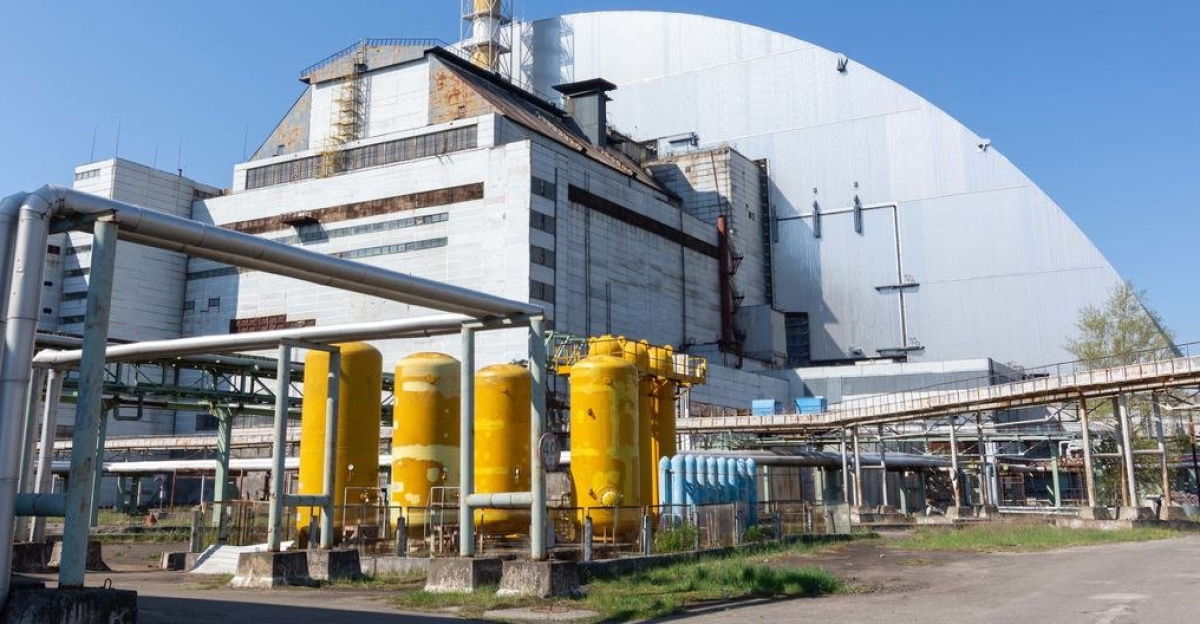
The NSC was central to multi-decade plans to dismantle the old sarcophagus and manage radioactive materials safely. With its confinement capability reduced, some longer-term cleanup operations may be paused or re-evaluated to ensure worker and environmental safety.
Comprehensive repairs will be necessary before major dismantling tasks can proceed, delaying milestones in the decades-long effort to finally secure Reactor 4’s remains.
Required Restoration
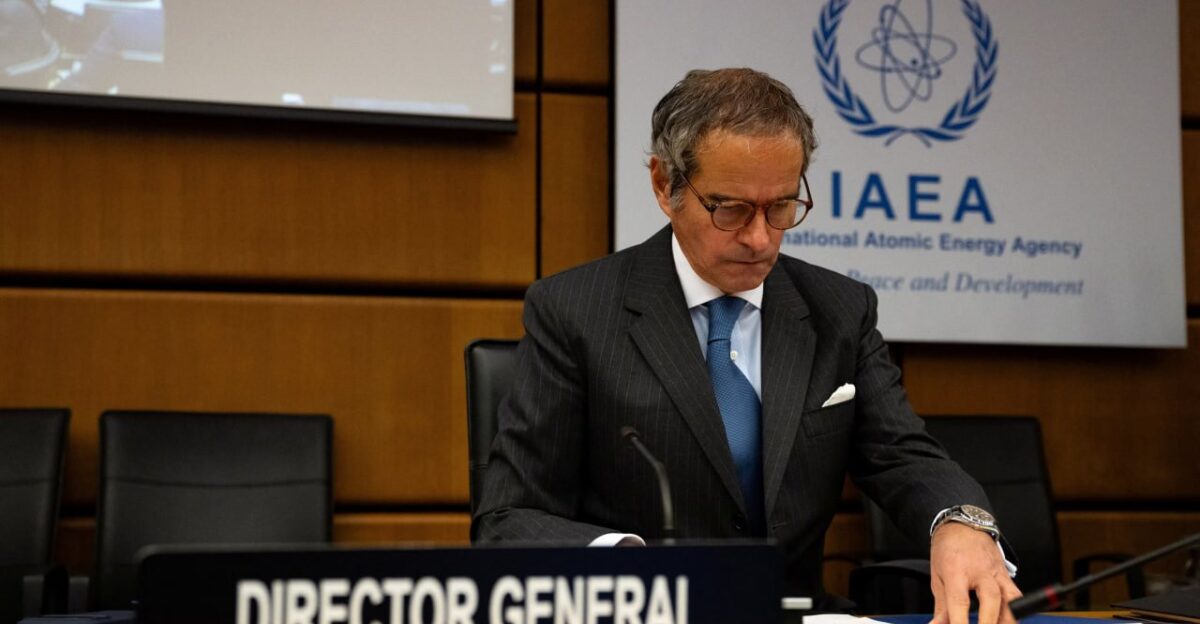
The IAEA recommends a phased restoration strategy that includes structural reinforcement, replacement of damaged cladding, and full revalidation of confinement systems.
Temporary roof repairs were completed promptly, but these do not resolve the underlying loss of safety functionality. Long-term work must account for harsh radiation environments, aging materials, and the technical challenges of repairing the world’s largest movable nuclear enclosure.
Global Nuclear Safety Lessons
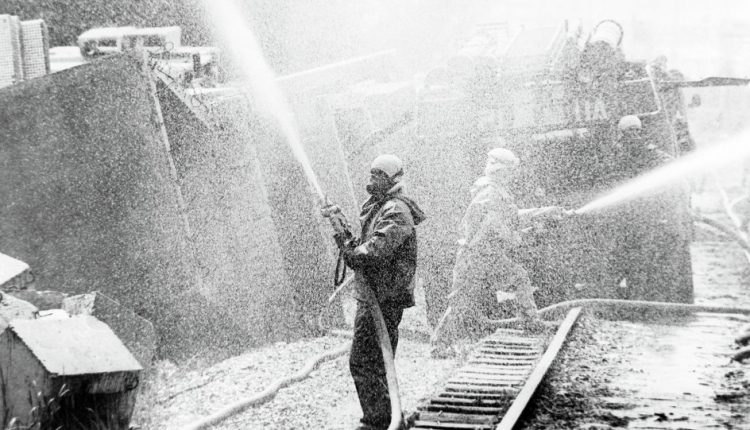
The Chernobyl strike underscores the vulnerability of nuclear-related facilities in active war zones. International conventions call for protection of such sites, but modern drone warfare increases risks dramatically.
The incident highlights the need for reinforced global norms, real-time monitoring, and rapid repair capability. Ensuring nuclear safety in conflict areas will require deeper cooperation between states, regulators, and international organizations.
Outlook and Next Steps
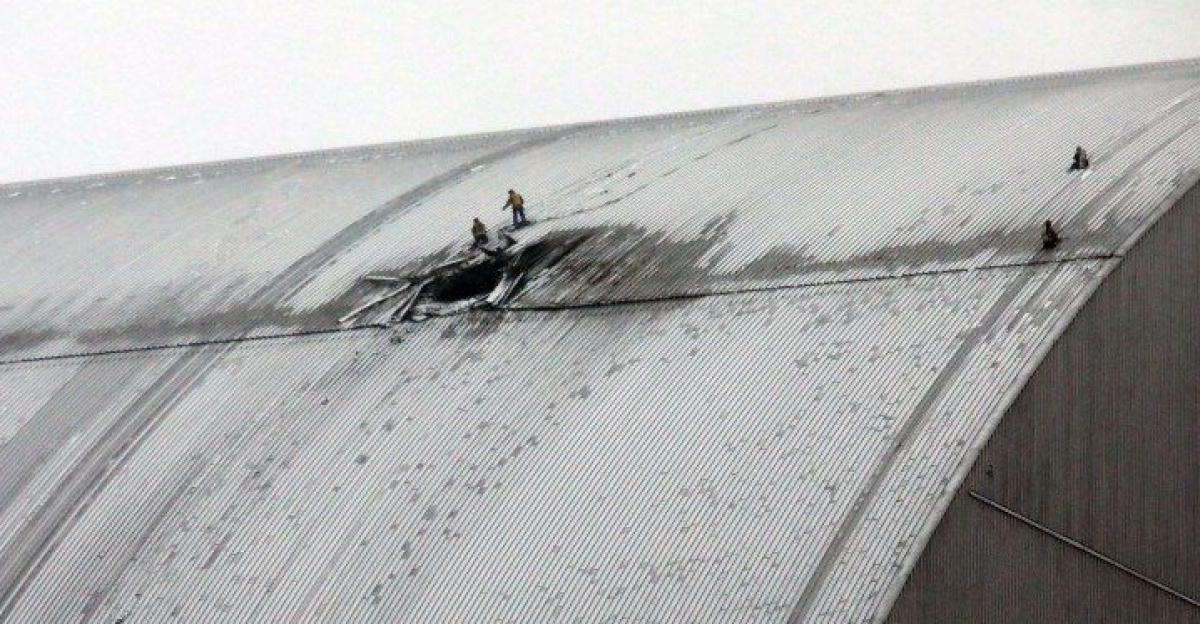
Radiation levels remain stable, but the NSC’s compromised condition demands urgent restoration to prevent long-term degradation.
The IAEA continues to emphasize the need for a full, coordinated repair plan supported by international partners. As Ukraine’s war enters its fourth year, protecting nuclear sites remains a top global priority. The future of Chernobyl’s containment now depends on safe access, adequate funding, and sustained technical oversight.
Sources:
Russian drone strike caused tens of millions worth of damage to Chornobyl
Chernobyl Nuclear Power Plant drone strike
Live updates: Russia says Ukraine attempted drone attack
Chernobyl Accident 1986 – World Nuclear Association
Vladimir Putin, hands off Ukraine! #StandWithUkraine
Chernobyl Breached! Russia’s Drone Strike on Nuclear History’s Most Dangerous Ruin